
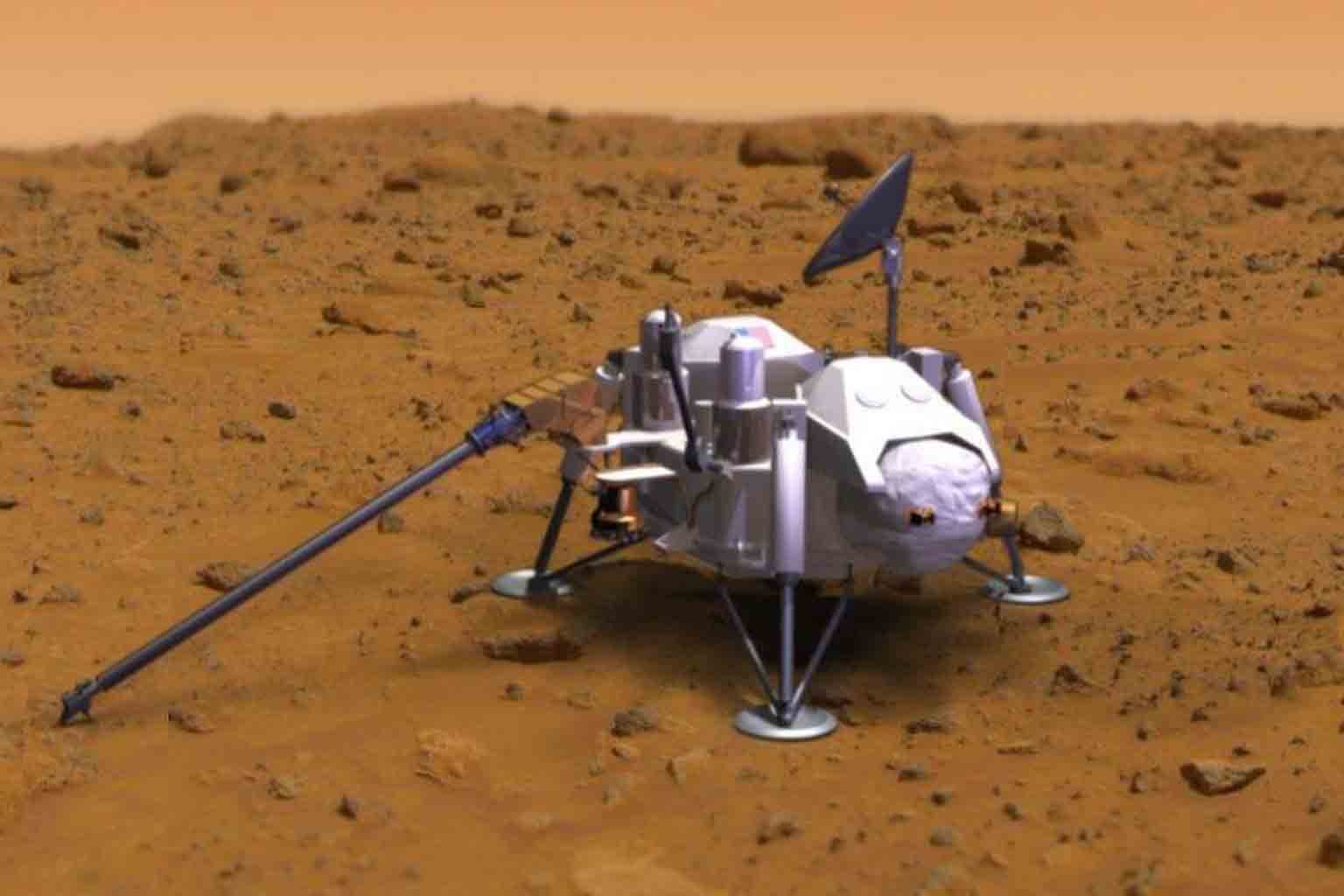
Nearly 50 years after NASA’s historic Viking mission landed on Mars, scientists are once again debating whether the spacecraft may have detected signs of life but failed to recognize them because of the limitations of technology available at the time.
The Viking 1 and Viking 2 landers, which reached Mars in 1976, carried experiments designed to search for microbial life in the Martian soil. One of the experiments, known as the Labeled Release (LR) test, produced results that some scientists interpreted as consistent with possible biological activity. However, another instrument aboard the landers did not detect organic molecules, leading NASA to conclude that the positive LR results were likely caused by non-biological chemical reactions.
Recent scientific studies have challenged that decades old interpretation. Researchers argue that the Viking instruments were not sensitive enough to detect trace organic compounds and that harsh Martian soil chemistry may have destroyed organic molecules during testing. Data collected by later missions, including NASA’s Curiosity and Perseverance rovers, have confirmed the presence of organic molecules on Mars, prompting scientists to re-examine the Viking findings.
Some researchers now believe the Viking experiments deserve a fresh analysis using modern scientific knowledge and improved understanding of Mars’ environment. They argue that the possibility of microbial life cannot yet be ruled out.
However, many scientists remain cautious, emphasizing that no conclusive evidence of past or present life on Mars has been found. They stress that while the renewed debate is scientifically significant, extraordinary claims require extraordinary evidence.
NASA continues its search for evidence of ancient microbial life through ongoing missions, including the Perseverance rover, which is collecting rock samples that could eventually be returned to Earth for detailed laboratory analysis.
The renewed discussion highlights how advances in science and technology can reshape interpretations of historic space missions, keeping alive one of humanity’s biggest questions: Are we alone in the universe?