
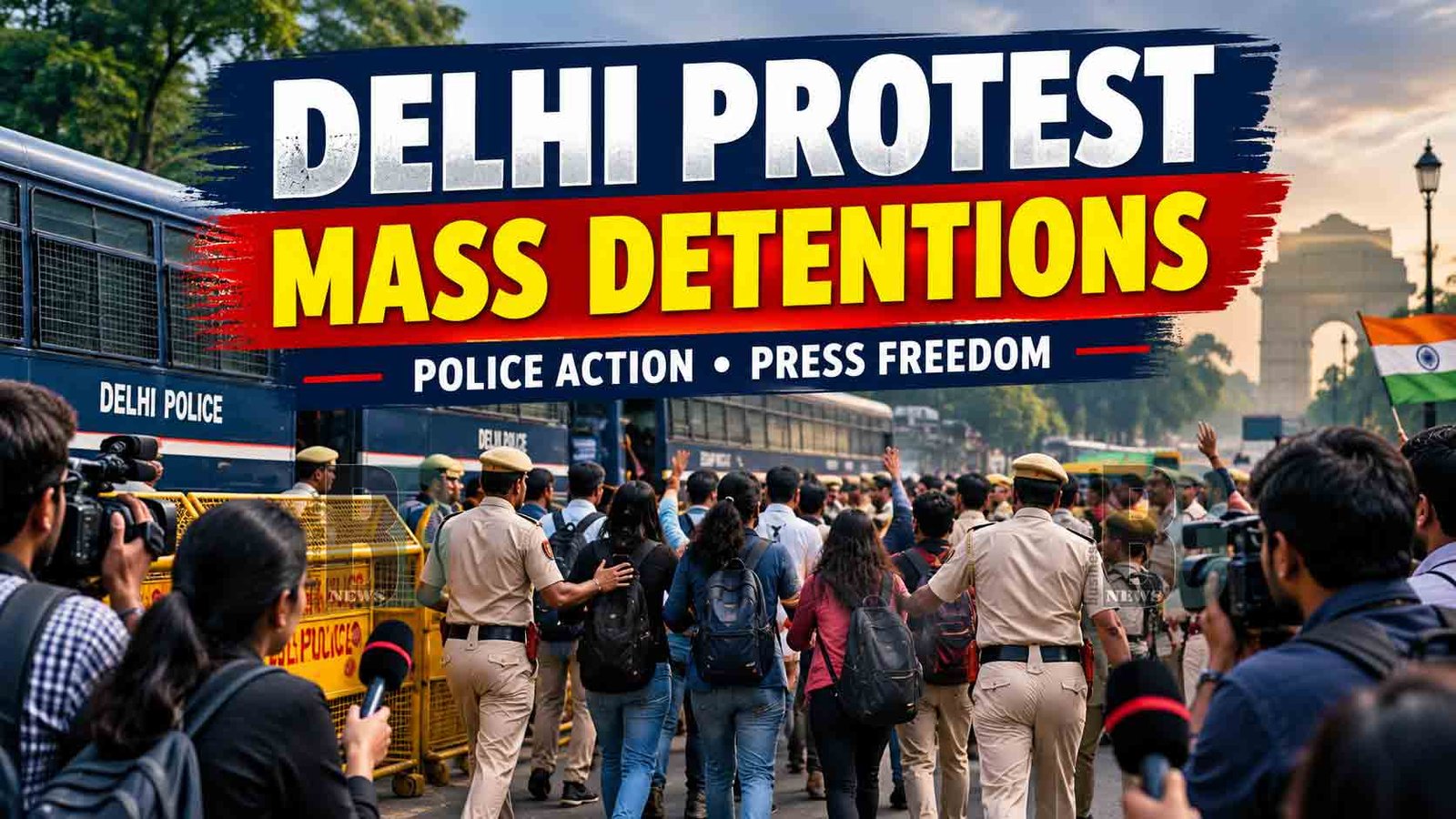
The events in Delhi during the October 10 CJP protest have raised serious questions about public safety, freedom of peaceful assembly, press freedom and the responsibility of law enforcement authorities. Multiple videos and reports have surfaced alleging assaults on protesters, threats against journalists and violent confrontations involving groups of men described in reports as members of right wing organisations. These incidents demand more than social-media arguments. They demand answers, evidence and accountability.
Reports from Connaught Place and near the MCD Civic Centre describe protesters being slapped, kicked, dragged and threatened. Journalists covering the events were also reportedly threatened or obstructed. Some accounts allege that assaults occurred in the presence of police personnel, raising questions about whether sufficient steps were taken to protect those being attacked. Delhi Police, meanwhile, said officers had rescued and assisted a woman in one reported incident. These accounts must be investigated impartially, and responsibility must be established on the evidence.
When Journalists Are Threatened, the Public’s Right to Know Is at Risk
- Reports from October 10 describe journalists being stopped while covering the protest, taken away on police buses despite carrying press identification, and allegedly having phones or reporting equipment confiscated. Journalists organisations raised concerns over the detentions and demanded protection for journalists performing their professional duties.
- A journalist’s role is not to please the police, a political party, a protest group or a crowd. It is to document events and report verified facts. Any threat, assault, obstruction or unlawful seizure of reporting equipment must be examined seriously. Equally, journalists must follow the law and professional standards. Press freedom cannot depend on whether a report is politically convenient.
- On October 9, the National Human Rights Commission took suo motu cognisance of allegations made by three women journalists concerning police misconduct during an earlier Jantar Mantar protest and sought a detailed report from the Delhi Police Commissioner within two weeks. The allegations remain subject to investigation. The NHRC’s action underscores the need for a transparent response.
The Safety and Dignity of Women and Minor Girls Must Be Non-Negotiable
- Separate claims circulating online concerning the treatment of girls, alleged inappropriate physical contact and detention after sunset must also be examined. The original footage, identities of the individuals involved, police records and statements from affected families should be independently verified. No allegation should be declared proven before investigation but neither should a serious complaint be dismissed without a fair inquiry.
- The law provides safeguards for women. Section 43(5) of the Bharatiya Nagarik Suraksha Sanhita generally restricts the arrest of women between sunset and sunrise, subject to an exceptional procedure requiring a written report by a woman police officer and prior permission from a Judicial Magistrate of the First Class. It is not a universal 6 PM cutoff, and the legality of any particular detention depends on the facts and applicable law.
- Where minors are involved, authorities must establish their ages, the circumstances of any detention and whether the relevant legal protections were followed. Their identities and privacy must be protected.
The Authorities Must Answer Difficult Questions
- If groups of men are able to threaten or assault protesters in heavily policed areas, the public deserves to know what steps were taken to prevent the violence, identify the perpetrators and protect victims. If police personnel themselves are accused of misconduct, those complaints must be investigated independently and fairly.
- Delhi Police have reported arrests in connection with a viral video assault case. That is a relevant step, but it does not settle every allegation arising from the wider events. Each incident requires its own evidence based investigation, and anyone found guilty must face appropriate legal action.
The questions are straightforward:
- Were all complaints of assault, threats and harassment properly registered and investigated?
- Were journalists allowed to document events safely, and were any devices or recordings unlawfully seized or deleted?
- Were police personnel who witnessed violence required to intervene, and were their actions recorded?
- Were all detentions lawful, properly documented and subject to the required safeguards?
- Will the authorities publish a clear account of the action taken and the outcome of the investigations?
A Call for Accountability not Political Excuses
- Prime Minister Narendra Modi’s “Beti Bachao, Beti Padhao” slogan carries a broader public expectation: the safety and dignity of girls must be protected in practice, not merely celebrated in words. The same principle applies to every citizen, regardless of political belief, ideology, gender or participation in a protest.
- The right to peaceful assembly is protected by the Constitution, subject to lawful restrictions. That right does not permit violence by protesters or counter protesters. Nor should a protest become an excuse for intimidation, indiscriminate detention or interference with legitimate journalism.
Business Galaxy calls for an impartial, time bound investigation into reported assaults on protesters, alleged intimidation of journalists and all complaints involving women and minors. Authorities should preserve CCTV footage, identify those involved, protect witnesses, disclose the legal basis for detentions and take action against anyone found responsible.
Democracy is tested not only by how authorities manage a peaceful day, but by how they respond when people are threatened, injured or prevented from reporting what they witness.
The public deserves facts. Victims deserve justice. Accountability must apply to everyone.