
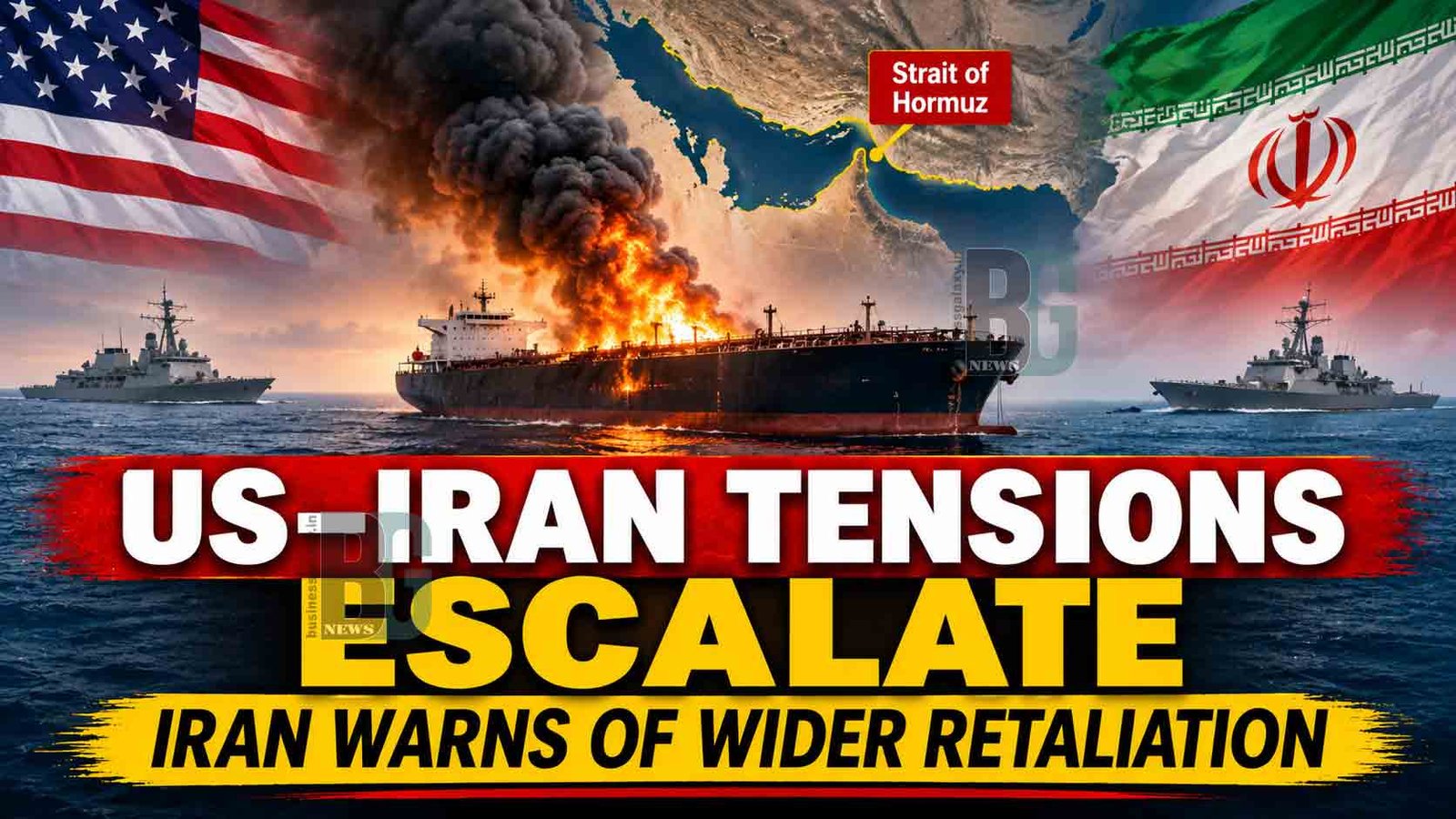
The possibility of renewed military confrontation between the United States and Iran is raising concerns across the Middle East following reports that Washington has warned regional allies to prepare for possible military action against Tehran.
Iran, meanwhile, has issued strong warnings that any new American attack could trigger a wider regional conflict. The latest tanker incident in the strategically important Strait of Hormuz has added to fears of further escalation.
However, the United States has not officially confirmed any decision to launch another attack against Iran.
1. Why Are Reports of a Possible US Attack Increasing?
- According to media reports, the United States has warned Middle Eastern allies to prepare for the possibility of renewed attacks against Iran and potential Iranian retaliation.
- Some reports suggest that President Donald Trump could consider military action after the November 3 US midterm elections.
- However, these reports do not establish that a final decision has been taken. US Secretary of State Marco Rubio has said that President Trump has not made a decision on further military action.
2. Iran Issues Strong Warning to the United States
- Iran’s Supreme Leader, Mojtaba Khamenei, has reportedly instructed the country’s armed forces to maintain maximum military readiness and ensure an immediate and effective response to any new attack.
- Iranian military officials have also warned that another American military operation could expand the conflict across the region.
- Tehran’s position is that any renewed attack would not necessarily remain limited to Iranian territory.
3. Oil Tanker Fire in the Strait of Hormuz
- The latest maritime incident has added to concerns about a possible escalation.
- On October 31, Iran’s Islamic Revolutionary Guard Corps (IRGC) Navy claimed that an oil tanker had struck a naval mine and caught fire while using what Iran described as an unauthorised shipping route.
- The tanker was reportedly carrying more than two million barrels of crude oil.
- Separately, the UK Maritime Trade Operations (UKMTO) reported that a vessel was struck by an unidentified projectile approximately 40 nautical miles south of Iran’s Lavan Island.
- According to the maritime agency, the crew was safe and no environmental impact had been reported.
- It has not been independently established whether the two reports refer to the same vessel or whether a naval mine caused the fire.
4. How Could Iran Respond to Another US Attack?
- Iran has indicated that any renewed military action could trigger a broader response.
Possible areas of escalation include:
- Missile and drone attacks: Iran could target military facilities and strategic sites in the region.
- Strait of Hormuz: Further disruption to commercial shipping could affect international oil transportation.
- Regional conflict: Fighting could spread to other parts of the Middle East.
- US military facilities: American bases and military assets in the region could face retaliation.
Although Iran’s conventional military capabilities have suffered damage during the conflict, its ability to disrupt regional security and shipping remains a significant concern.
5. Are Diplomatic Efforts Still Continuing?
- Despite the strong military statements, diplomatic efforts are continuing.
- Qatar has been involved in regional diplomatic discussions aimed at preventing renewed fighting between Washington and Tehran.
- Reports also indicate that communication has taken place between American and Iranian representatives through intermediaries.
- Issues surrounding sanctions, maritime restrictions, the Strait of Hormuz and the possibility of restarting negotiations remain important obstacles.
6. Why Is the Strait of Hormuz So Important?
- The Strait of Hormuz is one of the world’s most important energy transportation routes.
- A significant share of global oil and liquefied natural gas shipments passes through this narrow waterway.
Any prolonged military confrontation or disruption to commercial shipping could:
- Increase international crude oil prices.
- Affect fuel prices in importing countries, including India.
- Disrupt global energy supply chains.
- Increase shipping and insurance costs.
- Create uncertainty in international markets.
What Happens Next?
- The coming days could be important for US–Iran relations, particularly after the November 3 American midterm elections.
- The international community will be closely watching Washington’s military decisions, Iran’s response, developments in the Strait of Hormuz and Qatar’s diplomatic efforts.
The central question remains whether both countries will return to negotiations or move towards another military confrontation.
At present, the possibility of renewed conflict remains a serious concern, but a new US attack on Iran has not been officially confirmed.
Business Galaxy | International News