

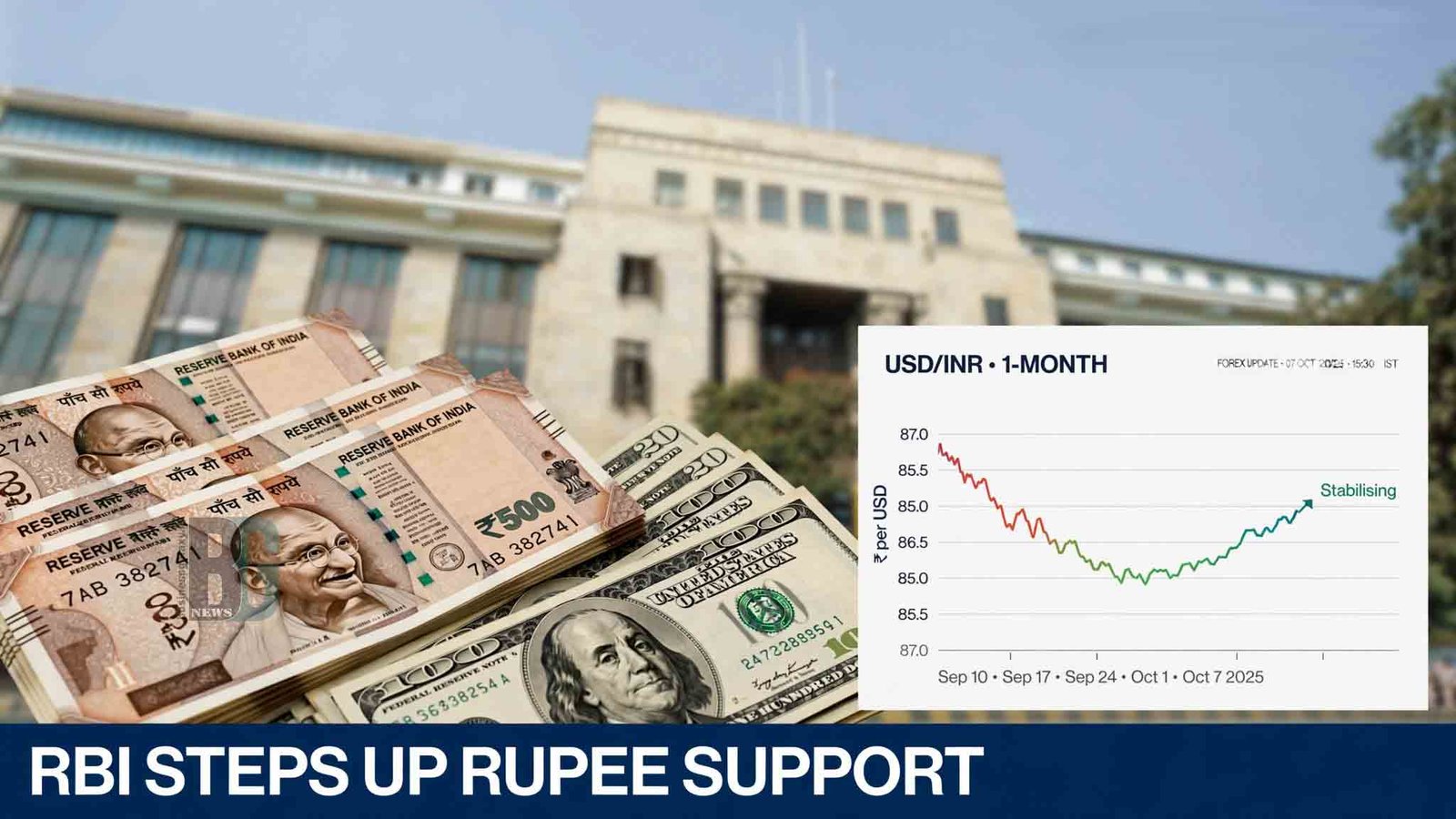
New Delhi: The Reserve Bank of India (RBI) is increasing its efforts to support the Indian rupee as global economic pressures continue to affect the currency.
The RBI has been selling US dollars in the foreign exchange market to prevent the rupee from falling sharply. The move comes as oil prices rise and US Treasury yields remain high, both of which can put pressure on the Indian currency.
Rupee Remains Under Pressure
- The Indian rupee has faced pressure against the US dollar this year. However, RBI intervention and strong foreign currency inflows have helped the currency recover recently.
- On September 1, the rupee closed at around ₹94.95 against the US dollar, reaching a two month high.
- The RBI is expected to continue intervening when necessary to reduce sharp movements in the currency market.
Forex Reserves Reach Record Level
- India’s foreign exchange reserves have risen to a record $729.33 billion as of August 21.
- The increase gives the RBI a stronger financial cushion to manage sudden movements in the currency market and deal with external economic pressures.
- In simple terms, forex reserves are India’s foreign currency savings and other reserve assets. The RBI can use these reserves when needed to maintain stability in the foreign exchange market.
Strong Foreign Currency Inflows
- A major reason for the increase in reserves has been strong foreign currency inflows.
- India attracted about $136.38 billion through special measures introduced by the RBI in June. A large part came from foreign-currency deposits by Non-Resident Indians (NRIs), along with external commercial borrowings and overseas foreign currency borrowings.
- These inflows were much higher than initially expected, giving the RBI additional room to manage the rupee.
Why Is the RBI Supporting the Rupee?
- A weaker rupee can make imports more expensive. This is particularly important for India because the country imports a large amount of crude oil.
- If oil prices rise while the rupee weakens, India’s import bill can increase further. This can also create pressure on inflation and affect household expenses.
Foreign Investment Remains a Concern
- Foreign investment flows are another important factor affecting the rupee.
- Foreign investors have withdrawn significant amounts of money from Indian equities this year, putting additional pressure on the currency.
- At the same time, India’s strong domestic economic growth provides support for the country’s overall financial position.
What Happens Next?
- The RBI is expected to remain active in the foreign exchange market in the coming months.
- India’s large foreign exchange reserves give the central bank greater ability to limit sudden falls in the rupee. However, crude oil prices, US interest rates, foreign investment and global geopolitical tensions will continue to influence the currency.
In Simple Words
The Indian rupee is facing pressure because of higher oil prices and global financial conditions. But India’s record foreign exchange reserves of around $729 billion give the RBI greater strength to manage the currency and prevent sudden falls.