

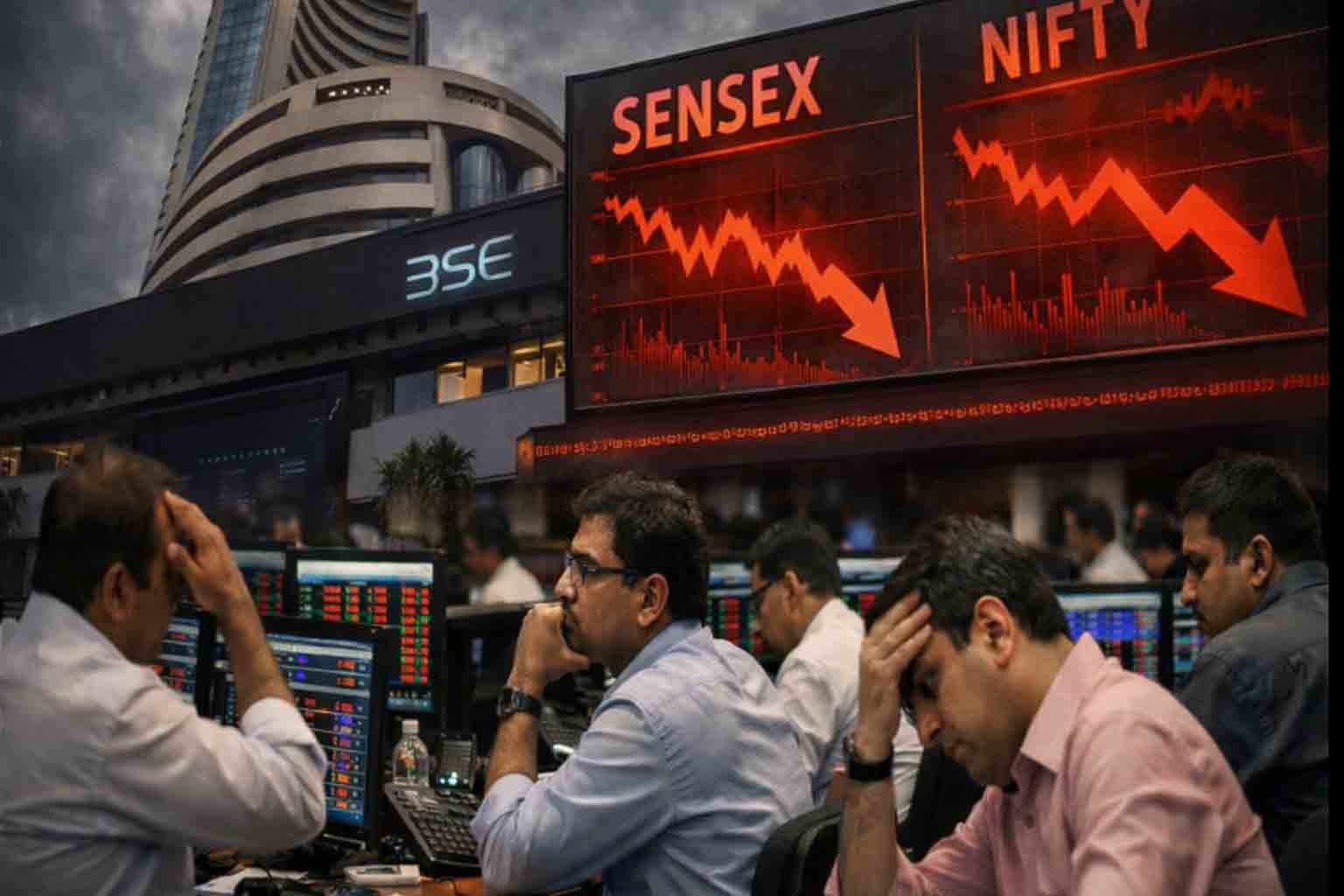
Mumbai: Indian equity markets extended their losing streak on Monday, August 17, with the Nifty 50 declining for the fifth consecutive session as elevated crude oil prices and continuing geopolitical tensions in the Middle East weighed on investor sentiment.
The Nifty 50 closed at 24,287.65, down 0.32%, while the BSE Sensex ended at 77,728.16, declining 281.85 points or 0.36%. Both benchmarks recovered from their intraday lows but remained in negative territory at the close.
Why did the market fall?
- The continuing conflict involving the US and Iran remained a major concern for investors, keeping crude oil prices elevated. Brent crude moved close to $89 per barrel during the session.
- Higher oil prices are particularly important for India because the country depends heavily on crude oil imports. A sustained rise in crude prices can increase import costs, put pressure on the rupee and potentially raise inflationary concerns.
Market sentiment was also affected by:
- Weak global market cues
- Continued foreign investor selling
- Strengthening of the US dollar
- Weakness in IT and PSU stocks
- Lack of major domestic triggers following the quarterly earnings season
Nifty extends losing streak
- Monday’s decline marked the Nifty 50’s fifth consecutive session of losses. The Sensex also closed lower, reflecting continued caution among investors.
- Despite weakness in the major benchmarks, some mid cap and small cap stocks showed resilience during the session.
- Stocks in focus
- BSE Ltd declined around 3.3% following a downgrade by Jefferies. PhysicsWallah gained around 2.4% after reporting a narrower quarterly loss.
- Reliance Industries gained around 0.8%, outperforming the broader market.
Rupee under pressure
- The Indian rupee also remained under pressure and weakened against the US dollar. Rising crude oil prices and changing global capital flows are adding to pressure on the currency.
- India’s strong foreign exchange reserves, however, provide an important cushion against external financial pressures.
What investors will watch next
- Investors will closely monitor developments surrounding the US-Iran conflict, crude oil prices, foreign institutional flows and movements in the rupee.
- Any further escalation in geopolitical tensions could increase volatility in Indian equities and put additional pressure on energy sensitive sectors.
- With the domestic earnings season largely behind the market, global developments and macroeconomic factors are expected to remain important drivers of trading activity.
- For now, the Nifty’s five session losing streak highlights the cautious mood prevailing in Indian markets amid geopolitical uncertainty and elevated energy prices.