
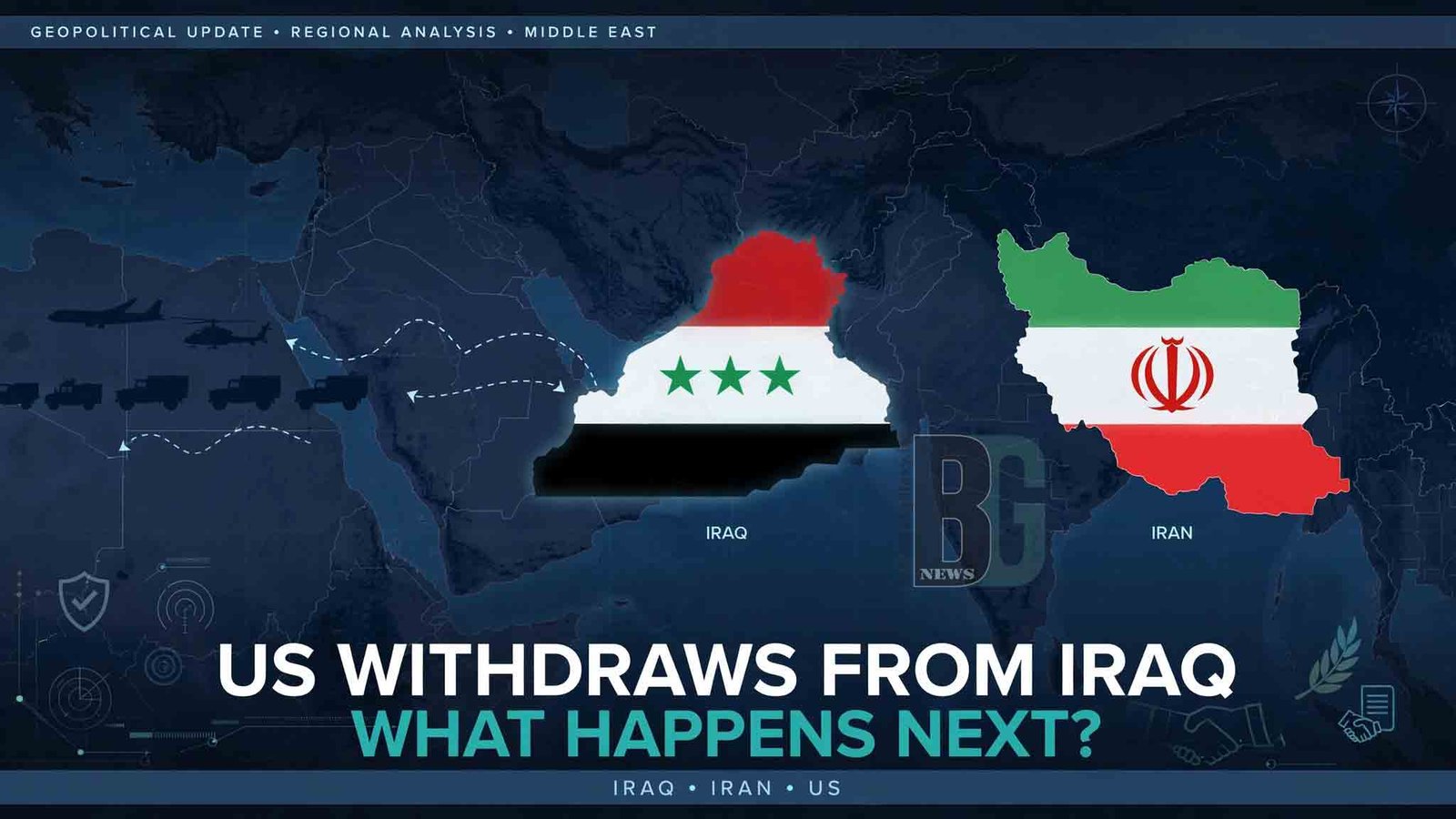
The United States has completed the withdrawal of its remaining military forces from Iraq, ending a more than two decade long military presence in the country. The development has triggered renewed debate over Iraq’s security, Iran’s regional influence and the future role of the United States in the Middle East.
The withdrawal marks a major change in the security relationship between Washington and Baghdad. While US military operations in Iraq have been significantly reduced over recent years, American personnel had continued to support counter terrorism efforts and provide intelligence, training and other assistance.
What Does the US Withdrawal Mean?
- The US military presence in Iraq dates back to the 2003 invasion that removed Saddam Hussein’s government. More than two decades later, Washington has now ended its remaining military deployment under an agreement reached in 2024.
- The withdrawal was completed during the Trump administration, although the decision and framework for ending the US military mission had been agreed earlier.
- The United States lost thousands of service members during the Iraq war and subsequent military operations. The end of the deployment therefore represents a significant milestone in US-Iraq relations.
Iran’s Influence in Iraq
- One of the central questions following the US withdrawal is how the balance of influence inside Iraq could change.
- Iran has maintained extensive political, economic and security ties with Iraq, particularly through relationships with powerful Shiite political and armed groups.
- Several Iran aligned militias are part of Iraq’s broader Popular Mobilization Forces (PMF), which were formally incorporated into Iraq’s security structure after playing a major role in fighting ISIS.
- Iran and some allied groups have described the US departure as a strategic achievement.
- Analysts cited by international media have also warned that Tehran could have greater room to expand its influence now that the US military footprint has been reduced.
- However, this does not automatically mean that Iran will gain complete control over Iraq. Iraqi political institutions, security forces and competing regional interests remain important factors.
Concerns About Pro-Iran Militias
- The Iraqi government is also facing the difficult issue of armed groups operating within the country.
- Prime Minister Ali al-Zaidi’s government has been seeking greater state control over armed formations and has discussed plans for militia disarmament.
- Some powerful groups have resisted calls to surrender their weapons, creating a potential challenge for Baghdad.
- The government has reportedly set a longer term timetable extending into 2027 for dealing with the issue.
- The situation could become particularly complicated if armed factions reject government orders or continue operating independently of the Iraqi state.
What About ISIS?
- Another major concern is the continued threat from ISIS sleeper cells.
- Although ISIS lost the territory it once controlled in Iraq, the group has not completely disappeared. Small cells can still conduct attacks, particularly in remote areas.
- US forces had provided intelligence, surveillance, logistical and counter terrorism support to Iraqi security forces.
- With the military withdrawal, Iraq will have greater responsibility for conducting counter terrorism operations and maintaining internal security.
- US support may continue in other forms, including intelligence cooperation, training and technical assistance.
Why the Timing Matters
- The withdrawal comes at a particularly sensitive period in US-Iran relations.
- The United States and Iran remain involved in a broader regional confrontation, while Iran maintains relationships with armed groups in Iraq and elsewhere in the Middle East.
- Some analysts therefore argue that the reduction of the American military presence could provide Tehran and Iran aligned groups with additional political and strategic space.
- Former Clinton administration speechwriter Paul Glastris has also argued that the timing of the withdrawal could have consequences for US leverage in relation to Iran and its regional allies.
- However, assessments about whether the withdrawal will ultimately strengthen Iran remain matters of analysis rather than an established outcome.
Iraq’s Balancing Challenge
- Iraq now faces the difficult task of maintaining its sovereignty while balancing relationships with both the United States and Iran.
- Baghdad has strong economic, political and security ties with Tehran, while the United States remains an important partner in areas including security cooperation, intelligence, training and economic relations.
- The Iraqi government will therefore need to manage competing pressures while attempting to prevent armed groups from becoming stronger than state institutions.
What Happens Next?
The US military withdrawal does not necessarily mean the end of the US-Iraq relationship.
Future cooperation is expected to focus more heavily on:
➤ Intelligence sharing
➤ Counter terrorism cooperation
➤ Training and capacity building
➤ Technical and logistical assistance
➤ Diplomatic and economic relations
For Iraq, the key challenges will include maintaining internal security, preventing an ISIS resurgence, managing armed groups and balancing relations with Washington and Tehran.
For the United States, the withdrawal represents a major reduction in its direct military footprint in Iraq, while questions remain about how Washington will maintain influence and respond to developments involving Iran and regional armed groups.
Important Note
Claims that the US withdrawal will definitely strengthen Iran are analytical assessments, not established facts. The actual impact will depend on Iraq’s internal political decisions, the behaviour of Iran aligned groups, the ISIS threat and the future relationship between Baghdad, Washington and Tehran.