

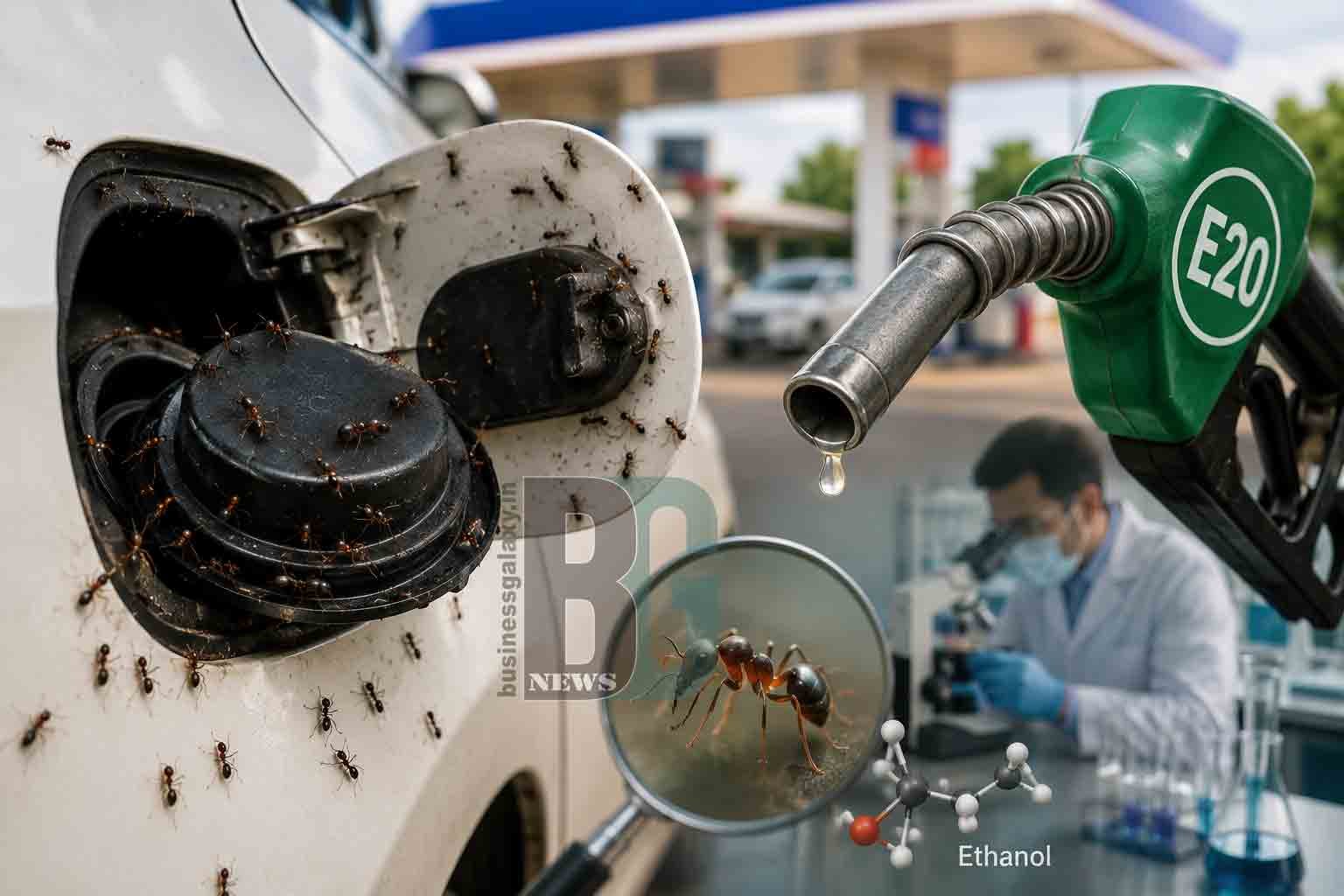
In recent days, several videos and posts circulating on social media have claimed that insects, particularly ants, are being attracted to vehicles because of ethanol blended petrol. One viral video reportedly showing ants swarming around a vehicle’s fuel cap sparked widespread debate and concern among motorists.
The videos have triggered questions among vehicle owners, many of whom are already concerned about the impact of ethanol blended fuel on mileage, engine performance and maintenance costs. However, there has been little official communication specifically addressing the insect-attraction claims, leaving room for speculation and misinformation.
Scientists and entomologists say the issue is more complex than many social media posts suggest. Ethanol is produced through fermentation, and some insects are naturally capable of detecting ethanol like odors because they associate them with fermenting fruits and plant material. This means certain insects may be attracted to ethanol vapors under specific conditions.
However, experts stress that ethanol-blended petrol does not contain sugar and insects are not being attracted because the fuel is made from sugarcane. During the production process, sugars are converted into alcohol and removed from the final fuel product.
Industry analysts note that while some insects may respond to ethanol odors, there is currently no scientific evidence showing that E20 petrol is causing widespread insect infestations in vehicles. They also point out that factors such as heat, moisture, food residues and lighting conditions can attract insects far more strongly than fuel vapors.
The broader concern, analysts say, is the lack of clear and consistent public communication. As videos continue to circulate online, many consumers are looking for detailed explanations from fuel suppliers, automobile manufacturers and government agencies. Experts believe transparent information and independent scientific studies will be essential to address public concerns and prevent misinformation from spreading further.
The Ministry of Petroleum and Natural Gas has previously stated that several concerns circulating on social media regarding ethanol blended petrol are not supported by scientific evidence and has cited studies conducted by automotive and petroleum research institutions.
For now, experts advise motorists not to rely solely on viral videos and social media claims. Instead, they recommend waiting for detailed scientific investigations before drawing conclusions about any direct link between ethanol blended petrol and insect activity.