
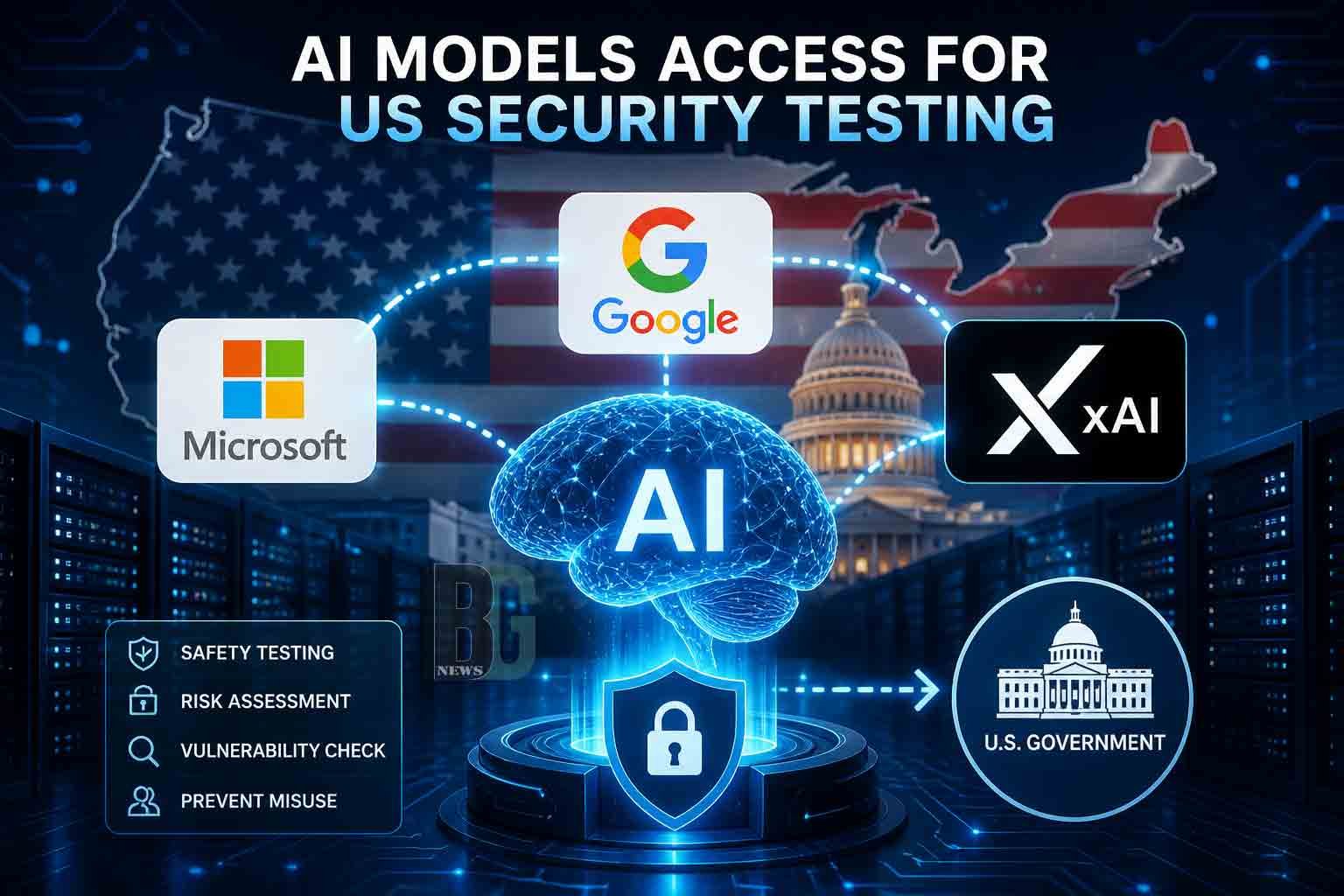
In a major step toward strengthening artificial intelligence oversight, leading tech companies including Microsoft, Google and xAI have agreed to provide the United States government with access to their advanced AI models for security testing.
The move is part of broader efforts by the U.S. government to ensure that rapidly developing AI systems are safe, reliable and do not pose risks to national security.
What This Means
Under this initiative, government agencies will be able to:
- Test AI models for potential vulnerabilities
- Identify risks such as misuse, bias, or security threats
- Evaluate how AI systems behave under sensitive or high risk scenarios
The goal is to detect problems early and prevent harmful use of AI technologies.
Why This Matters
As AI becomes more powerful and widely used, concerns have grown about:
- Cybersecurity threats
- Misinformation and deepfakes
- Misuse of AI in critical systems
By allowing government testing, companies aim to build trust and ensure their technologies are deployed responsibly.
Industry Government Cooperation
This collaboration reflects increasing cooperation between tech companies and regulators. Firms like Microsoft and Google have already been working on AI safety frameworks, while xAI is also positioning itself as a key player in responsible AI development.
Concerns and Debate
While the move has been welcomed as a step toward safer AI, it also raises questions:
- How much access will governments have?
- Will this affect user privacy?
- Could it lead to tighter control over AI innovation?
Experts say balancing innovation and regulation will be critical.
Big Picture
The decision highlights how governments worldwide are taking a more active role in regulating AI. As the technology evolves, such partnerships could become standard to ensure safety without slowing progress.
Conclusion
The agreement between major tech companies and the US government marks an important step in AI governance. By opening their models for security testing, companies are aiming to address risks early while building public confidence in the future of artificial intelligence.