
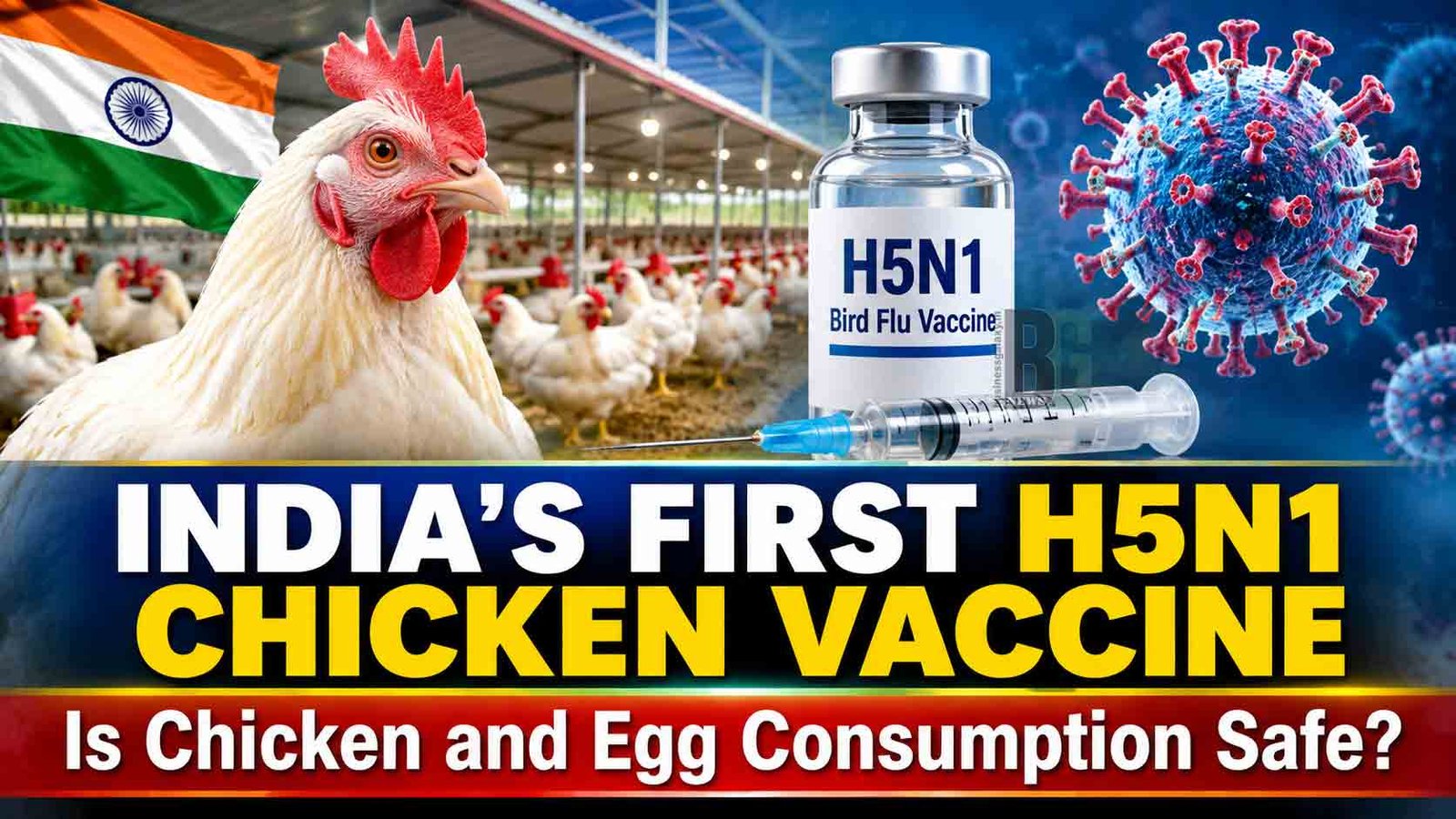
India’s first indigenous H5N1 vaccine aims to protect poultry against bird flu, but questions remain over vaccine effectiveness, disease surveillance and food safety. Health experts advise caution, not unnecessary panic.
New Delhi: India’s development of its first indigenous vaccine against the highly pathogenic H5N1 bird flu virus in chickens has attracted nationwide attention. While the Government describes the development as an important step towards protecting poultry farms and controlling recurring bird flu outbreaks, it has also raised questions among consumers about the safety of chicken and eggs.
Some social media discussions and online health advisories have urged people to avoid chicken and eggs because of bird flu concerns. Others have questioned why chickens need vaccination if poultry products are already considered safe when properly cooked.
Amid these concerns, the important question is whether consumers should stop eating chicken and eggs or simply follow appropriate food safety precautions.
Government Introduces India’s First Indigenous H5N1 Vaccine
- The vaccine has been developed by scientists at the Indian Council of Agricultural Research National Institute of High Security Animal Diseases (ICAR-NIHSAD), Bhopal.
- Union Agriculture and Farmers Welfare Minister Shivraj Singh Chouhan formally dedicated the indigenous vaccine technology on November 20, 2026.
- The inactivated vaccine targets H5N1 Clade 2.3.2.1a, a strain associated with several bird flu outbreaks in Indian poultry.
- According to the Ministry of Agriculture and Farmers Welfare, India has reported more than 500 combined outbreaks of H5N1 and H5N8 since the first detection of the disease in the country in 2006.
- The Government says the vaccine will strengthen poultry disease control, reduce financial losses for farmers and help limit the spread of the virus from chickens to other animals and humans.
What Is H5N1 and Why Is It Dangerous?
- H5N1 is a subtype of the influenza A virus commonly known as avian influenza or bird flu.
- It primarily affects birds, including chickens, ducks and wild birds. Highly pathogenic H5N1 can spread rapidly among poultry populations and cause severe illness and high mortality.
- Although human infections are uncommon, the virus can occasionally cross from animals to humans, particularly through close or unprotected contact with infected birds, their secretions, droppings or contaminated environments.
- The World Health Organization (WHO) has reported human infections, including severe and fatal cases. However, sustained human-to-human transmission has not been established.
- This does not mean the virus should be ignored. Scientists continue to monitor it because influenza viruses can change over time.
Why Does the Government Need to Vaccinate Chickens?
The vaccination programme is primarily intended to protect poultry, farmers and the wider poultry industry.
Bird flu outbreaks can result in:
- Large scale deaths among infected poultry.
- Mass culling of birds to contain outbreaks.
- Destruction of eggs and poultry feed.
- Restrictions on poultry transportation and trade.
- Financial losses for farmers and businesses.
- Disruption to chicken and egg supplies.
The vaccine is designed to stimulate the chicken’s immune system against the targeted H5N1 strain.
An important point is that the vaccine is inactivated, meaning it contains a virus that has been rendered non-infectious. It is not a vaccine intended for human use.
Will Vaccination Completely Prevent Bird Flu?
This is one of the important questions raised by experts.
Vaccination can reduce the severity of infection and may reduce the amount of virus shed by infected birds. However, it does not necessarily guarantee that vaccinated chickens cannot become infected.
Health experts have therefore stressed that vaccination must be supported by:
- Regular laboratory testing and disease surveillance.
- Proper cleaning and disinfection of poultry farms.
- Preventing contact between domestic poultry and wild birds.
- Safe disposal of dead or infected birds.
- Monitoring poultry movements and suspected outbreaks.
- Prompt reporting of unusual bird deaths.
Dr Amit Saraf, Director of Internal Medicine at Jupiter Hospital, Thane, has highlighted that vaccination could help reduce human exposure by controlling infection in poultry. However, he has also emphasised that vaccination alone is not sufficient and must be combined with surveillance and farm level biosecurity.
The central concern is that vaccinated birds could potentially become infected without showing obvious symptoms. If monitoring is weak, an outbreak could go undetected.
Therefore, the effectiveness of the programme will depend not only on the vaccine but also on how consistently poultry farms implement disease control measures.
Why Are Some Consumers and Social Media Users Advising People to Avoid Chicken?
- The announcement has generated questions and discussions about whether chicken and eggs should remain part of people’s daily diets.
- Some consumers are concerned about the possibility of infected birds entering the food supply. Others question whether poultry vaccination means the disease is more widespread than officially acknowledged.
- There are also general warnings circulating on social media advising people to avoid chicken and eggs during bird flu concerns.
- However, a distinction must be made between personal precautionary advice and scientifically established public-health guidance.
- No reliable evidence identified in the reports reviewed establishes that the public in India must stop eating commercially available chicken or eggs simply because an H5N1 vaccine has been developed.
- The WHO states that properly prepared and thoroughly cooked poultry meat and eggs can be safely consumed. It identifies direct or indirect exposure to infected birds and contaminated environments as the principal risks of human infection.
Business Galaxy could not independently authenticate specific influencers or establish that a recognised group of medical experts has advised the general public to stop eating chicken altogether. Such claims should not be attributed to named individuals without checking their original statements and qualifications.
Is It Safe to Eat Chicken from Vaccinated Farms?
According to available scientific guidance, vaccination against H5N1 does not automatically make chicken meat unsafe for human consumption.
An inactivated poultry vaccine is designed to stimulate immunity in birds. It does not mean that the meat contains infectious H5N1 virus.
However, consumers should understand that vaccination and food safety are two different issues.
- Vaccination helps protect poultry against disease.
- Food hygiene helps prevent contamination during handling and preparation.
- Thorough cooking destroys avian influenza viruses.
- Meat from sick or unexpectedly dead birds should never be consumed.
The WHO states that there is no evidence that avian influenza viruses are transmitted to humans through properly prepared and cooked poultry or eggs.
What Are the Main Concerns That the Government Should Address?
Although the indigenous vaccine is an important development, public-health experts, consumers and poultry farmers have legitimate questions that deserve clear answers.
- Vaccine effectiveness
What percentage of chickens are protected? How long does immunity last? Are there publicly available field-trial results? - Monitoring vaccinated birds
How will authorities identify infections in vaccinated chickens that may not show obvious symptoms? - Commercial rollout
Which poultry farms and states will receive the vaccine first? Will vaccination be compulsory or targeted at high-risk areas? - Food safety transparency
Will the Government publish clear guidance about the safety of meat and eggs from vaccinated poultry, including any applicable regulatory requirements? - Poultry farm conditions
Are farms following adequate hygiene, ventilation, disinfection and biosecurity standards? Vaccination cannot compensate for poor farm management.
These questions are important for consumer confidence and the long-term success of the vaccination programme.
What Should Chicken and Egg Consumers Do?
Consumers do not need to panic or automatically eliminate chicken and eggs from their diets. However, responsible food handling is essential.
The following precautions are recommended:
- Purchase chicken and eggs from reliable and hygienic suppliers.
- Avoid raw or undercooked chicken.
- Cook poultry thoroughly.
- Cook eggs properly rather than consuming them raw or undercooked.
- Keep raw chicken separate from cooked food.
- Wash hands, knives and cutting boards after handling raw poultry.
- Never purchase or consume sick birds or birds found dead unexpectedly.
- Follow local government advisories if bird flu is detected in a particular area.
People who handle poultry professionally should use appropriate protective measures, particularly when working with sick or dead birds.
Anyone developing fever, cough, breathing difficulties or eye irritation after possible exposure to infected birds should seek medical attention and inform the doctor about the exposure.
Expert View: Caution Is Necessary, but Panic Is Not
- India’s indigenous H5N1 vaccine is an important development for poultry disease prevention. It could help protect farmers from severe economic losses and reduce opportunities for the virus to spread.
- However, its success will depend on effective implementation, regular testing, farm hygiene and transparent reporting.
- The public should not confuse the development of a poultry vaccine with an official warning that chicken and eggs are unsafe.
- At the same time, authorities should not dismiss consumer concerns. Clear information about vaccine trials, poultry monitoring, outbreak locations and food safety standards is essential.
The message for consumers is straightforward: Do not follow unverified social media warnings blindly, but do not ignore official bird flu advisories either. Properly sourced, handled and thoroughly cooked chicken and eggs are considered safe under WHO guidance.
Source: Press Information Bureau (PIB), Ministry of Agriculture and Farmers Welfare; ICAR-NIHSAD; World Health Organization (WHO); India Today; The Indian Express; NDTV.
Business Galaxy – Reporting Facts. Shaping Futures.