
Gold is often seen as a safe asset. But history shows that governments have, at times, placed strict controls on gold ownership.
What happened in the United States?
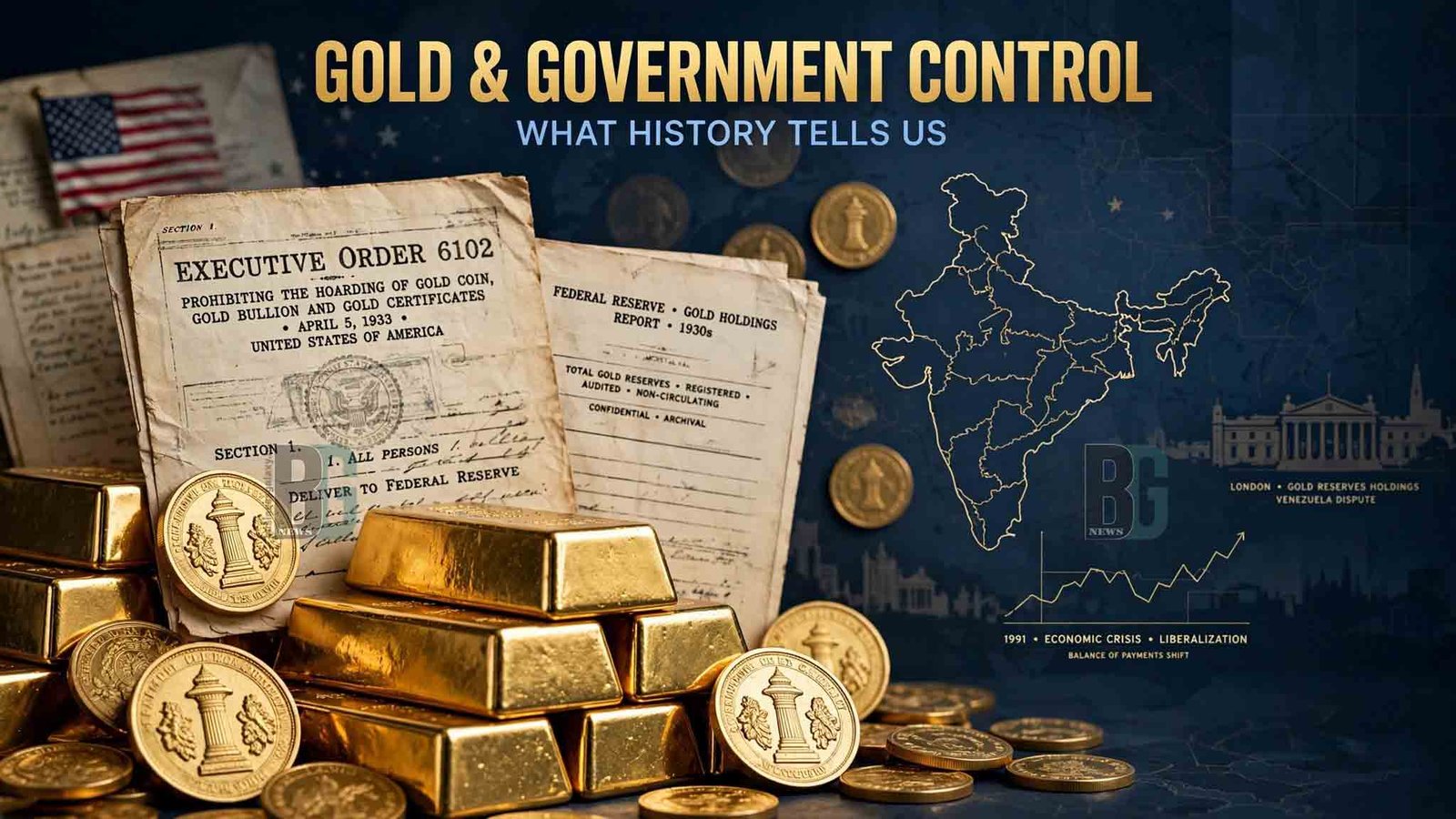
- In 1933, U.S. President Franklin D. Roosevelt issued Executive Order 6102.
- The order required people to surrender most gold coins, gold bullion and gold certificates to the government. The official price was $20.67 per troy ounce.
- People who deliberately violated the order could face a fine of up to $10,000, imprisonment of up to 10 years, or both. However, the order included certain exemptions.
- About nine months later, the U.S. government officially raised the price of gold to $35 per ounce under the Gold Reserve Act of 1934.
- Restrictions on private ownership of gold continued in different forms for decades and were eventually ended in 1974.
India’s gold control history
- India also introduced restrictions on gold during the 1960s.
- Following the 1962 period, gold controls were introduced in 1963, and the Gold (Control) Act, 1968 imposed further restrictions on the possession and trading of certain forms of gold.
- The Gold (Control) Act was later repealed in 1990.
What happened during India’s 1991 crisis?
- In 1991, India faced a serious balance of payments crisis.
- To raise emergency foreign exchange, the Reserve Bank of India arranged for about 46.91 tonnes of gold to be pledged as collateral with the Bank of England and the Bank of Japan.
- The gold was later recovered and returned to India.
What about Venezuela?
- Venezuela’s gold reserves held at the Bank of England have also been involved in a long running legal dispute over who has the right to control them.
- This is different from the U.S. 1933 situation because it concerns sovereign gold reserves and a legal dispute, not the confiscation of gold from ordinary citizens.
What does history tell us?
- These examples show that gold can become an important issue during financial or economic crises and that governments can introduce restrictions under particular laws and circumstances.
- However, there is currently no basis in these historical examples to say that the Indian government is planning to take gold from citizens.
- The question is therefore historical and hypothetical:
If a government introduced major restrictions on private gold ownership in the future, how would people respond?
History gives us examples. The future is a separate question.