
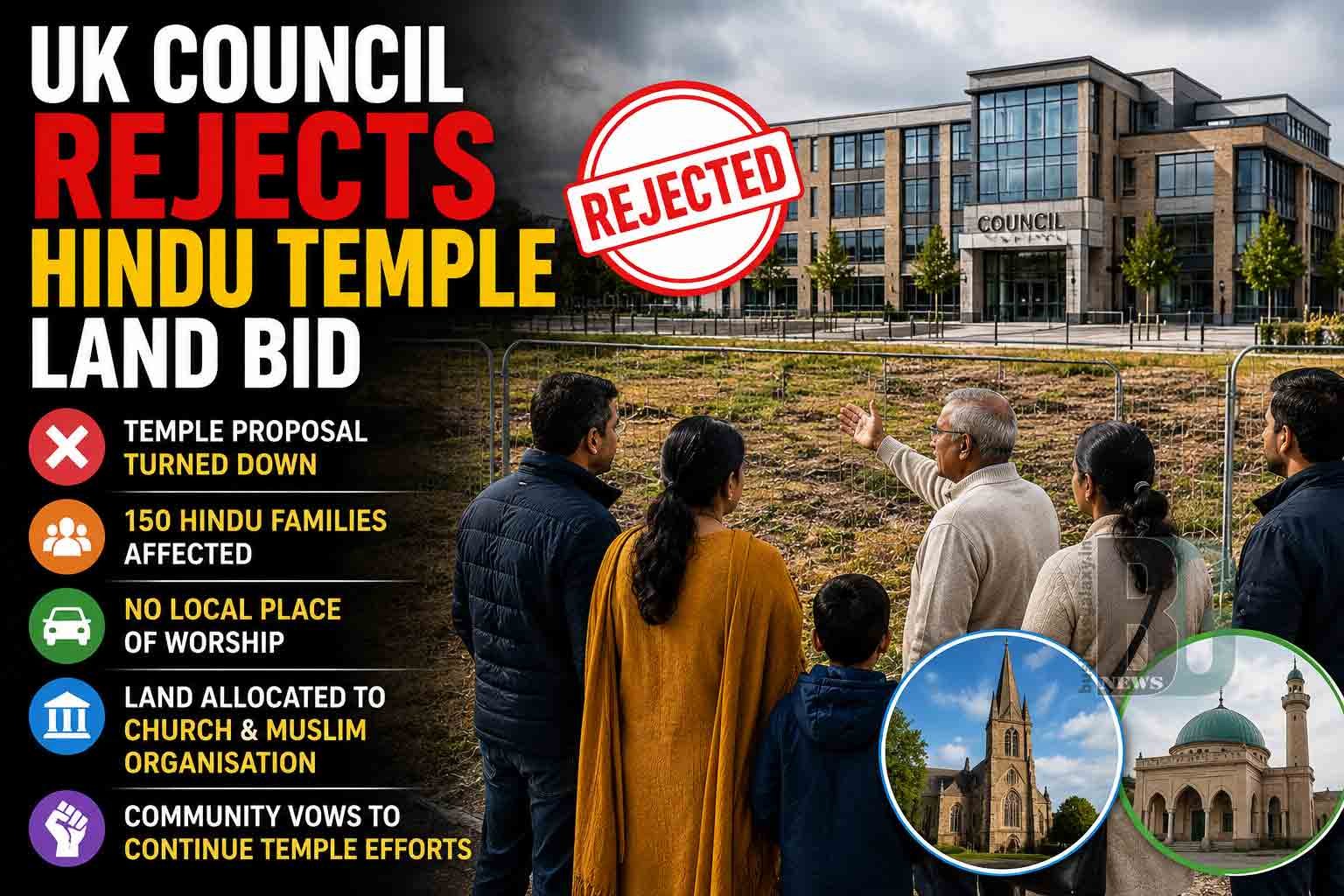
The Hindu community in Northstowe, Cambridgeshire, has expressed disappointment after the local council rejected its proposal for land to build the town’s first Hindu temple and community centre, instead selecting bids from a church network and a Muslim organisation for the available faith use plots.
The proposal was submitted by Hindu Samaj Northstowe, which had planned to develop a Hindu temple along with an interfaith community centre. The group said the project was intended to serve as a place of worship, cultural activities, educational programs and community events while encouraging dialogue between different faiths.
However, during the council’s evaluation process, the proposal received a lower overall score than a competing application from the Northstowe Church Network, which was awarded one of the designated faith use sites. Another plot was allocated to a local Muslim organisation.
The decision has affected nearly 150 Hindu families living in and around Northstowe. Community members say they currently have no dedicated place of worship in the town and must travel to nearby cities and towns to visit the nearest Hindu temple, making it difficult to hold regular religious ceremonies, festivals and cultural gatherings.
Representatives of Hindu Samaj Northstowe said they were disappointed by the outcome but remain committed to finding alternative opportunities to establish a permanent Hindu temple and community centre as the town continues to grow.
The issue comes at a time when another dispute involving a Hindu temple is unfolding elsewhere in the UK. In Peterborough, trustees of a decades old Hindu temple are pursuing legal action after the local council approved the sale of the temple site to an Islamic organisation. The temple management argues the decision threatens the future of the long established place of worship, while the matter remains before the courts.
The Northstowe council has stated that the land allocation process was based on predetermined evaluation criteria, including community benefit, financial viability and long term sustainability and that all applications were assessed using the same standards. The council maintains that the decision was made through a competitive process and was not based on the religion of the applicants.
The rejection has nevertheless sparked concern among many members of the local Hindu community, who say they hope future opportunities will allow them to establish a permanent place of worship and preserve their cultural heritage in the rapidly expanding town.