
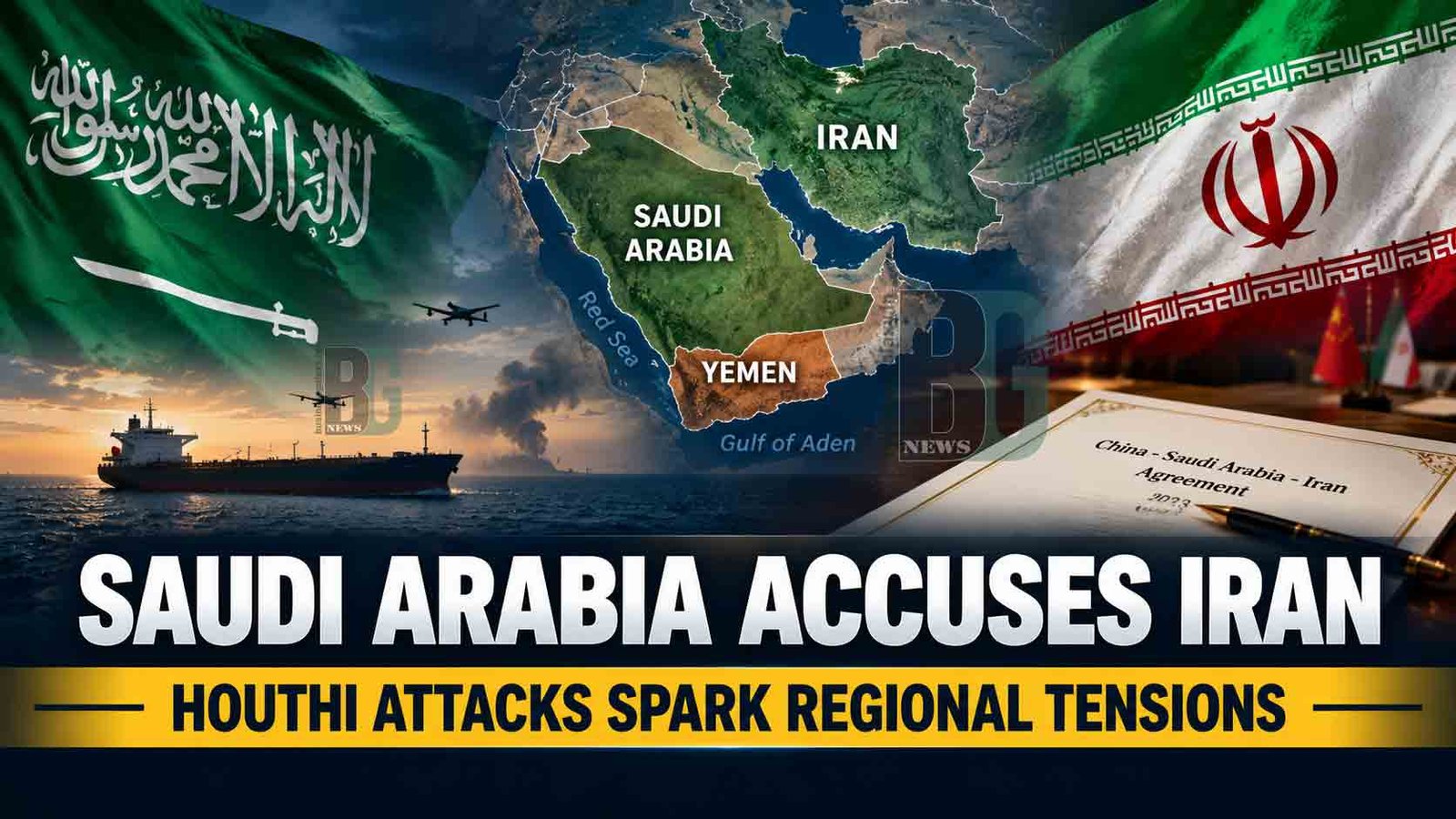
RIYADH: Saudi Arabia has accused Iran of encouraging an escalation in Houthi attacks against the kingdom, alleging that Tehran continues to arm, train and support the Yemen based armed group in violation of relevant United Nations Security Council resolutions and commitments under the China brokered agreement between Riyadh and Tehran.
Rayed Krimly, Saudi Arabia’s Deputy Minister for Public Diplomacy at the Foreign Ministry, made the allegations during a virtual briefing with journalists on October 15, according to the Associated Press.
Krimly said Saudi Arabia believed Iran was encouraging the latest phase of Houthi attacks. Iran had not immediately responded to requests for comment on the specific allegations.
Saudi Arabia Reports Attacks on Key Infrastructure
- The Saudi allegations follow a series of reported Houthi attacks targeting important infrastructure, including King Khalid International Airport in Riyadh, facilities associated with Saudi oil company Aramco and other aviation, military and energy related sites.
- Saudi officials said the attacks had caused casualties and raised concerns about the kingdom’s ability to protect critical infrastructure. The Saudi-led coalition also reported repeated targeting of Riyadh’s international airport.
- The escalation has added pressure on Saudi Arabia as it seeks to protect its territory, economic infrastructure and international trade routes.
Dispute Over the China Brokered Agreement
- Saudi Arabia and Iran agreed to restore diplomatic relations under an agreement announced in Beijing in March 2023, after a seven year diplomatic rupture.
- The agreement was intended to improve relations, respect state sovereignty and reduce regional tensions. Riyadh now argues that Iran’s alleged support for Houthi military operations conflicts with its commitments under that understanding.
- The two countries have nevertheless maintained direct communication channels. Krimly said Saudi officials remained in contact with Tehran even as tensions increased.
Saudi Arabia Says Houthi Talks Were Rejected
- Krimly said Saudi Arabia had sought a meeting with the Houthis in Oman to address outstanding differences and end the escalation, but the group declined to participate, according to the report.
- Oman has played a facilitating role in communications between the parties. Saudi Arabia says it continues to maintain direct channels with the Houthis.
- The latest developments have complicated diplomatic efforts to prevent the conflict from spreading further across the region.
Iran Calls for Diplomacy
- Iran has publicly advocated a diplomatic approach to the confrontation. Iranian Foreign Minister Abbas Araghchi has urged Saudi Arabia to pursue a political solution and criticised Saudi military action and restrictions affecting the Houthis.
- This position contrasts with Riyadh’s allegation that Tehran is encouraging further attacks. The claims about Iran’s role remain allegations made by Saudi officials and should be distinguished from independently verified findings.
Regional and Global Implications
- The escalation has raised concerns about regional security, oil infrastructure and commercial shipping. Saudi Arabia lies between two strategically important maritime areas: the Strait of Hormuz and the Red Sea approaches near the Bab el-Mandeb Strait.
- Disruption around these routes can affect energy shipments, shipping costs, insurance premiums and international trade.
- Saudi Arabia has called for greater security cooperation while continuing diplomatic contacts with regional partners. The situation also places renewed attention on efforts by international mediators to prevent a wider regional confrontation.
What Happens Next?
- The immediate challenge is to reduce attacks, protect civilian and economic infrastructure, and restore a diplomatic path toward de-escalation.
- For now, Saudi Arabia’s accusation that Iran is encouraging Houthi attacks remains contested. Iran’s response to the specific allegations and further independently verified information will be important in assessing the extent of Tehran’s role.
Source: Associated Press reporting and statements by Saudi Foreign Ministry official Rayed Krimly.