

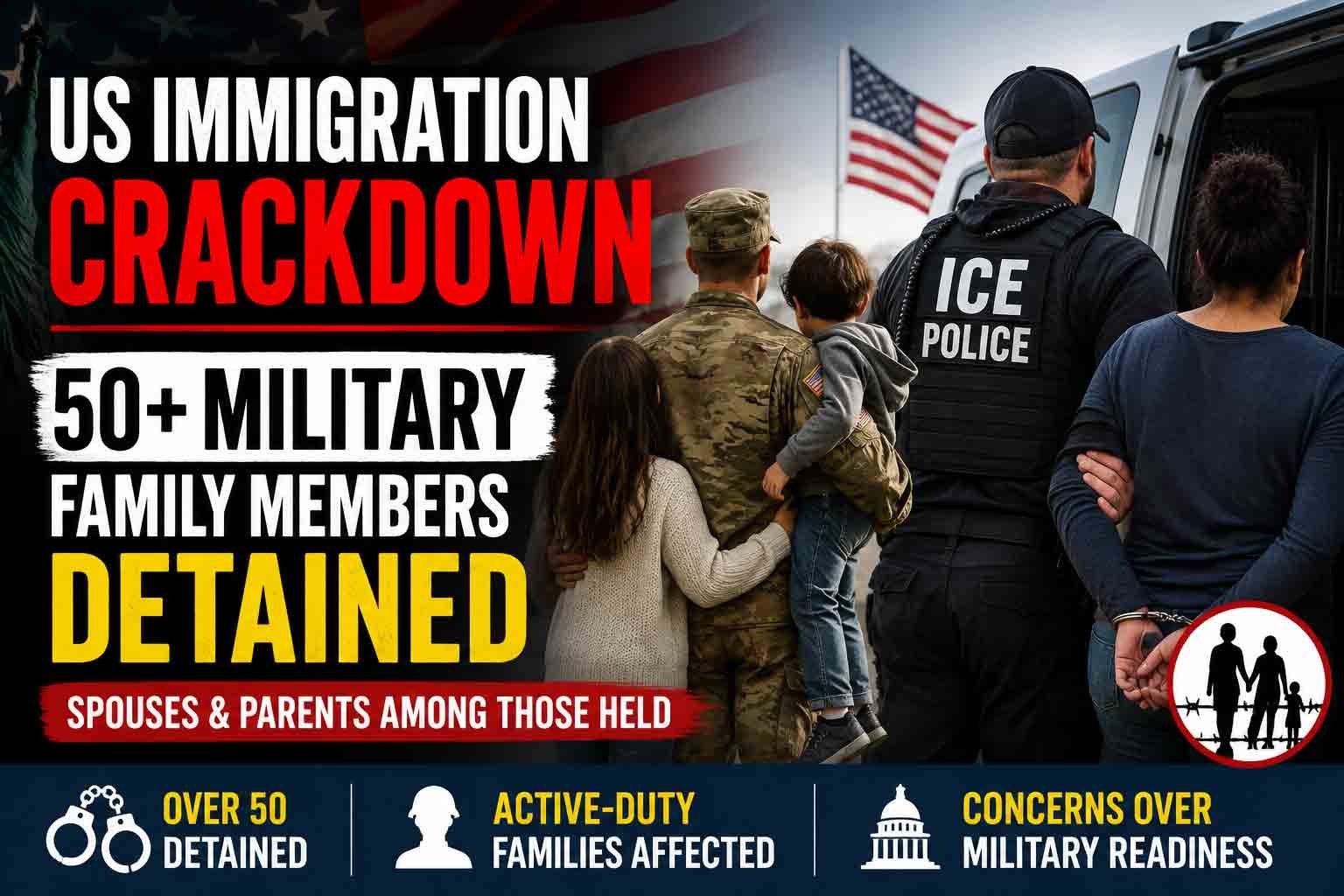
Washington: The Trump administration’s intensified immigration enforcement has expanded to the families of active duty U.S. military personnel, with more than 50 spouses and parents reportedly detained since President Donald Trump began his second term.
At least six of those family members have reportedly been deported, while several others remained in federal immigration custody. The actual number could be higher because the U.S. government does not maintain a specific tally of military family members detained by immigration authorities.
A Shift in Longstanding Practice
- For years, undocumented spouses, parents and other close relatives of U.S. service members have received special consideration from immigration authorities.
- One important program, known as Military Parole in Place, can allow certain undocumented relatives of military personnel to remain temporarily in the United States while seeking lawful immigration status.
- However, recent cases indicate that some military relatives are now being detained even while trying to use immigration programs available to military families.
Military Families Caught in Enforcement
- In one case, the wife of an active duty Army sergeant was detained while attending an immigration appointment connected to a Military Parole in Place application. She reportedly spent about a month in federal custody before being released.
- Another case involved the wife of an Army staff sergeant who was detained at a Louisiana military installation while seeking legal immigration status.
- These cases have raised concerns among military families and immigration advocates about the impact of the administration’s enforcement policies.
Concerns Over Military Readiness
- Critics argue that detaining or deporting spouses and parents can place significant pressure on active duty service members.
- Military families may suddenly face childcare problems, financial difficulties and separation, potentially affecting the morale and readiness of service members.
- Advocates also argue that the treatment of military family members appears inconsistent with longstanding efforts to protect military families from immigration related disruptions.
Government Defends Enforcement
- The U.S. Department of Homeland Security has defended the immigration crackdown, arguing that military service does not automatically provide lawful immigration status to a service member’s relatives.
- Officials maintain that undocumented individuals remain subject to U.S. immigration laws regardless of their relationship with military personnel.
Congress Raises Concerns
- The issue has prompted lawmakers to seek answers from federal agencies.
- More than 60 Democratic lawmakers have reportedly requested information from the Department of Homeland Security, Department of Defense and Department of Veterans Affairs regarding the detention and deportation of military family members.
- Lawmakers are particularly concerned about whether the policy could negatively affect troop morale, family stability and military readiness.
Why It Matters
- The controversy highlights a significant change in the treatment of undocumented relatives of U.S. military personnel.
- Supporters of the administration’s policy say immigration laws must be enforced regardless of family connections. Critics argue that detaining military spouses and parents could undermine military families and create additional challenges for active duty personnel.
- The issue is expected to remain part of the wider debate over the Trump administration’s aggressive immigration enforcement policies.