
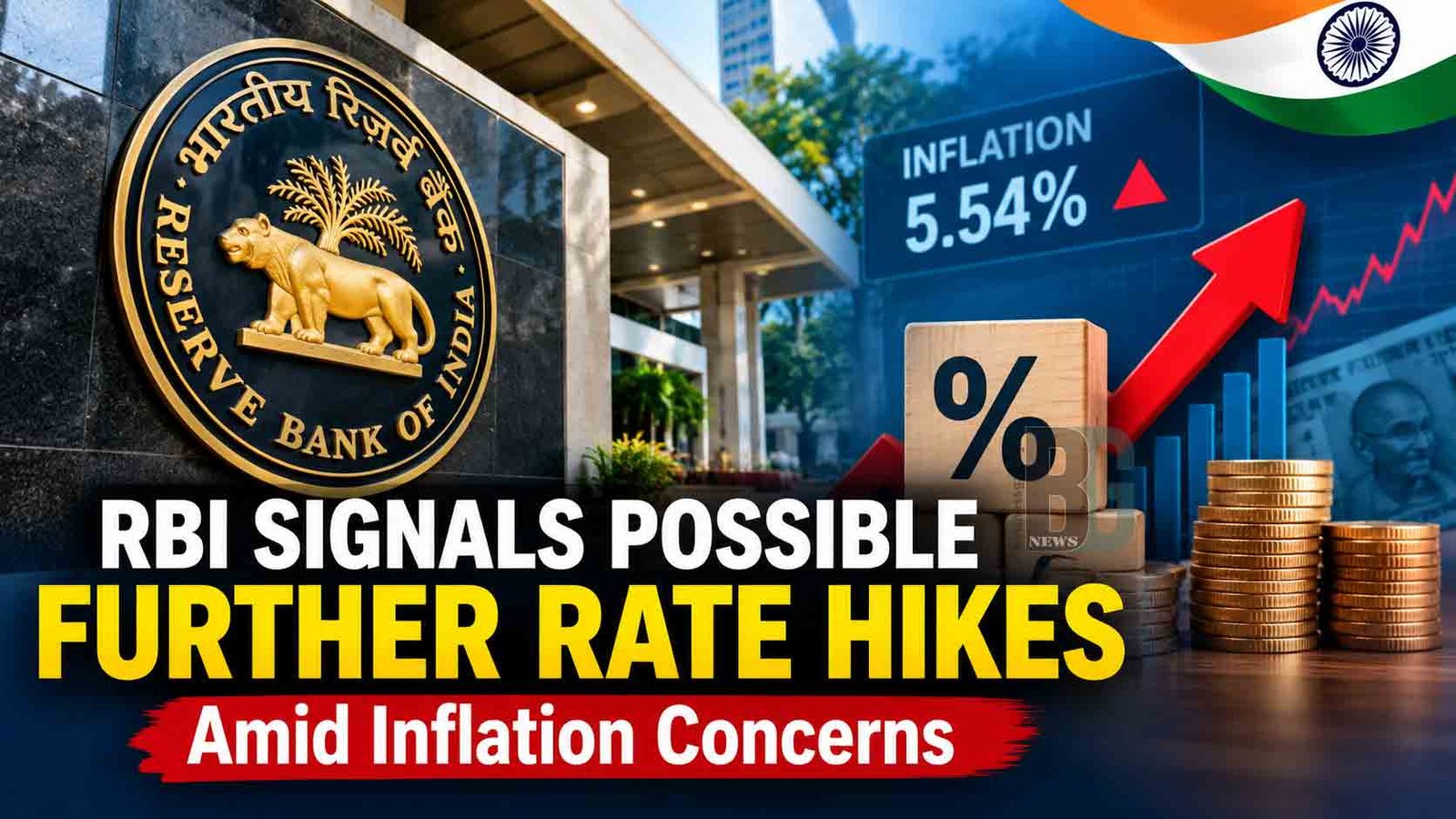
MUMBAI: The Reserve Bank of India (RBI) has indicated that further interest rate increases may be necessary to control rising inflation, as price pressures spread across different parts of the economy. However, policymakers remain divided over how quickly and how far interest rates should rise.
According to the minutes of the RBI’s Monetary Policy Committee (MPC) meeting held from October 5 to 7, all six members voted to increase the benchmark repo rate by 25 basis points, taking it from 5.25% to 5.50%. This was the first rate increase in nearly four years.
The committee also changed its policy stance from “neutral” to “calibrated tightening”, indicating that interest rate cuts are unlikely in the near term while inflation remains a concern.
Why is the RBI concerned about inflation?
- Retail inflation rose to 5.54% in September, approaching the RBI’s upper tolerance limit of 6%.
- The central bank expects inflation to average around 6% during the October-December quarter. It has also raised its inflation forecast for the 2026-27 financial year to 5.2%.
- Higher crude oil prices, tensions in West Asia and inadequate monsoon rainfall have added to concerns about rising energy and food costs.
- The RBI is also monitoring whether higher costs for businesses are being passed on to consumers through increased prices for goods and services.
RBI members differ over further rate hikes
- Although all six MPC members supported the October rate increase, two members, Nagesh Kumar and Ram Singh, opposed changing the policy stance to calibrated tightening.
- Some members believe the central bank should act early to prevent inflation from becoming more widespread. Others have warned that aggressive interest rate increases could weaken economic growth and borrowing demand.
- RBI Governor Sanjay Malhotra said the duration and extent of any further rate increases would depend on actual inflation trends, economic growth and whether price pressures become more persistent.
- The minutes therefore indicate that further hikes are possible, but the RBI has not announced a fixed schedule for future increases.
What does this mean for ordinary people?
- Home and personal loans: If banks raise lending rates following an RBI rate increase, borrowers with floating rate loans could face higher EMIs or longer repayment periods, depending on their loan terms.
- Business loans: Companies that depend on borrowing may face higher financing costs, potentially affecting expansion plans and investment.
- Depositors: Banks may offer more attractive deposit rates if market interest rates rise, although this is not guaranteed.
- Household budgets: If inflation continues to rise, families may face greater pressure from food, fuel, transport and other daily expenses.
- Economic growth: Higher interest rates can help control inflation but may also reduce borrowing, spending and investment if monetary tightening becomes too aggressive.
RBI raises growth forecast
- Despite inflation concerns, the RBI has raised its economic growth forecast for 2026-27 to 7.1%, reflecting its assessment of the economy’s growth prospects.
- The central bank now faces the challenge of containing inflation without unnecessarily slowing economic activity.
- The MPC’s next scheduled meeting is December 2-4, 2026. Its decision will depend on incoming inflation data, economic conditions and the extent to which rising costs spread across the economy.
Conclusion
- The RBI’s latest policy minutes signal a more cautious outlook for borrowers and financial markets. Further interest rate increases remain possible, but the timing and size of any future move are uncertain.
- Consumers, businesses and investors will closely monitor inflation data and the RBI’s next policy decision.
Source: RBI Monetary Policy Committee minutes, October 5-7, 2026; Reuters and Indian financial news reports published October 21, 2026.
Business Galaxy – Reporting Facts. Shaping Futures.