
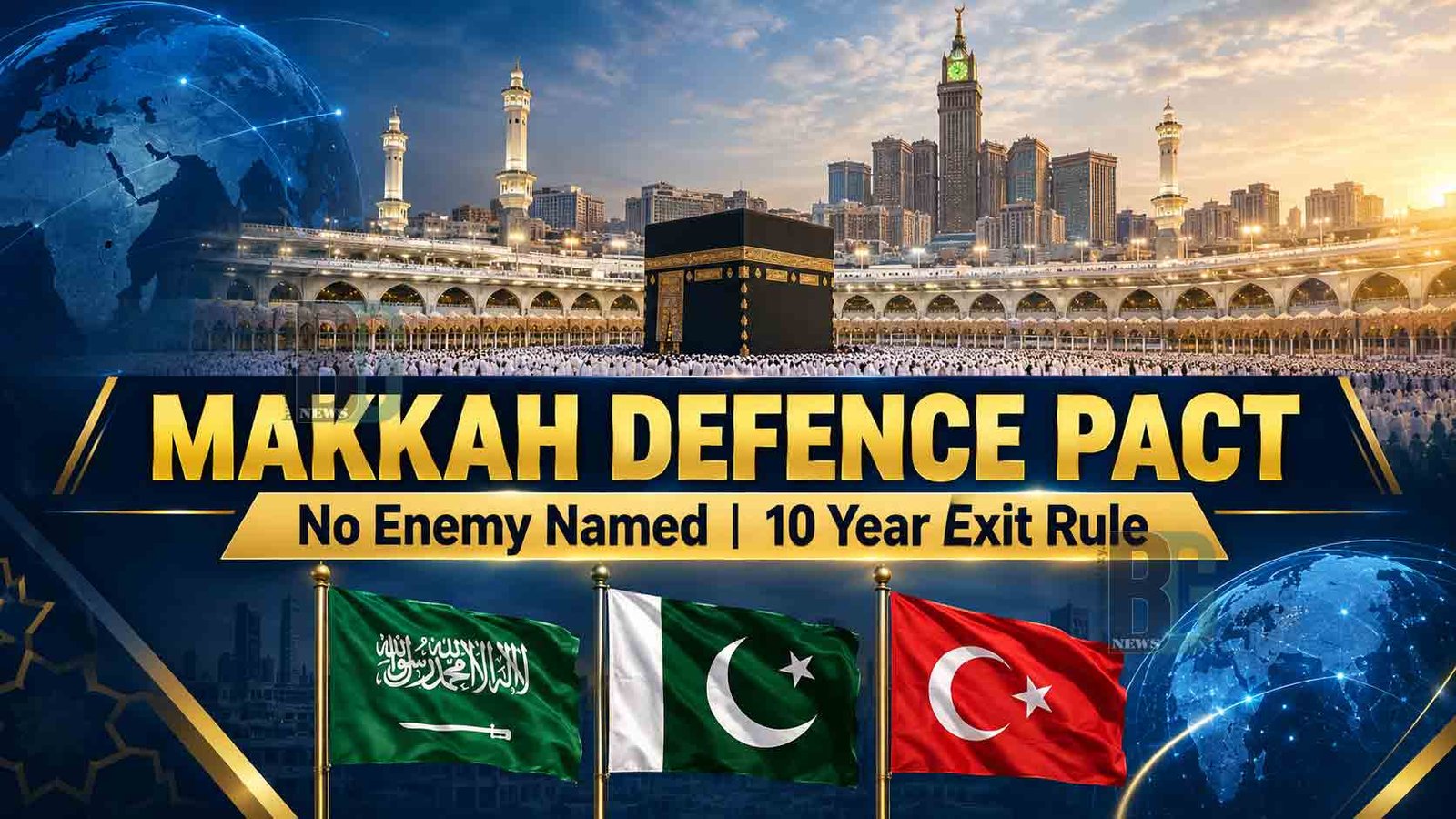
What is the Makkah Defence Pact?
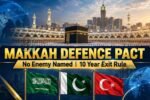
- Pakistan, Saudi Arabia and Turkiye have agreed to strengthen their defence and security cooperation through a joint defence agreement known as the Makkah Defence Pact.
- According to media reports, the agreement was signed on August 7 by Pakistani Prime Minister Shehbaz Sharif, Saudi Crown Prince Mohammed bin Salman and Turkish President Recep Tayyip Erdoğan.
- The main aim of the agreement is to help the three countries work together to protect their security and respond to military threats.
- One important point is that the agreement does not name any specific country as an enemy.
Key Points of the Agreement
- An attack on one member concerns all three
The agreement states that an armed attack on one member will be treated as an attack on all three countries. This means the other members are expected to support the country under attack, in accordance with the agreement. - No country is named as an enemy
The agreement does not identify India, Iran or any other country as its target. Therefore, claims that the pact was created specifically against a particular country should not be treated as confirmed facts without clear evidence. - Members face a 10 year withdrawal restriction
The agreement includes an important condition: a member cannot withdraw during the first 10 years after the pact officially enters into force.
After the 10 year period, a member can withdraw by giving at least three months written notice.
This means the 10 year period begins when the agreement officially takes effect, not necessarily on the date it was signed. - Stronger military cooperation
The three countries plan to improve cooperation between their armed forces. This may include joint military exercises, training and the exchange of defence knowledge. - Intelligence and security information sharing
The agreement provides for cooperation in sharing security and intelligence information. This could help the countries identify and respond to potential threats. - Defence technology and military supplies
The countries may also cooperate in developing defence technology, producing military equipment and providing supplies and logistical support when needed.
Has the Agreement Received Final Approval?
- According to reports, Turkiye has submitted the agreement to its parliament for ratification.
- Ratification means the formal approval required under a country’s legal process. The agreement’s entry into force depends on completion of the required procedures.
What Could This Mean for India and the Middle East?
- The agreement could strengthen military ties between Pakistan, Saudi Arabia and Turkiye. It may also influence security discussions in South Asia and the Middle East.
- However, the pact does not officially identify India or any other country as an enemy. It would be incorrect to claim that India is the target unless reliable evidence supports that conclusion.
- The agreement also does not automatically mean that the three countries will take exactly the same military action in every situation. The assistance provided would depend on the agreement and the circumstances of an attack.
Conclusion
- The Makkah Defence Pact aims to strengthen security and defence cooperation between Pakistan, Saudi Arabia and Turkiye.
- Its main provisions include mutual defence support, intelligence sharing, military cooperation and a restriction on withdrawal during the first 10 years after the agreement enters into force.
- The pact does not name a specific enemy country. Its actual impact will depend on the agreement’s legal status and how the three countries put its provisions into practice.
Business Galaxy – Reporting Facts. Shaping Futures.