

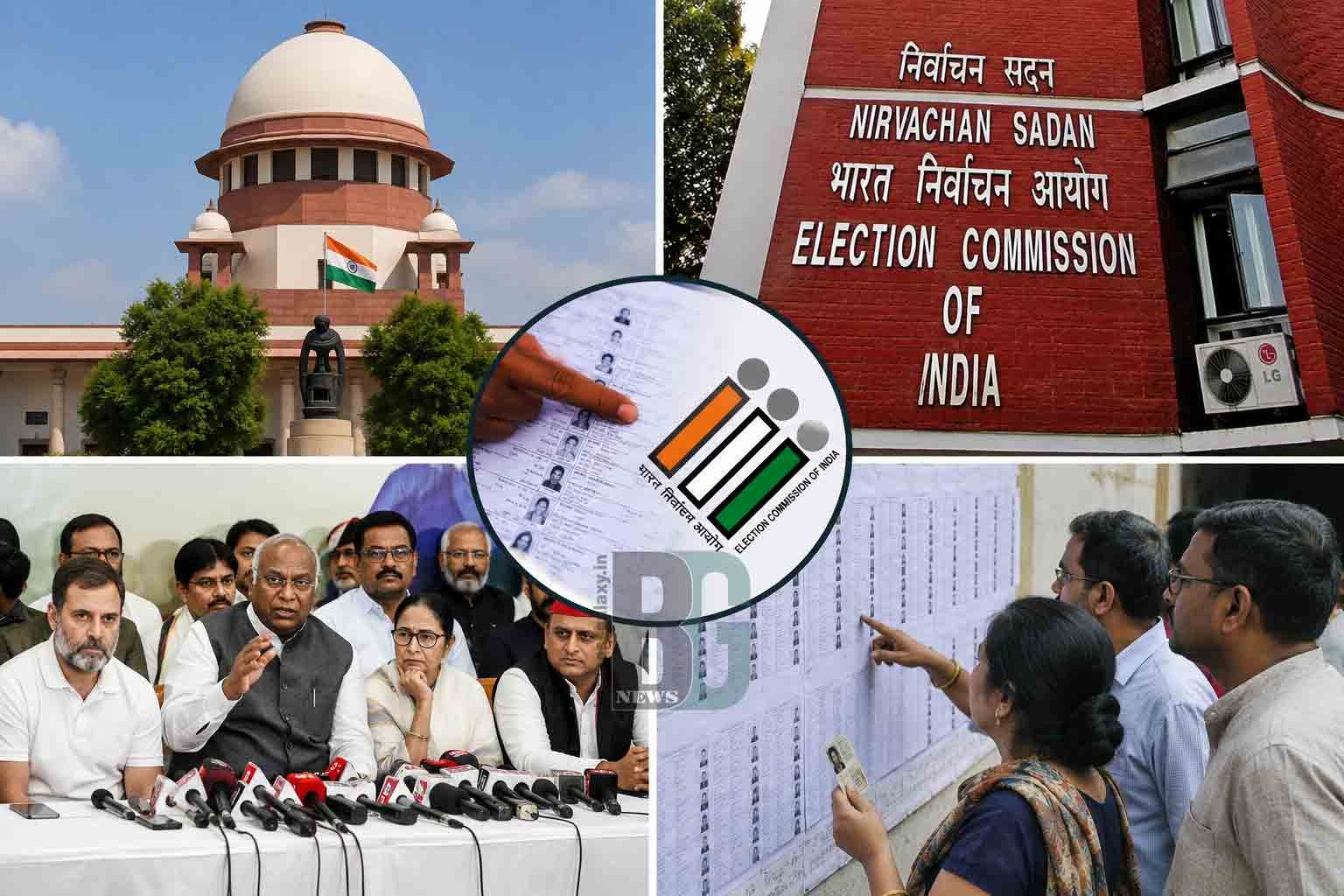
New Delhi: A political controversy has erupted after 23 opposition parties and an Independent Member of Parliament jointly wrote to Chief Justice of India Surya Kant, seeking judicial intervention over the Election Commission of India’s (ECI) Special Intensive Revision (SIR) of electoral rolls.
In their letter, the opposition parties expressed concerns that the large scale voter verification exercise could affect the fairness and transparency of future elections. They alleged that the process may result in the exclusion of eligible voters if not conducted with adequate safeguards and urged the judiciary to ensure that the constitutional right to vote is fully protected.
The signatories include leaders from the Congress, Trinamool Congress (TMC), Samajwadi Party (SP), Dravida Munnetra Kazhagam (DMK), Aam Aadmi Party (AAP) and several other opposition parties. According to the opposition, judicial oversight is necessary to maintain public confidence in the electoral process.
The Bharatiya Janata Party (BJP), however, rejected the allegations, stating that the Special Intensive Revision is a routine and legally sanctioned exercise aimed at updating electoral rolls by removing duplicate, shifted, or deceased voters while ensuring the accuracy of voter lists. The party accused the opposition of attempting to politicize a standard administrative process.
Experts Urge Transparency
Constitutional and election law experts say that periodic revision of electoral rolls is essential for maintaining the integrity of elections. However, they emphasize that such exercises must be carried out with complete transparency, clear communication, sufficient time for verification, and an accessible grievance redressal mechanism to ensure that no eligible voter is wrongly excluded.
Experts also note that public trust in democratic institutions depends not only on the accuracy of voter rolls but also on the confidence of political parties and citizens in the fairness of the verification process. They caution that allegations without credible evidence or lack of transparency could both undermine confidence in the electoral system.
Possible Future Impact
The dispute is expected to become a major political issue ahead of upcoming elections, with opposition parties likely to intensify their campaign over electoral reforms. If the Supreme Court decides to examine the matter, it could issue guidelines on how the Election Commission should conduct future intensive voter roll revisions.
The controversy may also prompt greater scrutiny of the Election Commission’s procedures and lead to discussions on strengthening safeguards for voter verification, improving transparency, and ensuring that every eligible citizen retains the right to vote.
The eventual impact of the issue will depend on the Supreme Court’s response, the Election Commission’s handling of the revision process, and the ability of all stakeholders to preserve public confidence in India’s democratic institutions.