

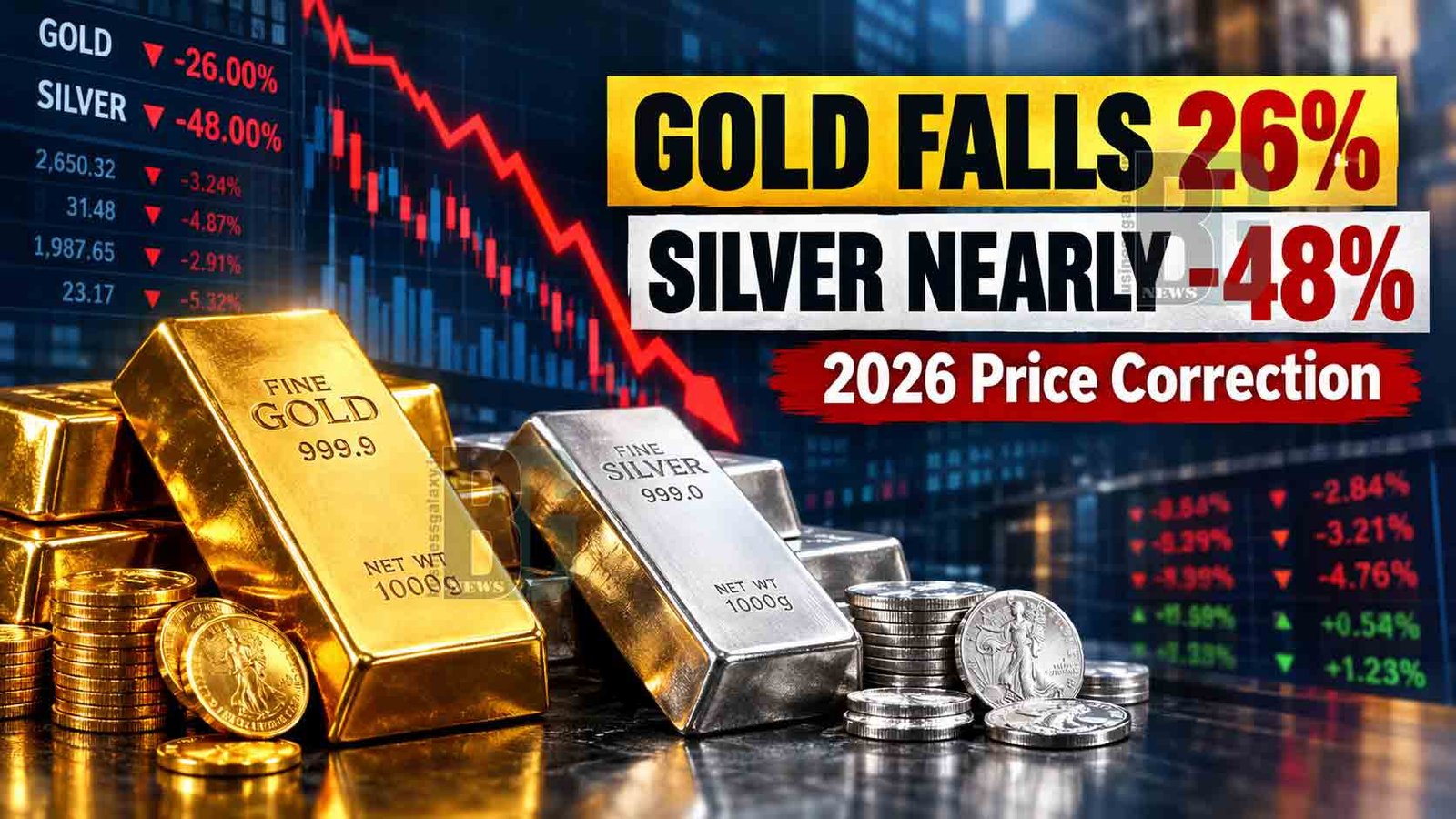
Gold and silver prices have witnessed a sharp correction in 2026, with both precious metals trading significantly below their record highs reached earlier this year.
According to market reports, gold is currently around 26% below its January 2026 peak of approximately $5,595 per ounce. Gold was trading around $4,150-$4,170 per ounce on October 6.
Silver has also experienced a steep decline. It was trading near $61 per ounce on October 6, compared with its 2026 peak above $118 per ounce, putting the metal roughly 48% below its record level.
Why Are Gold and Silver Falling?
- Analysts have linked the recent pressure on precious metals to factors including higher US Treasury yields and a stronger US dollar. Since gold does not generate interest income, higher bond yields can make it relatively less attractive to investors.
- However, the correction does not necessarily mean that gold has lost its long term role as a diversification or safe haven asset. Central bank purchases and investment demand continue to provide support to the gold market.
What About Gold Purity?
- The price correction also highlights the importance of checking the authenticity and purity of physical gold before buying or selling it.
- In India, consumers have several ways to verify hallmarked jewellery. The Bureau of Indian Standards (BIS) says consumers can check the six-digit HUID (Hallmark Unique Identification) number using the BIS Care app. Consumers can also have gold jewellery or samples tested at BIS recognised Assaying and Hallmarking Centres.
- BIS says hallmarking provides third party assurance regarding the declared purity of gold jewellery.
A Reminder for Gold Buyers
- Gold is widely regarded as a store of value, but its market price can rise and fall substantially. Consumers buying physical gold should check the BIS hallmark, purity/fineness and HUID, retain the purchase invoice and use recognised testing facilities when independent verification is required.
- The recent fall in gold and silver prices is therefore a reminder that even traditionally preferred assets can experience significant volatility.