
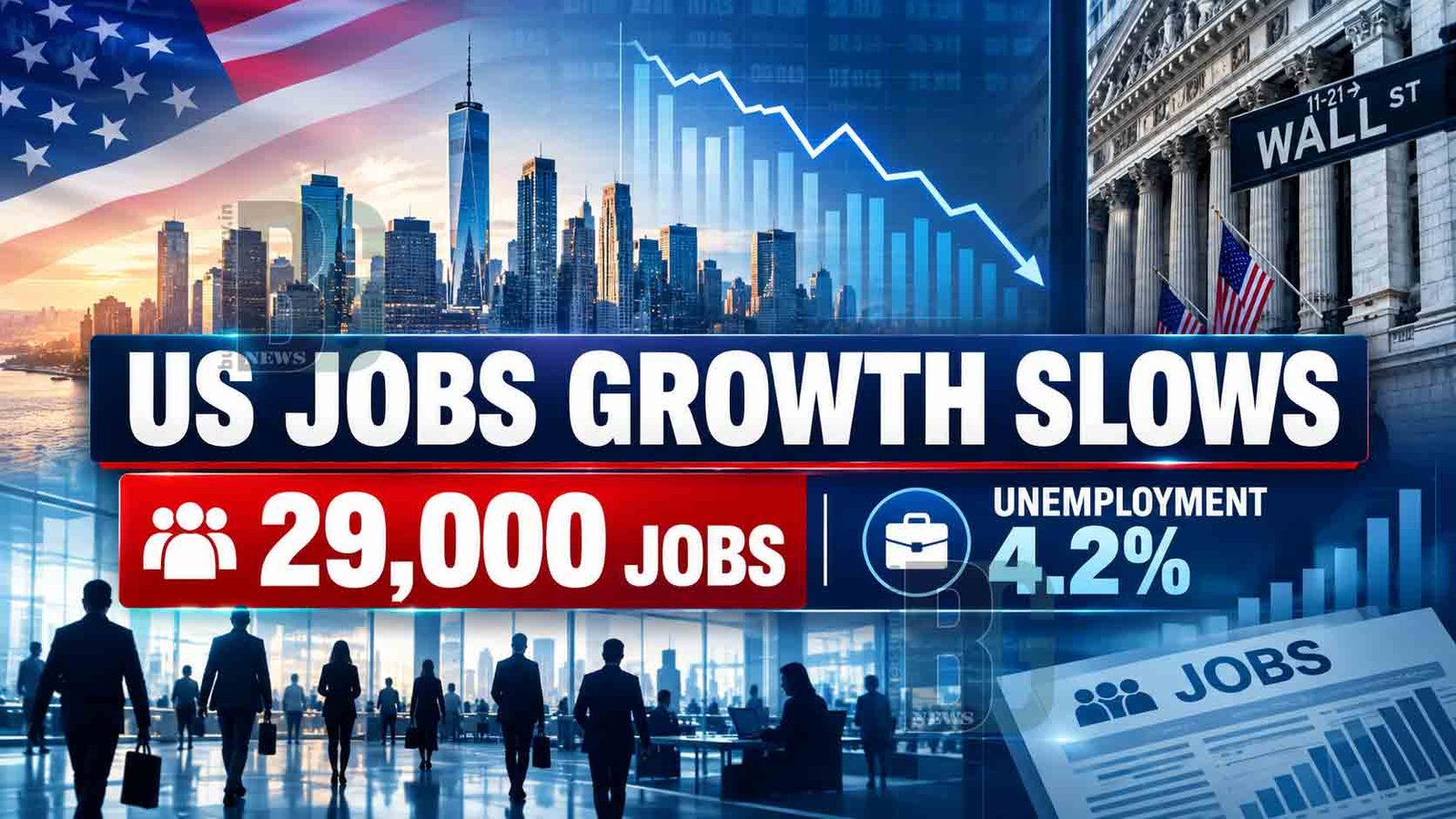
Washington: U.S. employers added 29,000 nonfarm jobs in September 2026, according to the latest report from the U.S. Bureau of Labor Statistics (BLS), marking a sharp slowdown in employment growth compared with August.
The September increase was below economists expectations, with estimates cited by major financial news outlets ranging from roughly 84,000 to 90,000 new jobs. The unemployment rate increased slightly to 4.2%, up from 4.1% in August.
The BLS said employment in all major industries changed little during September. The number of unemployed people stood at approximately 7.1 million, while the unemployment rate has remained within a relatively narrow range of 4.1% to 4.3% since March.
Previous Job Figures Revised Lower
- The latest report also revised employment figures for the previous two months.
- July employment was revised from an initially reported gain of 21,000 jobs to a decline of 10,000, while August’s figure was revised from 162,000 to 133,000.
- Together, the July and August revisions reduced previously reported employment gains by 60,000 jobs.
Healthcare Still Adding Jobs
- Healthcare remained one of the sectors adding jobs in September, although growth slowed.
- Healthcare employment increased by 17,000 positions, compared with an average monthly gain of about 33,000 over the previous 12 months. Ambulatory healthcare services added 13,000 jobs and hospitals added 12,000, while nursing and residential care facilities lost about 9,000 jobs.
- According to the U.S. Senate Joint Economic Committee’s employment update, private sector employment increased by about 46,000 jobs, while government employment declined by approximately 17,000 during September.
Wages Continue to Rise
- Average hourly earnings for private sector employees increased by 5 cents, or 0.1%, to $37.81 in September.
- Over the past 12 months, average hourly earnings increased by 3.0%, according to the BLS. The average workweek remained unchanged at 34.4 hours.
Labour Force Participation Edges Higher
- The labour force participation rate increased by 0.2 percentage points to 61.8% in September, while the employment to population ratio increased slightly to 59.2%, according to analysis from the Federal Reserve Bank of St. Louis.
- The broader U-6 measure of labour underutilisation, which includes unemployed people and some workers who are marginally attached to the labour force or working part time for economic reasons, stood at 7.6% in September.
Possible Implications for the Federal Reserve
- The weaker hiring figures are being closely watched by the U.S. Federal Reserve as policymakers consider the future path of interest rates.
- Federal Reserve officials have indicated that they will consider additional employment and inflation data before making their next policy decision. Cleveland Fed President Beth Hammack said the September employment report fits the recent hiring trend and that policymakers have time to assess additional information before the Federal Open Market Committee’s meeting later in October.
- The Federal Reserve raised its target interest rate range in September to 3.75%-4%, according to Reuters. The latest employment data could therefore become an important factor in discussions over future monetary policy.
What the Numbers Mean
- The September report points to a labour market where hiring has slowed considerably, while unemployment has increased only slightly.
- The BLS reported an average monthly payroll gain of 45,000 jobs over the previous 12 months, compared with the 29,000 jobs added in September.
- Economists and policymakers will continue to watch whether the slowdown persists in coming months or whether employment growth picks up again.
Key Highlights
- U.S. employers added 29,000 jobs in September.
- Unemployment rate increased from 4.1% to 4.2%.
- About 7.1 million people were unemployed.
- July and August employment figures were revised down by a combined 60,000 jobs.
- Healthcare added 17,000 jobs.
- Average hourly earnings rose 3.0% over the past year.
- Labour force participation increased to 61.8%.
- The report will be closely watched by the Federal Reserve as it considers future interest rate decisions.
Source: U.S. Bureau of Labor Statistics; Federal Reserve Bank of St. Louis; Reuters.