

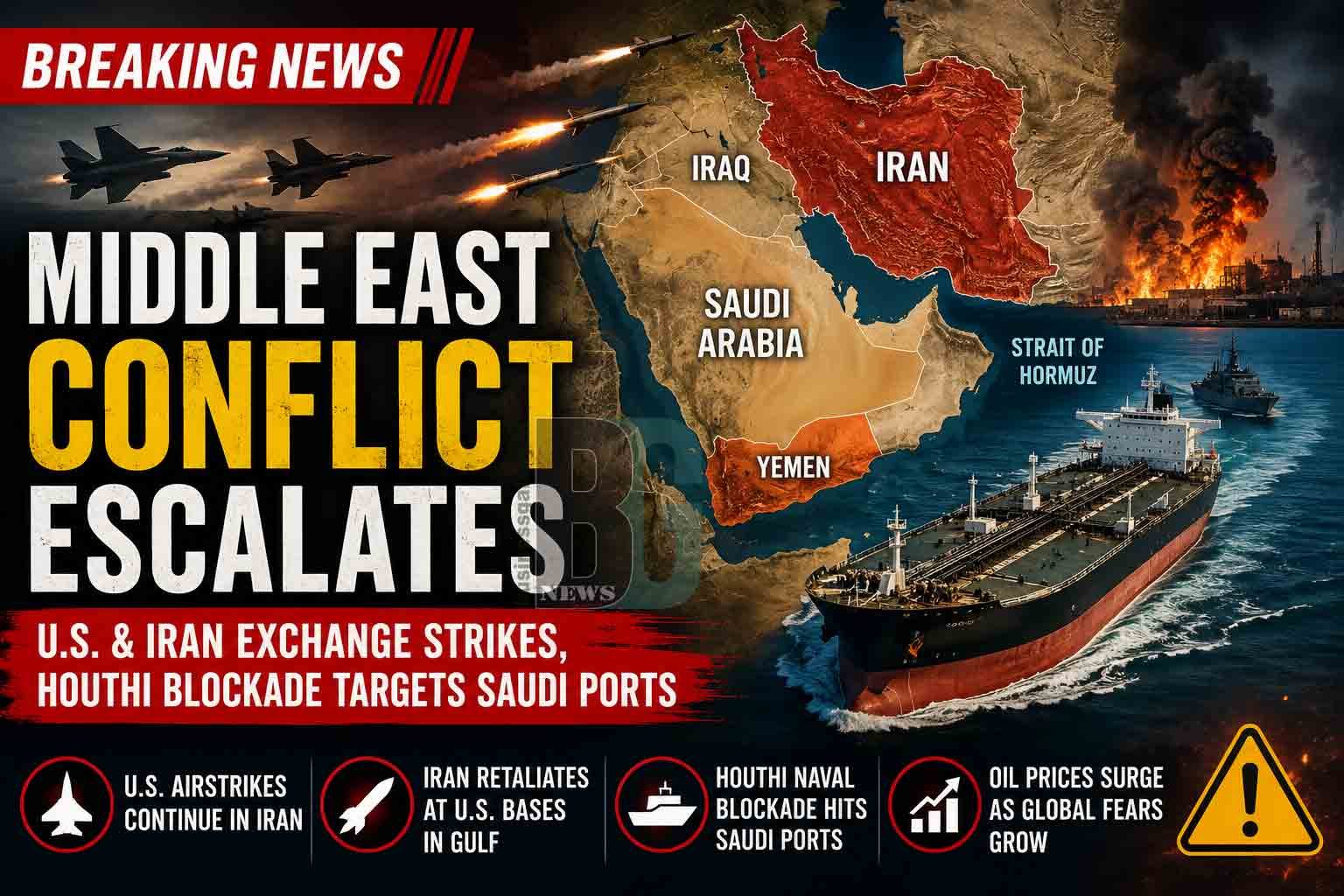
The conflict between the United States and Iran has intensified significantly, with both sides carrying out new military operations across the Middle East.
The United States launched its 10th consecutive night of airstrikes, targeting Iranian military command centers, missile facilities and maritime assets. Washington said the strikes were aimed at weakening Iran’s military capabilities and protecting international shipping routes in the Strait of Hormuz.
In response, Iran launched missile and drone attacks against U.S. military facilities and allied infrastructure in Bahrain, Kuwait and Jordan. Some strikes reportedly damaged power and water facilities, while regional air defense systems intercepted several incoming missiles.
Adding to regional tensions, Yemen’s Iran-backed Houthi movement announced a naval blockade on Saudi Arabian ports, warning commercial shipping companies to avoid Saudi ports or face possible attacks. Following the announcement, reports indicated that at least two Saudi oil tankers changed course, increasing concerns about disruptions to global oil supplies.
U.S. President Donald Trump warned that Washington would respond if the Houthis attempted to block shipping in the Red Sea or Bab el-Mandeb Strait, stating that the U.S. would take action if such a blockade was enforced.
The escalating conflict has pushed Brent crude oil prices above $90 per barrel, as markets fear prolonged disruptions to two of the world’s most important energy shipping routes the Strait of Hormuz and the Red Sea.
Despite renewed diplomatic efforts by regional countries, including mediation attempts by Pakistan, no breakthrough has been announced, and military operations continue across the region.