
Washington combines military and economic pressure as Trump administration seeks to isolate Tehran
Washington: The United States is intensifying pressure on Iran on two fronts, with a new U.S. aircraft carrier strike group arriving in the Middle East while the Trump administration prepares what Treasury Secretary Scott Bessent described as the “toughest sanctions in history” against Tehran.
The developments come as the U.S.-Iran conflict continues and Washington seeks to increase pressure on the Iranian government. The two moves are separate, but together they demonstrate the administration’s broader strategy of combining military pressure with economic isolation.
New U.S. aircraft carrier arrives in Middle East
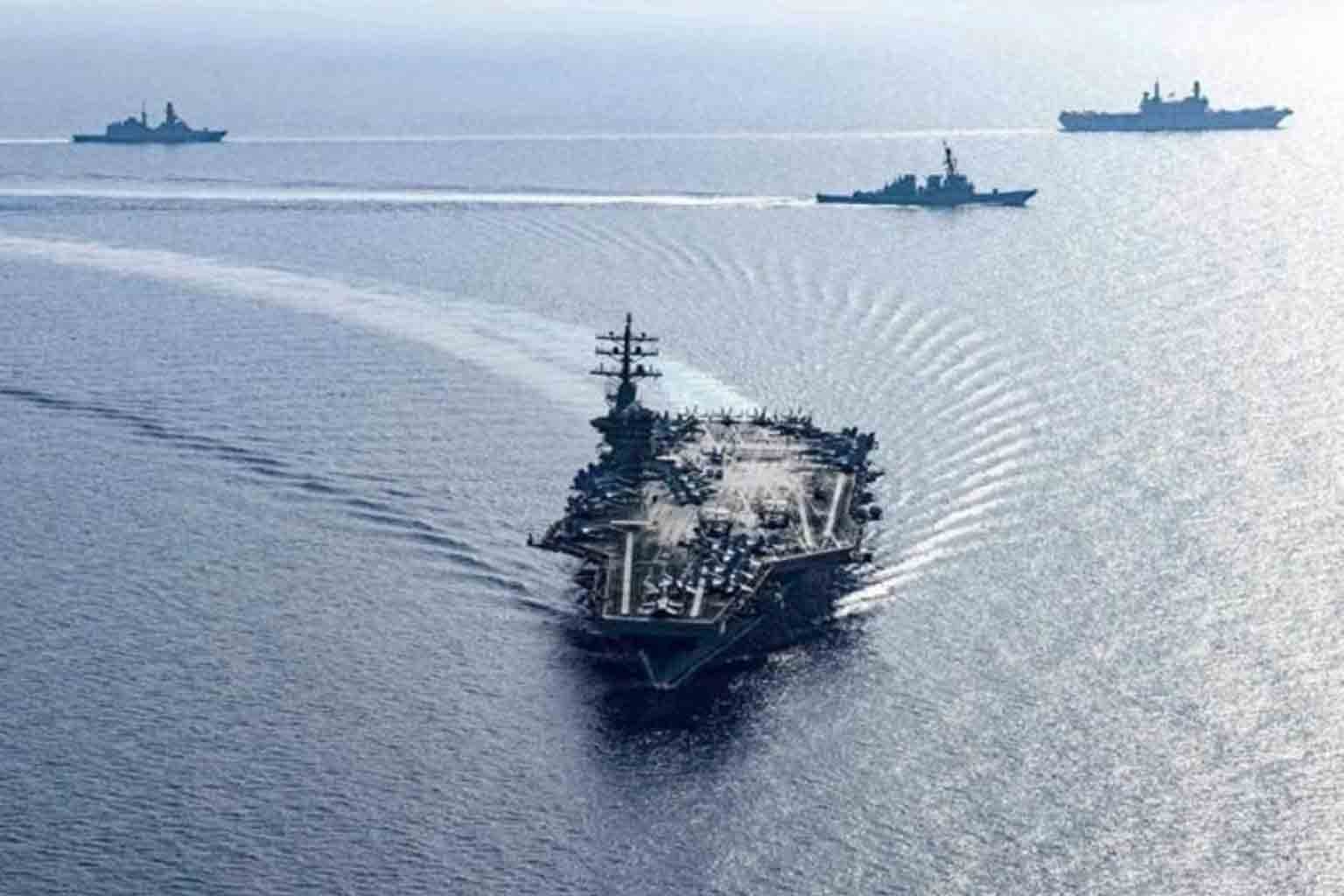
- The USS George Washington aircraft carrier and its strike group have arrived in the Middle East, replacing the long deployed USS Abraham Lincoln.
- The Lincoln has been deployed in the region for more than 250 days while supporting U.S. military operations connected to the Iran conflict. Its unusually long deployment has generated concerns among lawmakers and others about conditions aboard the ship, including crew fatigue and shortages of some supplies.
- The George Washington’s arrival provides the United States with another major naval aviation capability in the region as tensions with Iran remain high.
- The new carrier joins other U.S. naval forces already operating in the Middle East, reinforcing Washington’s military presence at a time when the Strait of Hormuz and regional shipping remain major concerns.
Bessent says sanctions aim to “Collapse” Iranian government
- Alongside the military deployment, Washington is preparing a major expansion of economic pressure.
- U.S. Treasury Secretary Scott Bessent said Thursday that the United States plans to impose what he called the “toughest sanctions in history” against Iran.
- Bessent said the sanctions would work together with the existing U.S. blockade, describing the approach as a “one two punch” designed to severely weaken Iran’s economy.
- He went further, saying the campaign would ultimately “collapse” the Iranian regime.
- Bessent is expected to provide additional details about the sanctions package at a press conference on Monday.
Washington asks allies and China to cooperate
- The Trump administration is also seeking international support for the economic campaign.
- Bessent urged U.S. allies and China to cooperate with Washington’s efforts to isolate Iran economically. He warned that countries and companies continuing to provide Iran with financial or commercial lifelines could face consequences.
- China is particularly important because it remains a major buyer of Iranian oil. Washington’s effort to restrict Iran’s oil revenues could therefore create additional tensions between the United States and China.
Iran rejects U.S. pressure
- Iran has rejected the latest U.S. measures.
- Iranian Foreign Minister Abbas Araghchi described Washington’s economic pressure as “Economic terrorism” and accused the Trump administration of attempting to distract from America’s own economic problems.
- Tehran has continued to resist U.S. demands and has shown no indication that it intends to surrender under the new pressure campaign.
Military pressure and economic warfare
The latest developments represent two different tools being used by Washington.
- Military pressure: The arrival of the USS George Washington strengthens the U.S. naval presence in the Middle East.
- Economic pressure: The proposed sanctions are designed to cut Iran’s access to international finance, oil revenues and other sources of economic support.
The Trump administration appears to be using both approaches simultaneously in an effort to force Tehran to change its position.
Strait of Hormuz remains critical
- The economic campaign also comes amid continuing tensions around the Strait of Hormuz, one of the world’s most important energy routes.
- The U.S. has maintained a naval blockade involving Iranian ports, while Iran has continued to exert pressure around the strategically important waterway. Any further escalation could affect global oil supplies and energy prices.
- Oil prices moved higher following the latest U.S. announcements as markets assessed the possibility of further disruption to regional energy supplies.
What could happen next?
- The next major development will likely come Monday, when Bessent is expected to provide more details about the planned sanctions.
- The response from China and other countries will also be important. If Washington succeeds in persuading major trading partners to restrict business with Iran, the economic impact on Tehran could be significantly greater.
- At the same time, the increased U.S. military presence creates another potential flashpoint if fighting resumes or tensions rise around Iranian ports and the Strait of Hormuz.
Bottom line
- The United States is escalating pressure on Iran through both military and economic measures.
- The arrival of the USS George Washington strengthens Washington’s military position in the Middle East, while the planned sanctions seek to dramatically increase the economic cost for Tehran.
- Although the two developments are separate, together they signal a broader U.S. strategy to isolate Iran economically while maintaining strong military pressure in the region.