

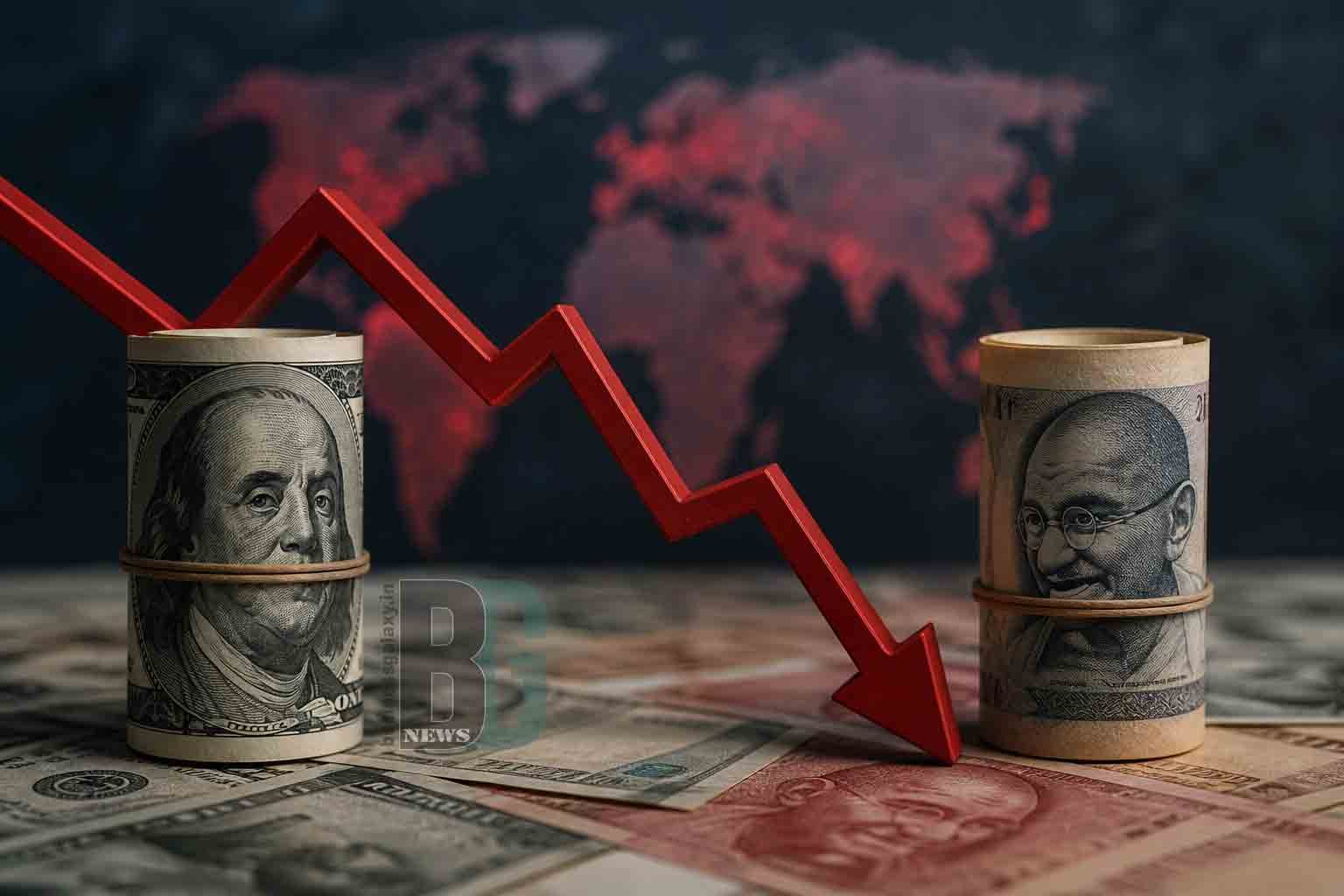
The Indian rupee plunged to a historic low, closing at ₹95.23 against the US dollar, down 39 paise in today’s trading session. This marks the weakest level ever recorded for the domestic currency, raising concerns over inflation and economic stability.
What Happened?
The rupee weakened sharply against the United States Dollar due to:
- Strong demand for the dollar from importers
- Rising global crude oil prices increasing India’s import bill
- Persistent outflow of foreign investments
- Ongoing global uncertainty linked to geopolitical tensions
Forex traders reported heavy pressure on the rupee throughout the day, with the currency slipping steadily before settling at the record closing level.
Global Factors at Play
- Continued tensions involving the United States under Donald Trump have strengthened the dollar globally
- Investors are moving funds to safe haven assets, boosting demand for the US currency
- Volatility in global markets and trade routes has added pressure on emerging market currencies like the rupee
Impact of Oil Prices
India, being a major oil importer, is highly sensitive to crude price movements.
- Higher oil prices mean more dollars are needed for imports
- This increases demand for the dollar, weakening the rupee further
Market Reaction
- Domestic stock markets showed mixed trends amid currency pressure
- Import-dependent sectors like aviation, oil and electronics may face higher costs
- Exporters could benefit slightly due to a weaker rupee
What It Means for Common People
- Fuel prices may rise
- Imported goods could become more expensive
- Foreign travel and education costs may increase
- Inflationary pressure could build in the coming weeks
RBI’s Possible Response
The Reserve Bank of India may step in to:
- Intervene in forex markets to stabilize the rupee
- Adjust monetary policies if volatility continues
Big Picture
The rupee’s fall reflects global economic pressures and domestic vulnerabilities. If the trend continues, it could impact India’s trade balance, inflation, and overall economic growth.