
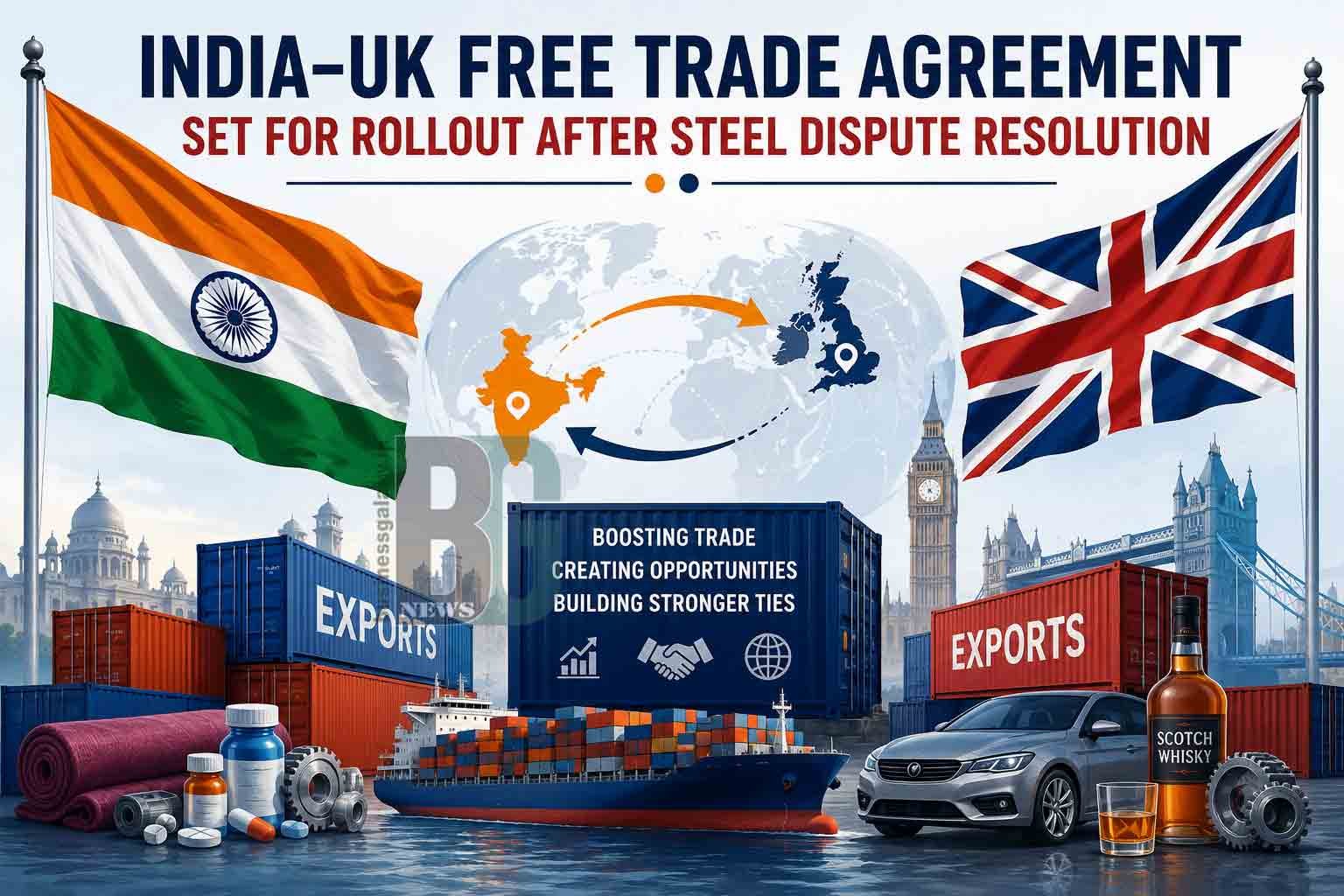
The India-United Kingdom Free Trade Agreement (FTA), one of the most significant trade deals negotiated by India in recent years, is now set to come into force after both countries resolved a major dispute over British steel safeguard measures. The development follows high level discussions between Prime Minister Narendra Modi and UK Prime Minister Keir Starmer on the sidelines of the G7 Summit.
India had earlier expressed concerns over proposed UK restrictions on steel imports, arguing that they could hurt Indian exporters and undermine the benefits of the trade pact. Following negotiations, both sides reached an understanding under which around 85% of India’s steel exports to Britain will remain protected from the new safeguard measures.
According to official statements, the agreement is expected to take effect on July 15, 2026, ending months of uncertainty over its implementation timeline.
What the Trade Deal Includes
Under the agreement:
- India will gradually reduce tariffs on several British products, including Scotch whisky and automobiles.
- The UK will lower or eliminate tariffs on a wide range of Indian exports, including clothing, footwear, engineering goods and selected food products.
- Both countries expect greater market access for businesses and investors.
- Provisions have also been made regarding social security contributions for employees working temporarily in the other country.
Expected Economic Impact
The UK government estimates that the deal could increase bilateral trade by approximately £25.5 billion in the long term and add around £4.8 billion to the British economy. Businesses in both countries are expected to benefit from lower tariffs, improved market access and stronger investment opportunities.
Why It Matters
The India-UK FTA is considered one of the most ambitious trade agreements signed by the United Kingdom since leaving the European Union and is expected to strengthen economic ties between two of the world’s largest economies. After several years of negotiations and recent disputes over steel trade rules, both governments have now moved toward implementation of the pact.
Trade experts say the agreement could create new opportunities for exporters, manufacturers, service providers and investors in both countries while deepening strategic economic cooperation.