

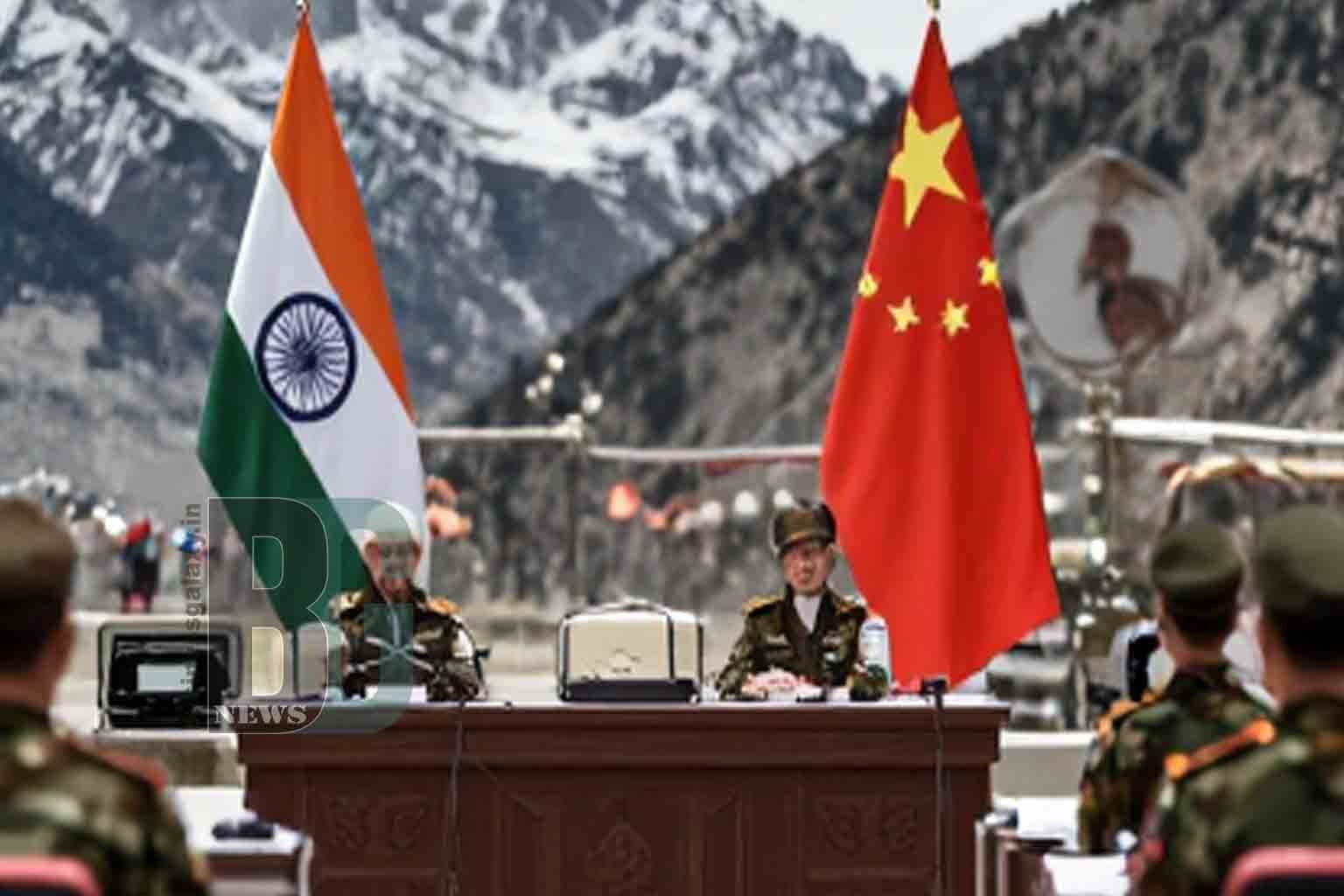
India and China have reached an eight point consensus following the 25th round of Special Representatives talks on the boundary question in Beijing on August 25.
India’s National Security Adviser Ajit Doval and China’s Foreign Minister Wang Yi held detailed discussions on the border dispute, border management and the broader India-China relationship. The two sides agreed to continue efforts toward a fair, reasonable and mutually acceptable settlement of the boundary question.
8 point consensus
- The discussions focused on maintaining peace along the Line of Actual Control (LAC) and advancing negotiations on boundary delimitation.
- Both countries agreed to work toward an early and substantial outcome in boundary delimitation and border management while using established diplomatic and military channels to quickly address problems arising along the border.
Two new military hotlines
- One of the key decisions is the establishment of two additional border military hotline channels in the Eastern and Middle sectors.
- The countries will also create two additional meeting points for senior military commanders.
- The aim is to improve communication, prevent misunderstandings and ensure that local incidents do not escalate into larger confrontations.
Focus on preventing another border crisis
- The latest talks come after years of military tensions following the 2020 Galwan Valley clash.
- The two countries have since taken steps toward disengagement and reducing tensions. The latest agreement indicates a continued effort to build mechanisms that can help maintain peace and stability along the LAC.
Boundary dispute remains unresolved
- Despite the diplomatic progress, India and China have not reached a final settlement of the border dispute.
- The two countries continue to have different positions regarding parts of their disputed Himalayan boundary. The latest consensus should therefore be viewed as a step toward managing the dispute and advancing negotiations, rather than as an agreement that settles the border.
Cooperation beyond the border
- The discussions also covered cooperation involving trans-border rivers, hydrological data sharing, border trade and the Kailash-Manasarovar pilgrimage.
- Both sides have indicated that improving border stability can contribute to broader improvement in bilateral relations.
Next round of talks
- The 26th round of Special Representatives talks is scheduled to take place in India in 2027.
- The next round will provide an opportunity to assess progress on boundary delimitation, border-management mechanisms and the implementation of the latest consensus.
Why this matters for India
- The development is significant for India’s national security because a stable LAC reduces the risk of military escalation and allows both countries to focus on broader diplomatic and economic priorities.
- However, India is expected to remain cautious. Communication mechanisms can reduce the risk of conflict, but they do not by themselves resolve the underlying territorial dispute.