
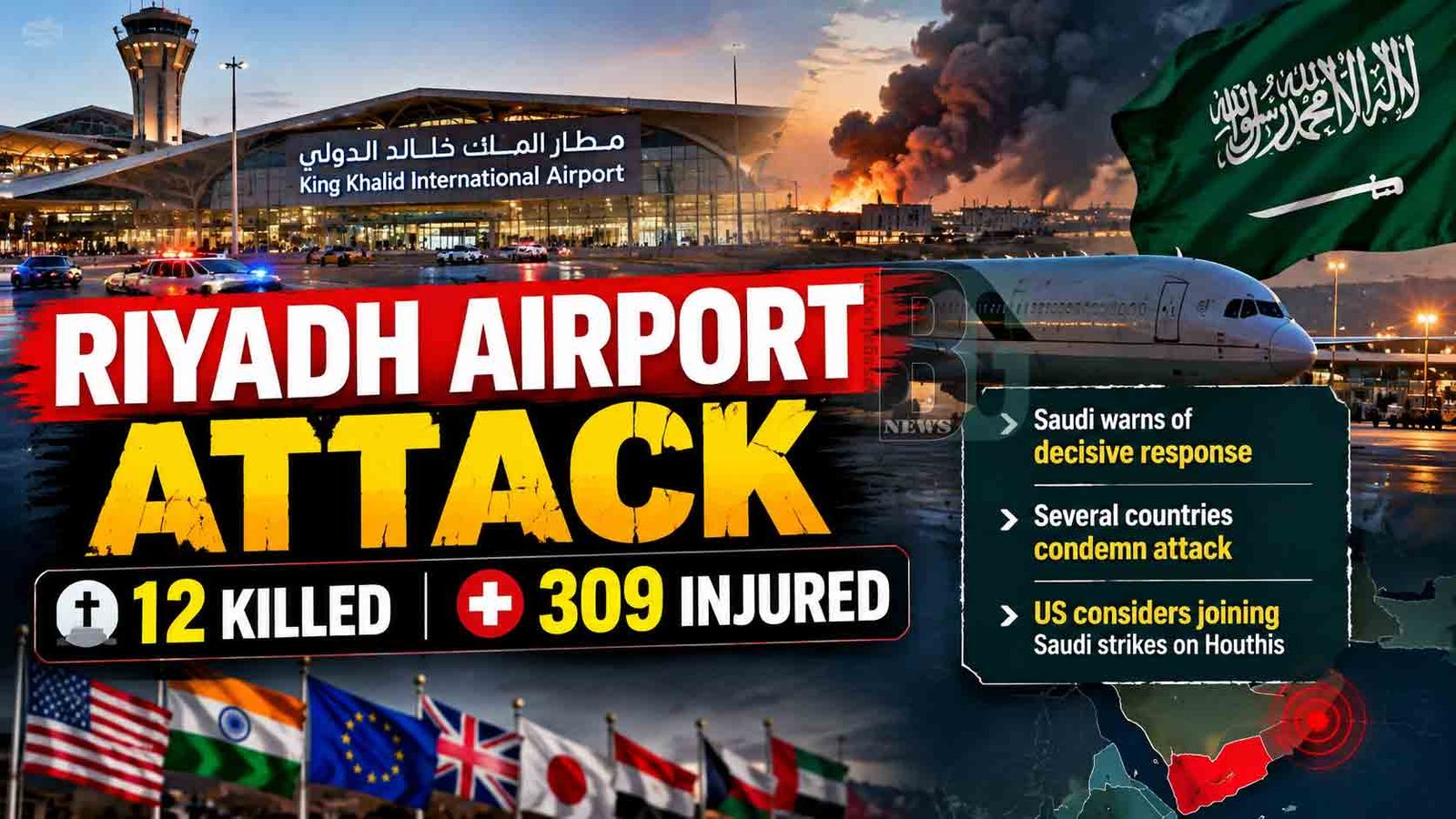
Riyadh: At least 12 people were killed and 309 others injured in an attack on King Khalid International Airport in Riyadh, Saudi Arabia, on Saturday, October 10, according to the Kingdom’s General Authority of Civil Aviation (GACA). Several injured people are reported to be in critical condition and are receiving treatment at hospitals.
The attack has intensified regional tensions, disrupted air travel and triggered condemnations from several countries and international organisations.
Victims Include Saudi and Foreign Nationals
- According to GACA, the 12 fatalities included four Saudi citizens, two Bangladeshi nationals and one citizen each from the United States, Egypt, Jordan, Syria, Palestine and Sudan.
- Authorities said the attack also caused property damage, the full extent of which is still being assessed. Emergency services responded to the incident, while medical teams continued treating the injured.
Saudi Arabia Warns of a Decisive Response
- Major General Turki Al-Maliki, spokesperson for the Saudi-led coalition supporting Yemen’s internationally recognised government, condemned the attack and described it as a serious crime against civilians.
- The coalition said it would respond decisively in accordance with international humanitarian law. Saudi authorities have also been assessing the damage and taking measures to protect civilian aviation facilities.
- The attack followed earlier strikes targeting Saudi airports during the same week. A separate projectile incident was also reported near King Fahd International Airport in Dammam, raising further concerns about the security of the Kingdom’s aviation infrastructure.
Airport Operations Suspended, Flights Disrupted
- Airport operations at King Khalid International Airport were temporarily suspended following the attack as authorities assessed the damage and reviewed security conditions.
- Several airlines cancelled or suspended flights, while passengers were advised to contact their airlines and confirm flight schedules before travelling to the airport.
- Foreign diplomatic missions, including those of the United States, the United Kingdom, Ireland and Canada, issued security advisories urging their citizens to avoid the airport and surrounding areas or follow official instructions.
Who Is Being Blamed for the Attack?
- The Saudi-led coalition has blamed Yemen’s Houthi movement, which is backed by Iran, for the attack. However, the Houthis had not claimed responsibility for the latest strike at the time of the reports.
- The attack comes amid an escalation in fighting involving the Houthis and Saudi-backed Yemeni government forces. The wider conflict has increased concerns about regional security, civilian safety and the possibility of further military action.
United States Considers Its Response
- US President Donald Trump said Washington was considering whether to join Saudi military strikes against the Houthis. His remarks indicated that a decision was still under consideration.
- US Secretary of State Marco Rubio strongly condemned the attacks and confirmed that an American citizen was among those killed. He said the attacks demonstrated disregard for innocent civilian life and called for them to stop.
- The United States has not, in the statements reported so far, confirmed a final decision to join a new military operation specifically in response to this latest strike.
Countries and International Organisations Condemn the Attack
Several governments and international bodies have condemned attacks on Saudi civilian aviation facilities and expressed solidarity with the Kingdom.
The countries and organisations reported to have issued condemnations or statements of solidarity include:
- Bahrain: Condemned the attack and called for international action to protect civilian aviation.
- Qatar: Described the strike as a serious violation of Saudi sovereignty and a threat to regional security.
- Jordan: Condemned the attack and expressed solidarity with Saudi Arabia.
- Egypt: Condemned the attacks and offered condolences to the victims’ families.
- Palestine: Expressed solidarity with Saudi Arabia and condemned the targeting of its civilian infrastructure.
- Oman: Rejected attacks on civilian facilities and called for diplomatic efforts to reduce regional tensions.
- Japan: Condemned attacks on Saudi airports and other civilian facilities.
- Cyprus: Condemned attacks on Saudi airports and expressed solidarity with the Kingdom.
- Somalia: Condemned the attacks and expressed concern over threats to Saudi sovereignty and regional security.
- Uruguay: Expressed solidarity with Saudi Arabia and raised concerns about wider regional security and maritime navigation.
The United Nations Secretary General António Guterres also strongly condemned the strike, reiterating that attacks against civilians and civilian infrastructure violate international law and must cease.
The Council of Arab Interior Ministers and a human rights commission associated with the Organisation of Islamic Cooperation also condemned attacks on Saudi aviation facilities.
India’s position: India had already condemned attacks targeting Abha International Airport and King Khalid International Airport in a statement issued on October 8, expressing condolences for civilian deaths and solidarity with Saudi Arabia. That statement preceded the latest attack, so it should not be described as a separate response to Saturday’s incident without further confirmation.
How Many Countries Have Condemned the Attack?
- Reports published on October 11 identify at least ten countries above as having issued condemnations or statements of solidarity concerning the latest attack or the wider series of attacks on Saudi airports. The exact number of countries that specifically condemned Saturday’s strike may differ because some statements addressed earlier incidents or repeated attacks rather than this particular strike.
- The Gulf Cooperation Council and other regional organisations have also expressed concern. Their statements should be counted separately from those of individual member states.
Concerns Over Further Escalation
- The attack has raised fears of a wider regional conflict, particularly if Saudi Arabia and its allies launch additional military operations against Houthi targets in Yemen.
- The immediate priorities remain medical care for the injured, airport security, the restoration of safe air travel and efforts to prevent further attacks on civilian facilities.
- Saudi Arabia has warned of a decisive response, while international governments have called for an end to attacks and greater protection for civilians. Whether the latest incident leads to a broader US military role or further regional escalation remains uncertain.
Business Galaxy will continue to follow verified developments concerning Saudi Arabia’s response, international reactions and the impact on regional security.