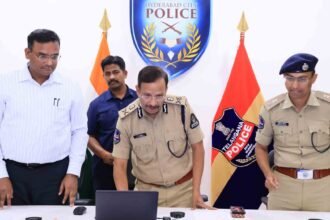

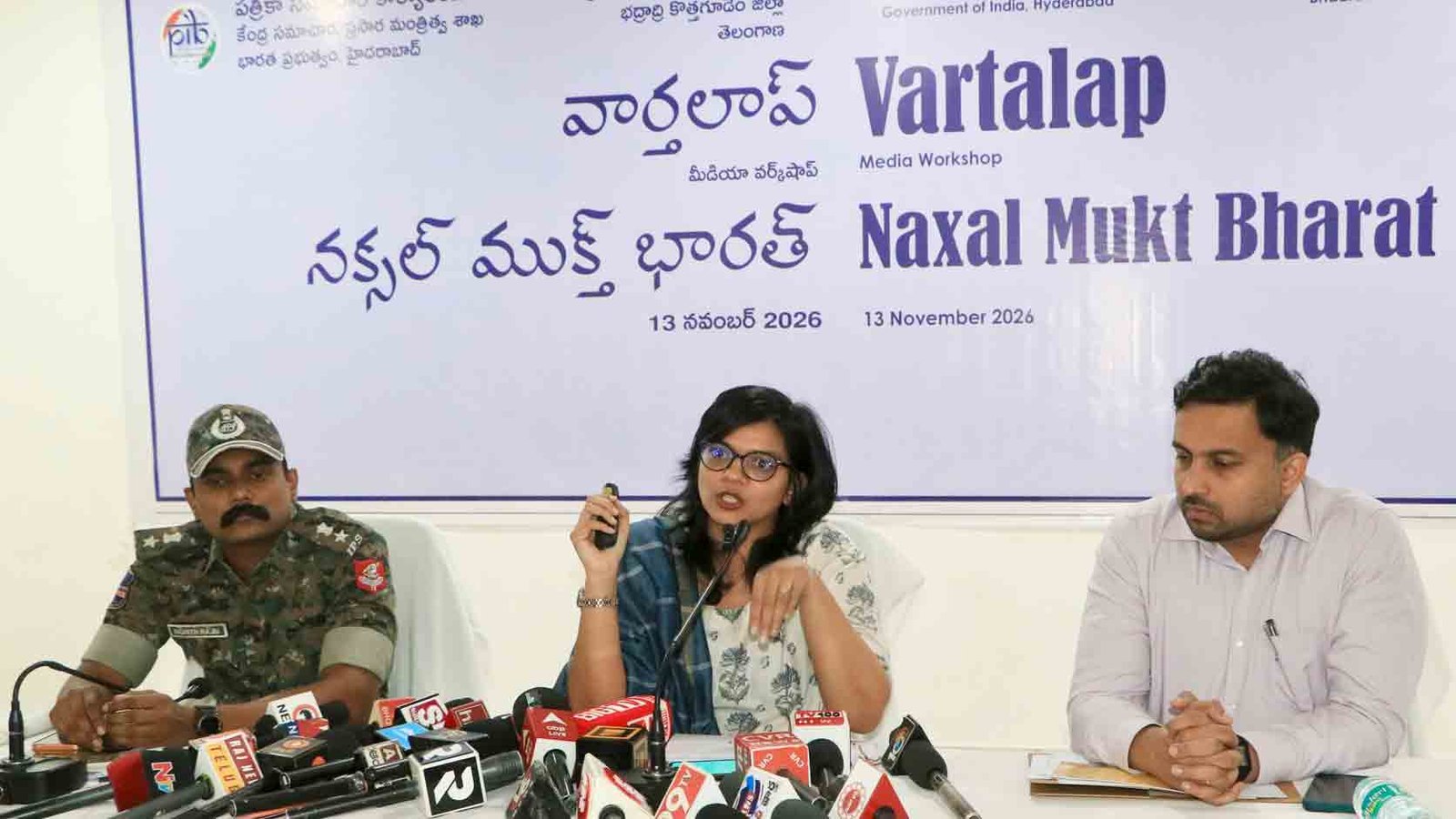
Bhadradri Kothagudem: In a significant step towards building a Maoist free India, the Bhadradri Kothagudem District Police, in collaboration with the Press Information Bureau (PIB), Ministry of Information and Broadcasting, Government of India, organised a media conference on the theme of “Naxal Free India” at the District Police Headquarters on Friday.
The conference was attended by State Intelligence SP Sindhu Sharma, IPS, PIB Joint Director Dr. Manas Krishnakanth and Bhadradri Kothagudem District SP Rohith Raju, IPS. The officials briefed media representatives on the history of Maoist activities in the district, arrests, surrenders, violent incidents, casualties and development initiatives undertaken in Maoist affected areas.
829 Maoists Arrested and 918 Surrendered
- According to the information presented at the conference, between 2014 and 2026, a total of 829 Maoists were arrested in Bhadradri Kothagudem district. During the same period, 27 exchange of fire incidents took place between security forces and Maoists, resulting in the deaths of 57 Maoists.
- The district also recorded 918 Maoist surrenders during this period. Officials attributed the decline in Maoist activities to continuous police operations, growing public awareness, government development initiatives, surrender programmes and rehabilitation measures.
Maoist Violence Caused Significant Loss of Lives
- Officials highlighted the impact of Maoist violence on civilians, police personnel and public infrastructure. According to the figures shared at the conference, 868 civilians lost their lives and 331 police personnel were killed in Maoist related violent incidents.
- Maoist attacks on police stations, landmine explosions and the destruction of roads and bridges severely affected remote villages. These incidents disrupted transportation and restricted people’s access to healthcare, education and other essential services, while creating fear among local communities.
Rehabilitation Support for Surrendered Maoists
- The government is providing rehabilitation assistance to former Maoists who abandon violence and return to mainstream society.
- The rehabilitation policy includes financial assistance, agricultural land, residential plots and additional incentives for those surrendering with weapons. These measures aim to help former Maoists establish livelihoods, support their families and lead dignified lives.
- Former Maoists who attended the media conference shared their experiences and explained how government assistance, including land, housing and self employment opportunities, had helped them begin a new chapter in their lives.
Development and Welfare Initiatives in Maoist-Affected Areas
The district police are also supporting several development and community welfare initiatives to improve living conditions in remote and tribal villages.
Key initiatives include:
- Construction of roads and BT roads to improve connectivity to remote villages.
- Employment and self employment opportunities for local youth.
- Support for small industries and rice mills to strengthen rural livelihoods.
- Distribution of books, school bags and study materials to students.
- Providing sports equipment and encouraging youth participation in sports.
- Organising free medical camps and distributing medicines in tribal villages.
- Installing borewells to improve access to drinking water.
- Providing essential supplies and blankets to families affected by floods.
- Conducting community outreach programmes to strengthen public trust in the police.
Focus on a Peaceful and Developed Future
- The media conference highlighted the importance of combining security measures with development, rehabilitation, education, employment and welfare initiatives to address the challenges in Maoist affected regions.
- The officials emphasised that improving infrastructure, creating livelihood opportunities and building public confidence are essential for bringing lasting peace and development to remote areas.
- The initiatives aim to encourage people, particularly youth, to move away from violence and participate in building a peaceful, secure and developed society.