
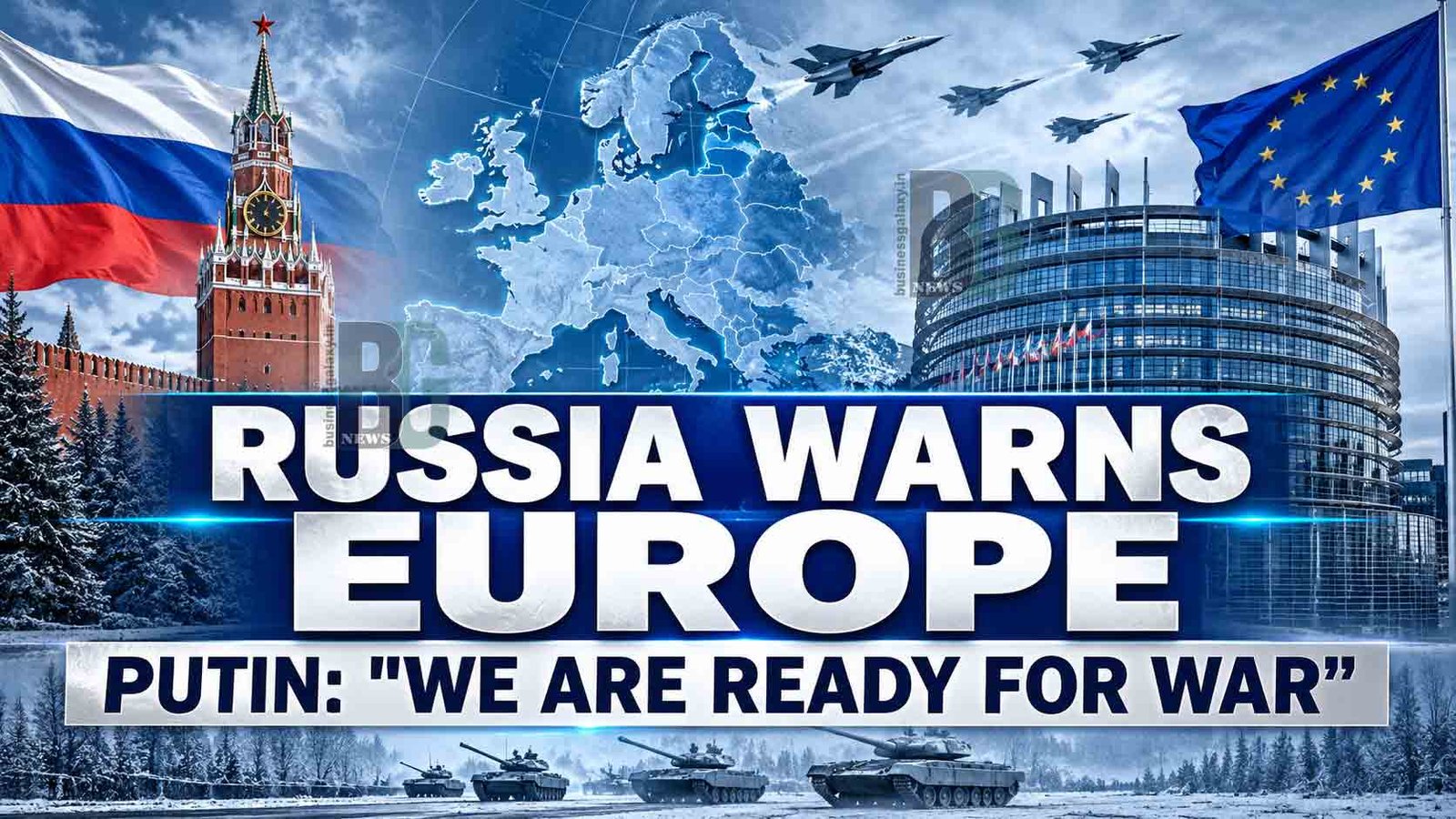
Russian President Vladimir Putin has issued a strong warning to European countries, saying that Russia is prepared for a potential war with Europe but does not want such a conflict.
His remarks, delivered on October 29, come amid growing tensions between Moscow and European governments over the ongoing Russia-Ukraine war, NATO’s military activities and regional security.
Putin warned that any conflict escalating into a direct confrontation between Russia and Europe would have no winners.
Putin Says Russia Does Not Want War with Europe
- Speaking to reporters after hosting a Russia-Africa summit in Moscow, Putin said Russia supported efforts to restore normal diplomatic relations with European countries.
- However, he warned that Moscow was prepared if European nations wanted a military confrontation.
- He also said Russia would respond to any challenge and opposed restrictions on navigation in the Baltic Sea.
- Putin’s remarks followed telephone conversations with Finnish President Alexander Stubb and Norwegian Prime Minister Jonas Gahr Store, who had discussed relations with Moscow.
Russia Issues Nuclear Warning to NATO
- Earlier, on September 30, Russia issued a diplomatic warning to NATO concerning Kaliningrad, a Russian territory located between Poland and Lithuania on the Baltic Sea.
- In a document sent to NATO, Moscow warned that it could use its entire military arsenal, including nuclear weapons, if NATO countries attempted to isolate or blockade Kaliningrad.
- Russia also warned that military strikes against decision making centres in NATO member countries could be considered at the beginning of a direct conflict.
- The warning came amid concerns about military activities and security developments in the Baltic region.
NATO Rejects Russia’s Nuclear Threat
- NATO strongly criticised Russia’s nuclear rhetoric and rejected the suggestion that the alliance was planning to blockade Kaliningrad.
- NATO Secretary General Mark Rutte said the alliance was defensive and had no intention of attacking Russian territory.
- He also stated that NATO did not see an imminent threat to its territory from Russia.
- The alliance maintains that it will defend its member countries if they are attacked.
Why Are Relations Between Russia and Europe Deteriorating?
Several developments have contributed to the growing tensions:
- Russia-Ukraine war: European countries continue to support Ukraine with military, financial and diplomatic assistance.
- NATO military preparedness: The alliance has strengthened its defence arrangements along its eastern flank.
- Baltic Sea tensions: Military activities and concerns about shipping security have increased regional tensions.
- Security allegations: European governments have raised concerns about suspected sabotage, cyberattacks and other activities attributed to Russia. Moscow denies involvement in such operations.
- Nuclear rhetoric: Repeated warnings involving nuclear weapons have increased concerns about the possibility of a wider confrontation.
Could the Situation Lead to World War III?
- The growing confrontation between Russia and NATO has raised international concerns, particularly because both sides possess substantial conventional and nuclear military capabilities.
- A direct military conflict involving Russia and NATO could have consequences far beyond Europe.
- However, military warnings and defence preparations do not automatically mean that a world war is imminent.
- The situation currently involves diplomatic confrontation, military deterrence and competing security interests. Both sides continue to maintain that they do not want a direct war.
What Happens Next?
- The international community will closely monitor developments around the Baltic Sea, Kaliningrad, NATO’s eastern borders and the continuing Russia-Ukraine conflict.
- Diplomatic communication and military restraint will remain important in preventing misunderstandings or an unintended military escalation.
The central concern is whether Russia and European countries can prevent their growing confrontation from turning into a direct military conflict.
Business Galaxy | Europe & International Affairs