
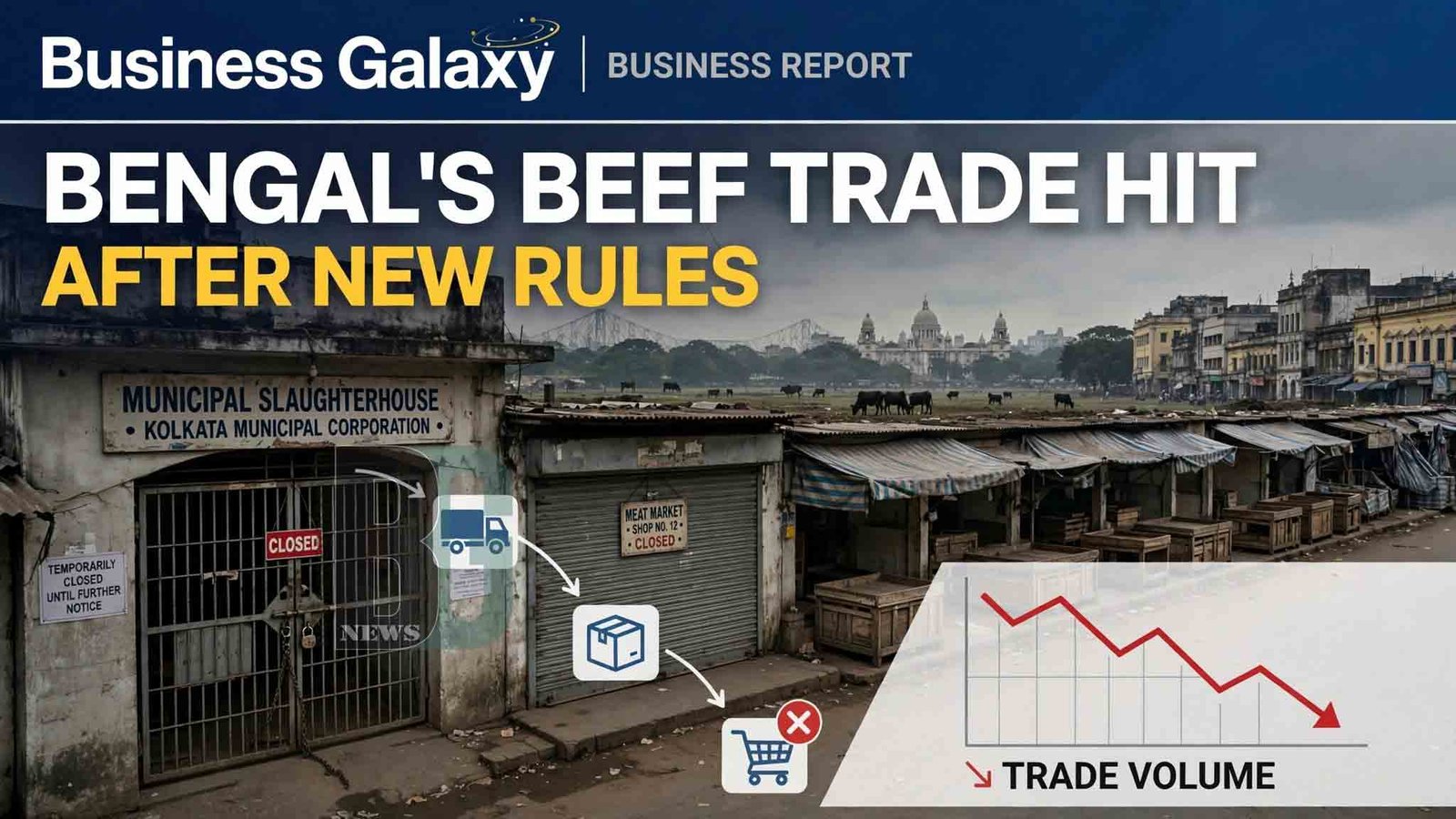
The beef trade in West Bengal is facing major disruption, more than three months after the state government introduced stricter enforcement of rules on cattle slaughter.
The West Bengal government issued a notice on May 13 requiring cattle meant for slaughter to have a certificate confirming that the animal is legally fit for slaughter. The rules cover Cows, Bulls, Bullocks, Calves and Certain buffaloes.
Under the notice, cattle can generally be certified for slaughter if they are more than 14 years old, are no longer fit for work or breeding, or have certain serious injuries, deformities or incurable diseases. Slaughter is also required to take place at an approved slaughterhouse.
The new enforcement came shortly after the BJP came to power in West Bengal, ending the Trinamool Congress’s 15 year rule. The timing also came close to Eid ul Adha in May, when demand for meat traditionally increases.
Kolkata slaughterhouse remains closed
- Kolkata’s Tangra area has one of the city’s main municipal slaughter facilities. According to Al Jazeera’s report, the facility has remained closed since May, affecting traders and restaurants that depended on it.
- Meat traders say they are facing difficulties getting the required certificates and renewing their trade licences.
- The renewal of some licences has also been delayed following changes in the Kolkata Municipal Corporation, according to the report. Kolkata is scheduled to hold its next civic elections in December.
Traders and restaurants affected
- Several traders and restaurant owners told Al Jazeera that their businesses have suffered because of the shortage of legally available beef.
- One trader, Mushtaq, said he has not earned money from his meat business for more than three months. Restaurant workers also reported lower sales and difficulty obtaining meat supplies.
- Some traders have also reduced or closed their businesses because of the uncertainty surrounding cattle slaughter and meat supplies.
Beef consumption in West Bengal
- Beef and buffalo meat have traditionally been consumed by sections of West Bengal’s population. Government data cited by Al Jazeera shows that 10.4 percent of rural households and 7.9 percent of urban households in the state reported consuming beef or buffalo meat.
- The report also says beef consumption is common among sections of Muslim, Christian, Dalit and Indigenous communities.
What happens next?
- The future of the beef trade in West Bengal remains uncertain. Traders are waiting for clarity on slaughter certificates, licences and when normal operations at slaughter facilities may resume.
- The state government’s stated position is that the rules are based on the existing West Bengal Animal Slaughter Control Act, 1950 and require strict compliance with its provisions.
- For traders, restaurants and consumers, the main issue now is whether the required certification and licensing process will become easier and when the affected slaughter facilities will return to normal operations.