

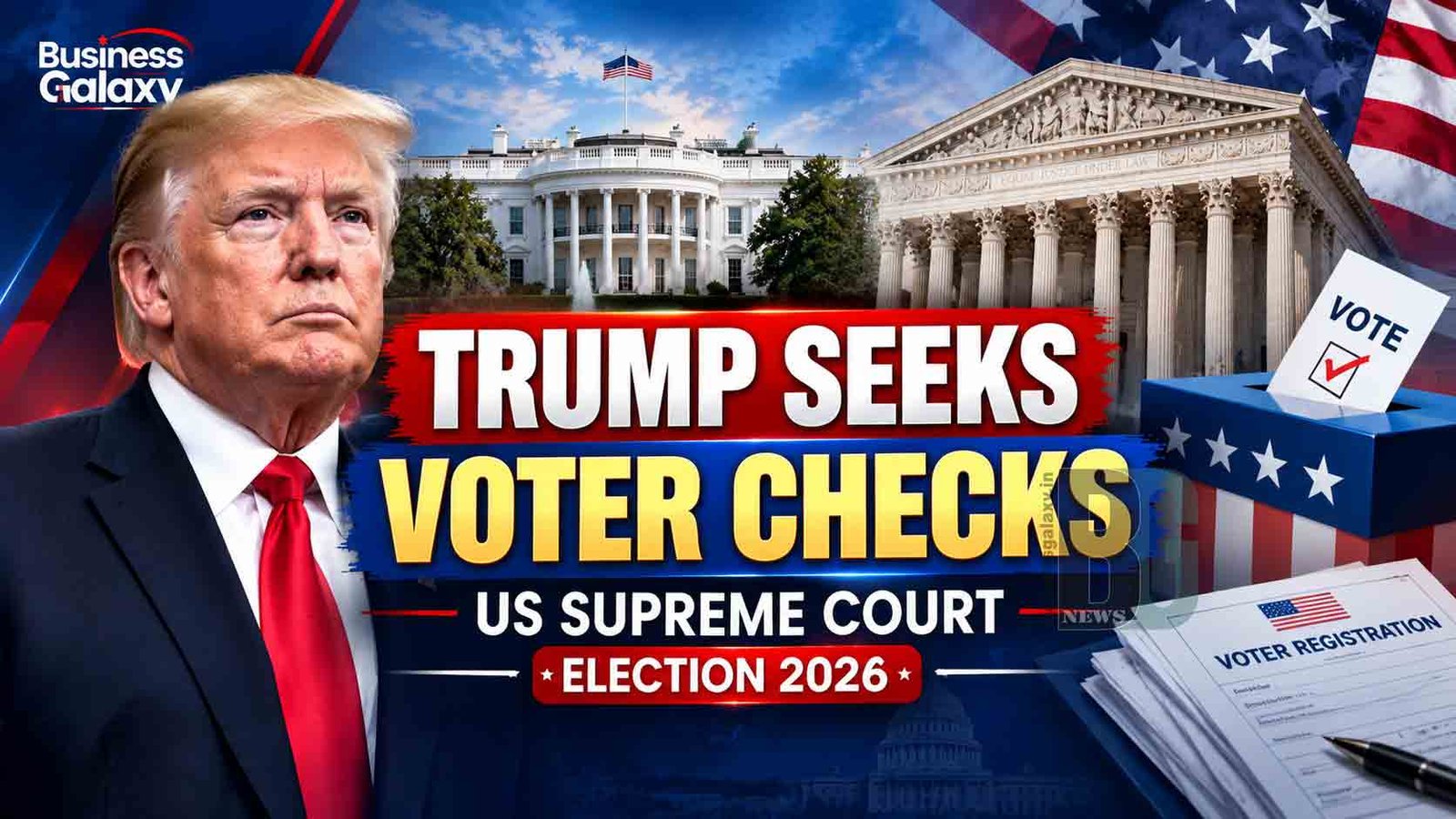
Move Could Increase Federal Role in State Voter Rolls Ahead of 2026 Midterm Elections
WASHINGTON: The administration of US President Donald Trump has asked the US Supreme Court to allow the federal government to use a revised immigration database to check state voter rolls ahead of the November midterm elections.
The administration says the system could help states verify whether people registered to vote are US citizens. The request has become an important legal and political issue as the midterm elections approach.
What Is the Trump Administration Seeking?
- The Trump administration wants to use a federal database known as the Systematic Alien Verification for Entitlements, or SAVE, to compare voter information with federal citizenship and Social Security records.
- The administration says the system can help identify people who may not be eligible to vote and improve election security.
Why Was the System Blocked?
- A federal judge in Washington, D.C., blocked the expanded system in June. The judge raised concerns about the reliability of the citizenship information and the possible impact on eligible voters.
- The US Court of Appeals for the District of Columbia Circuit later upheld the block in a 2-1 decision on September 4. The case has now moved to the Supreme Court.
Concerns Over Eligible Voters
- Voting rights and privacy groups oppose the administration’s plan. They argue that government records can sometimes contain outdated or incorrect information.
- They are particularly concerned that naturalized US citizens could be incorrectly identified as noncitizens and removed from voter rolls.
- The groups have also raised privacy concerns because the system involves federal personal information.
Trump Administration Defends the Move
- The Trump administration says blocking the database limits the federal government’s ability to help states verify citizenship information.
- Justice Department lawyers have argued that the system is part of efforts to protect the integrity of upcoming elections.
Why Is This Important?
- The dispute comes less than two months before the November 3, 2026 US midterm elections, when Americans will vote for members of Congress.
- If the Supreme Court allows the system to be used, states could have greater access to federal information when checking voter rolls.
- If the court keeps the block in place, the expanded federal voter verification system would remain restricted.
- The Supreme Court’s decision could therefore have an important impact on how voter eligibility checks are carried out before the midterm elections.
Business Galaxy Note: The Supreme Court has not yet ruled on the administration’s latest request. The concerns about incorrect voter identification have been raised by opponents of the system, while the Trump administration maintains that the measure is intended to protect election integrity.