
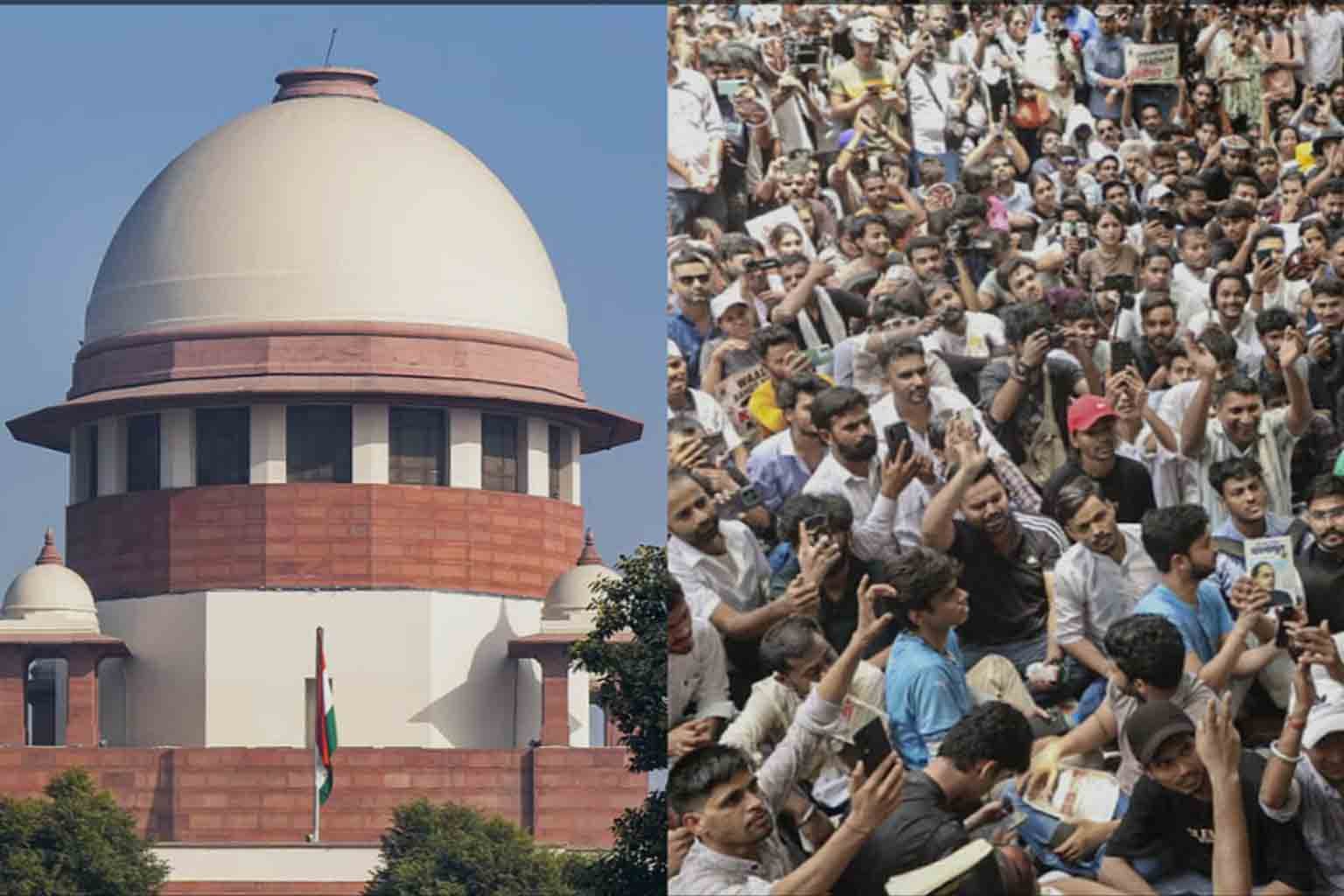
Former Supreme Court judge R. Subhash Reddy to lead inquiry into alleged police excesses and violence during student protests
New Delhi: The Supreme Court has constituted a five member High Powered Enquiry Committee to independently investigate allegations of excessive use of force by security personnel and violence during recent student protests in Delhi and other parts of the country.
The protests were linked to concerns over examination irregularities, alleged paper leaks and issues surrounding competitive examinations. The demonstrations included a major protest at Jantar Mantar and a Parliament march on July 20.
Justice R. Subhash Reddy to head panel
The committee will be headed by former Supreme Court judge Justice R. Subhash Reddy.
The other members are:
- Former Punjab and Haryana High Court Chief Justice Ravi Shankar Jha
- Former Delhi High Court judge Justice Shalinder Kaur
- Former CBI Director Rishi Kumar Shukla
- Former Meghalaya DGP L.R. Bishnoi
The panel brings together former judges and senior law enforcement officials to examine the events independently.
What will the committee investigate?
- The Supreme Court has given the committee a broad mandate.
- It will examine allegations of excessive or disproportionate force by police, paramilitary forces and other Security personnel, Including allegations involving pellet guns, Lathi charges, Tear gas and other crowd control measures.
- The inquiry will also examine allegations of violence by protesters against police and security personnel.
- The committee will also look into allegations of targeted violence, harassment and molestation of women protesters, as well as whether the force used by security personnel was lawful and proportionate to the situation.
Both protesters and police actions under scrutiny
- The Supreme Court’s intervention is significant because the inquiry is not limited to allegations against the police.
- The committee has also been asked to examine violence allegedly committed by protesters, damage to public property and the impact of the unrest on police personnel and their families.
- This means the inquiry will assess the conduct of both sides rather than treating the protests only as a question of police action.
Compensation and medical assistance
- The committee will also examine issues involving injuries suffered during the protests and the possibility of interim compensation for affected people.
- The court is particularly examining whether injured protesters received appropriate medical assistance and whether those affected on either side should receive relief.
Why the Supreme Court intervened
- The Supreme Court’s decision follows petitions alleging serious police excesses during the student demonstrations.
- The Court had earlier indicated that the allegations required an independent examination rather than relying solely on the existing police investigation.
- The formation of the committee therefore places the events under direct judicial scrutiny and could provide an independent assessment of what happened during the protests.
What happens next?
- The five member committee will examine evidence, including allegations concerning the use of Force, Violence, Injuries, Surveillance and the conduct of protesters and security personnel.
- Its findings could help determine whether security forces acted within the law and whether protesters or others involved in the violence should face further action.
- The inquiry could also contribute to clearer guidelines on the proportionate use of force during large student demonstrations.
Why this matters
The case has wider implications for the right to peaceful protest, police accountability and the handling of large demonstrations.
The Supreme Court’s decision signals that allegations of excessive force during student protests will receive independent scrutiny while allegations of violence by protesters will also be examined.
Bottom line: The Supreme Court has established a five member panel headed by former Justice R. Subhash Reddy to investigate the violence and alleged police excesses surrounding recent student protests. The committee will examine the actions of both security forces and protesters and assess issues including excessive force, injuries, violence, harassment and compensation.