

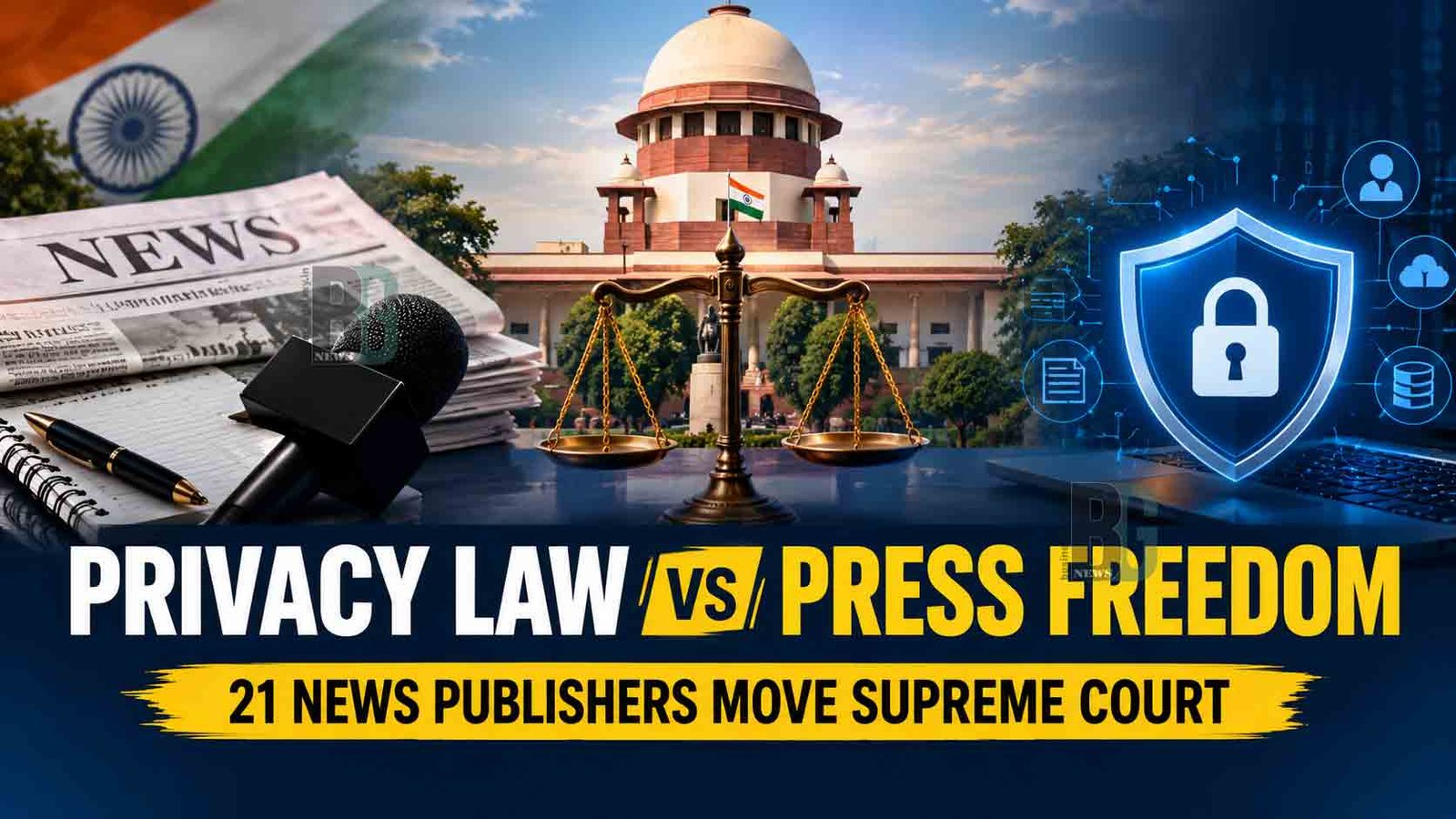
NEW DELHI: The Supreme Court of India has sought the Central government’s response to a petition filed by the Digital News Publishers Association (DNPA), representing 21 news publishers, challenging provisions of the Digital Personal Data Protection (DPDP) Act, 2023 and its associated rules.
The publishers argue that certain provisions of the data protection framework could affect investigative journalism, reporting on matters of public interest and the protection of confidential journalistic sources.
The case raises questions about how India can protect citizens’ personal data while safeguarding press freedom and the public’s right to information.
What Is the Dispute About?
- The Digital Personal Data Protection Act, 2023, establishes a framework for protecting individuals digital personal data. The associated rules were notified in 2025.
- The DNPA argues that the framework does not provide sufficiently clear exemptions for journalistic activities. According to the petitioners, applying certain data protection requirements to news reporting could make investigations involving personal information more difficult.
Three Major Concerns Raised by Publishers
- Impact on investigative journalism
Publishers argue that obtaining consent from individuals before processing certain personal information could complicate investigations into alleged corruption, corporate wrongdoing and other public interest matters.
They are concerned that people under investigation could refuse consent or interfere with the collection of information. - Concerns about removing published reports
The association has raised concerns about provisions relating to the withdrawal of consent and the erasure of personal data. Publishers argue that these requirements could lead to demands to remove or modify factual news reports, potentially affecting public access to information. - Protection of confidential sources
Journalists often rely on whistleblowers and confidential sources to investigate matters of public interest. Publishers fear that certain data access requirements could expose these sources and discourage people from sharing information about alleged wrongdoing.
These are arguments presented by the petitioners. The Supreme Court has not yet delivered a final ruling on the merits of the challenge.
Which Media Organisations Are Involved?
- The petition has been filed by the Digital News Publishers Association, whose members include major news publishers and media groups.
- The association is seeking judicial intervention against provisions it considers harmful to journalistic work and potentially inconsistent with constitutional protections.
What Is the Government’s Position?
- The DPDP framework aims to strengthen the protection of individuals digital personal data. The publishers, meanwhile, are seeking clearer safeguards for journalistic activities.
- Media organisations have argued that assurances about protecting press freedom should be supported by explicit legal provisions. The government’s detailed response to the current petition and the final position of the court remain to be established through the ongoing proceedings.
What Happens Next?
- The Supreme Court issued notice to the Centre on 27 October 2026 and listed the matter for further hearing on 17 November 2026.
- The court will consider the legal arguments and the relief sought by the petitioners. The final impact on journalism will depend on the provisions challenged and the court’s eventual decision.
Why This Case Matters
- Journalists frequently handle personal information while investigating government decisions, public expenditure, corporate activities and alleged wrongdoing. At the same time, individuals have legitimate rights to privacy and protection against misuse of their personal data.
- The legal challenge brings these interests into focus. Its outcome could have implications for digital news publishers, investigative journalists, whistleblowers and citizens seeking information about matters of public importance.
- The central question is how to balance the right to privacy with press freedom and the public’s right to know. The Supreme Court’s eventual decision will help clarify the legal position.