
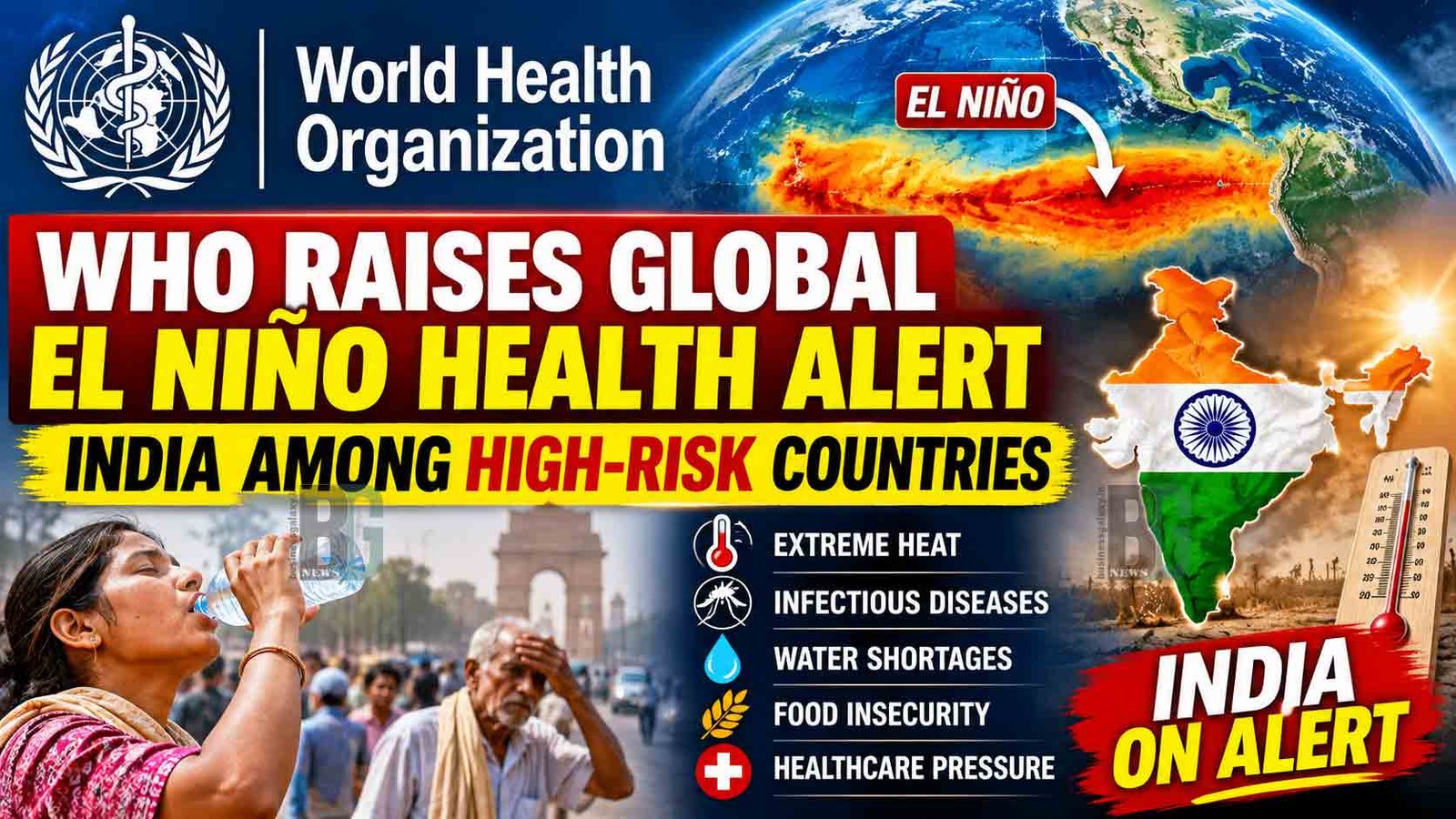
The World Health Organization (WHO) has stepped up its global emergency response to the growing health risks associated with the El Nino climate phenomenon, activating a Grade 3 response, its highest emergency response level. India has been identified among the countries facing high or very high public health risks, with concerns over extreme heat, drought, infectious diseases and food insecurity.
According to WHO’s September 2026 global public health risk assessment, India and several other South Asian countries could face increased climate-related health challenges due to changing rainfall and temperature patterns.
El Nino Could Increase Heat and Health Risks
- El Nino is a natural climate phenomenon involving the warming of surface waters in the central and eastern tropical Pacific Ocean. It can influence weather patterns across the world, affecting rainfall, temperatures and the frequency of extreme weather events.
- The World Meteorological Organization (WMO) warned on September 3, 2026, that the ongoing El Nino could intensify into a very strong event and persist through February 2027. The phenomenon could increase the risks of extreme heat, droughts and floods in different parts of the world.
- For India, concerns include above normal temperatures, irregular rainfall and possible pressure on water resources and agricultural production.
India Faces Multiple Public Health Concerns
WHO has identified several potential health risks associated with El Nino related climate disruptions in India, including:
- Extreme heat: Increased temperatures could lead to dehydration, heat exhaustion and heatstroke.
- Infectious diseases: Changing weather and water conditions could increase the risk of dengue, malaria and other climate-sensitive diseases.
- Water shortages: Reduced rainfall could affect drinking water availability and sanitation.
- Food insecurity: Drought conditions and irregular rainfall could affect agricultural production, potentially increasing food insecurity and malnutrition.
- Healthcare pressure: Extreme weather and disease outbreaks could place additional pressure on hospitals and healthcare services.
Children, pregnant women, elderly people, outdoor workers and individuals with existing health conditions may be particularly vulnerable.
WHO Calls for Stronger Health Preparedness
- WHO’s strategic preparedness and response plan covers the period from October 2026 to September 2027. It calls for stronger disease surveillance, early warning systems, preventive healthcare measures and improved coordination among governments and health authorities.
- The organisation has also emphasised the importance of ensuring adequate medical supplies, hospital preparedness and public awareness to minimise the health consequences of climate related emergencies.
What Does This Mean for India?
- India’s dependence on monsoon rainfall makes it particularly important to monitor changing climate conditions. Any prolonged disruption to rainfall could affect agriculture, drinking water supplies and livelihoods.
- The India Meteorological Department (IMD) and other relevant agencies continue to monitor El Nino and related climate conditions. However, the impact will depend on the intensity of the phenomenon, regional weather patterns and preparedness measures.
The key concern is not just rising temperatures but the combined impact of extreme heat, water stress, infectious diseases and potential food insecurity. Strengthening public health preparedness and early warning systems will be important to protect vulnerable communities across India.