

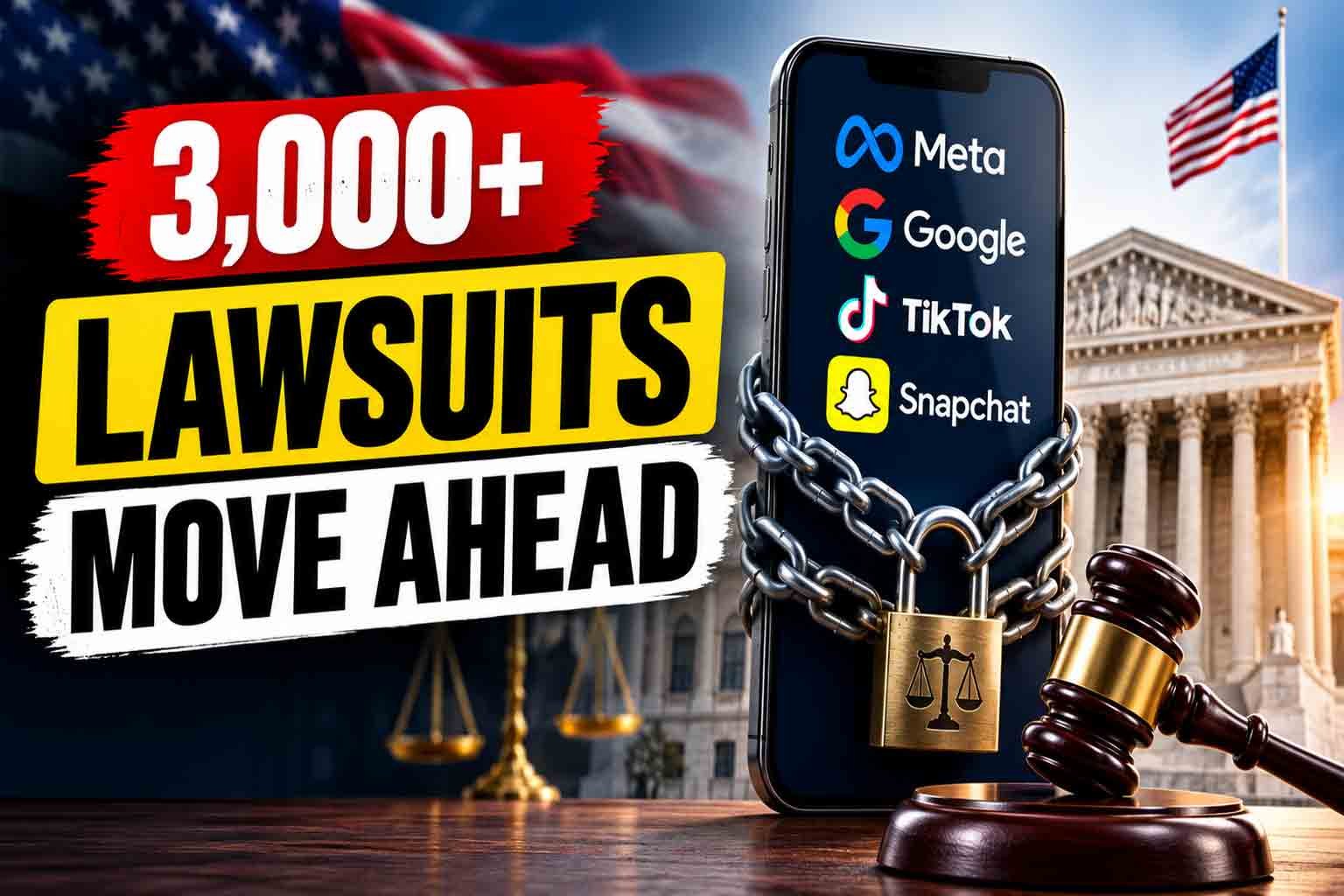
Washington: A US federal appeals court has cleared the way for more than 3,000 lawsuits accusing major social media companies of designing platforms that are addictive and potentially harmful to young users.
The ruling by the 9th US Circuit Court of Appeals on Monday, August 10, allows lawsuits against Meta, Google, TikTok and Snapchat to continue in federal court. The cases allege that the companies deliberately designed features that encourage young users to spend excessive amounts of time on their platforms and contributed to mental health problems among children and teenagers.
Court Rejects Early Appeal by Tech Companies
- The companies had attempted to stop the litigation by relying partly on Section 230 of the Communications Decency Act, a US law that generally protects online platforms from liability for content posted by their users.
- The companies argued that Section 230 should provide broad protection against the lawsuits.
- However, the appeals court said Section 230 provides a defense against liability rather than immunity from being sued at this stage. The court also concluded that the companies’ appeal was premature because the underlying litigation had not yet reached a final judgment.
- The ruling does not establish that the companies are legally responsible for harming children. It allows the lawsuits to continue through the normal court process.
What the Lawsuits Allege
- The cases have been brought by a wide range of plaintiffs, including children, young adults, parents, schools and government authorities.
- Plaintiffs accuse the companies of using algorithmic recommendations and other engagement focused design choices to keep young people using their services for longer periods.
- They argue that these practices contributed to problems including depression, anxiety, body image concerns and other mental health difficulties among young users.
Thousands of Cases Consolidated
- More than 3,000 federal lawsuits have been consolidated for coordinated proceedings before a federal judge in Oakland, California.
- The plaintiffs are seeking damages and other forms of legal relief.
- Thousands of related cases are also pending in state courts, adding to the legal pressure facing the technology companies.
Earlier Jury Verdict Against Meta and Google
- The latest ruling follows an important jury decision earlier this year.
- In March, a Los Angeles jury found Meta and Google liable for negligence in a case brought by a young woman who said she became addicted to Instagram and YouTube as a child.
- The jury awarded her $6 million in damages.
- Meta and Google have denied wrongdoing and have indicated that they will challenge the ruling.
Meta Faces Additional Legal Pressure
- Meta has also faced another major legal challenge in New Mexico, where authorities accused the company of misleading consumers about the safety of its platforms.
- A jury ordered Meta to pay $375 million, followed by an additional $567 million penalty ordered by a judge, along with youth safety measures.
- Meta has denied the allegations and is challenging the decisions.
Separate Case Involving 29 States
- The appeals court also refused to delay a separate case involving 29 US state attorneys general.
- The states accuse Meta of illegally collecting and using children’s data, designing its platforms to keep young users engaged and misleading consumers about the safety of its services.
Why the Ruling Matters
- The decision could have major consequences for the social media industry.
- If the plaintiffs ultimately succeed, technology companies could face significant financial penalties and potentially be required to change how their platforms are designed for younger users.
- The cases could also influence how courts interpret Section 230 when lawsuits focus not on content posted by users, but on the companies own product designs and business practices.
For now, the court has not ruled that Meta, Google, TikTok or Snapchat are responsible for the alleged harms. The companies will have the opportunity to defend themselves as the lawsuits move forward.