

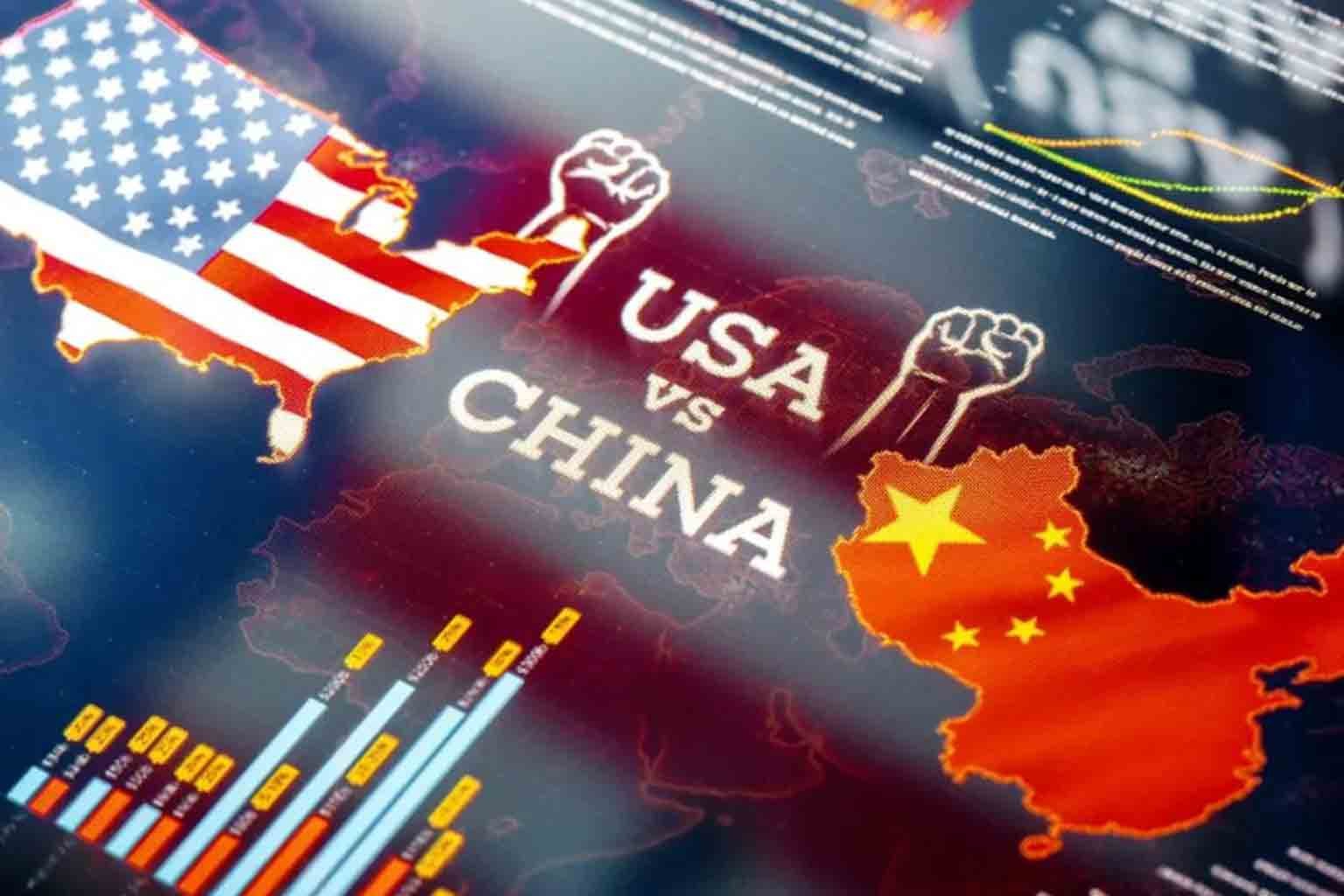
The global race for artificial intelligence (AI) leadership is accelerating, with the United States and China investing heavily in advanced computing, semiconductor technology and next generation AI systems. As competition between the world’s two largest economies intensifies, experts say the outcome could shape the future of technology, economic growth, and global influence.
The United States currently maintains an advantage in several key areas of AI development. Major American companies such as OpenAI, Google, Microsoft, Anthropic, Meta and Nvidia continue to lead in cutting edge AI research, advanced chips, cloud computing infrastructure, and commercial AI deployment. Nvidia’s AI processors remain the global industry standard for training and operating large AI models.
China, however, has rapidly emerged as a formidable challenger. Chinese technology firms have made significant progress in developing powerful AI models, expanding domestic semiconductor manufacturing, and building large scale computing infrastructure. The country’s government has also prioritized AI as a strategic national industry, supporting investments in data centers, research and technology innovation.
Recent developments have drawn global attention to China’s AI ambitions. Chinese companies have unveiled increasingly capable AI models at lower operating costs, prompting discussions about whether the gap between Chinese and American AI capabilities is narrowing faster than previously expected.
At the same time, analysts caution against many of the dramatic claims circulating on social media. Assertions that Chinese AI chips are thousands of times faster than Nvidia’s latest processors or that most American startups have switched to Chinese AI models are not supported by credible evidence. Industry experts note that while Chinese technology has advanced rapidly, American firms continue to hold significant advantages in high performance semiconductor design and frontier AI research.
The competition extends beyond software and hardware. Both countries are investing heavily in data centers, energy infrastructure, and specialized computing facilities needed to support the growing demand for AI applications. China has also explored innovative approaches to data-center development, including experimental underwater facilities designed to improve cooling efficiency and reduce energy consumption.
Technology analysts increasingly describe the AI race as a long-term strategic competition rather than a contest with a single winner. While the United States remains the global leader in many aspects of AI innovation, China’s rapid progress demonstrates its ability to challenge that dominance in several sectors.
Experts believe the future of AI leadership will depend not only on computing power and investment but also on talent, research breakthroughs, regulatory policies, energy resources and the ability to commercialize new technologies at scale.
As governments and technology companies continue pouring billions of dollars into artificial intelligence, the rivalry between the United States and China is expected to remain one of the defining technological competitions of the 21st century.