
AIMIM and Azad Samaj Party Hold Joint Lucknow Rally, While BJP Strengthens Preparations to Retain Power
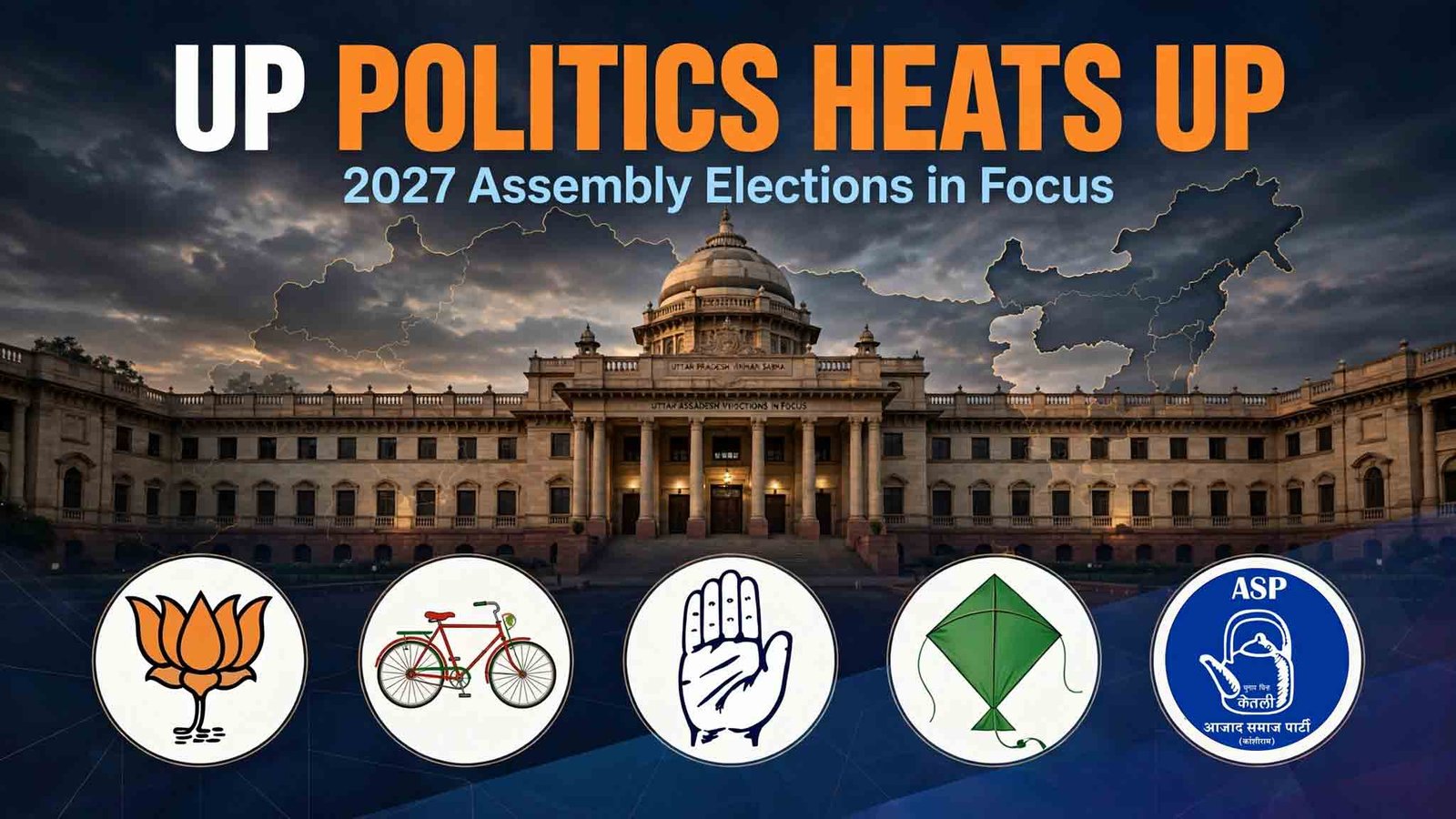
LUCKNOW: Political activity in Uttar Pradesh is gaining momentum ahead of the 2027 Assembly elections, with major parties working on alliances, candidate selection and electoral strategies. Disagreements over seat sharing between the Samajwadi Party (SP) and Congress, a new political alliance involving AIMIM and the Azad Samaj Party, and the BJP’s organisational preparations have brought the state’s political contest into focus.
SP-Congress Seat Sharing Talks Face Challenges
- The seat sharing negotiations between the Samajwadi Party and Congress have encountered difficulties after the SP announced its first list of five candidates while discussions with its alliance partner were still underway.
- The SP named Umar Ali Khan from Behat, Ashu Malik from Saharanpur, Nahid Hasan from Kairana, Mehboob Ali from Amroha and Jyoti Lodhi from Lalitpur.
- The announcement created disagreement because Behat and Saharanpur were among the constituencies reportedly sought by Congress. Congress MP Imran Masood criticised the SP’s decision, raising questions about coordination between the alliance partners.
- The SP has reportedly offered Congress 26 seats, while Congress is seeking a larger share. Both parties are expected to continue discussions to reach an agreement before the elections.
AIMIM and Azad Samaj Party Launch Joint Political Campaign
- Meanwhile, AIMIM president Asaduddin Owaisi and Azad Samaj Party (Kanshi Ram) chief Chandrashekhar Azad held a joint public rally in Lucknow on November 26 under the banner of the Samajik Parivartan Morcha.
- During the rally, Chandrashekhar Azad was formally projected as the alliance’s Chief Ministerial candidate. Owaisi announced that a Muslim leader would be appointed Deputy Chief Minister if the alliance forms the government.
- The alliance has indicated that it intends to contest all 403 Assembly constituencies in Uttar Pradesh.
- Addressing supporters, Owaisi criticised the Samajwadi Party over its approach to Muslim political representation and challenged its leadership. Chandrashekhar Azad also spoke about Dalit and Muslim representation, social justice and the concerns of disadvantaged communities.
- The alliance is seeking to establish a separate political platform ahead of the 2027 elections. Its actual electoral influence will become clearer as its candidates, constituency level organisation and campaign activities develop.
BJP Focuses on Organisational Strength
- The BJP has also started preparations for the next Assembly elections, reportedly concentrating on constituencies where it lost ground in previous electoral contests.
- According to media reports, the party is focusing on nearly 90 constituencies and has set a tentative target of winning at least 260 of the state’s 403 Assembly seats, excluding those won by its allies.
- The BJP’s reported strategy includes strengthening its organisation and expanding support among Other Backward Classes (OBCs) and Scheduled Caste communities.
- These figures represent reported party targets and preparations, not confirmed electoral outcomes.
Ground Reality: Key Issues Likely to Shape the Contest
- Beyond political alliances and public rallies, several issues are likely to remain important in the state’s electoral debate.
- Unemployment, farmers concerns, education, healthcare, law and order, caste representation and local development are among the issues that voters may consider when evaluating political parties.
- The performance of sitting MLAs, candidate selection and the ability of parties to maintain support at the constituency level will also be important factors.
- The SP-Congress seat sharing negotiations, the political campaign of the Samajik Parivartan Morcha and the BJP’s organisational preparations indicate that the contest is taking shape well ahead of the 2027 Assembly elections.
- However, rallies, political announcements and party targets alone cannot establish the actual mood of voters. A clearer picture will emerge through constituency level developments, public feedback and reliable opinion surveys as the election approaches.
Source: Hindustan Times, The Indian Express, The New Indian Express, PTI, United News of India and The Statesman.