

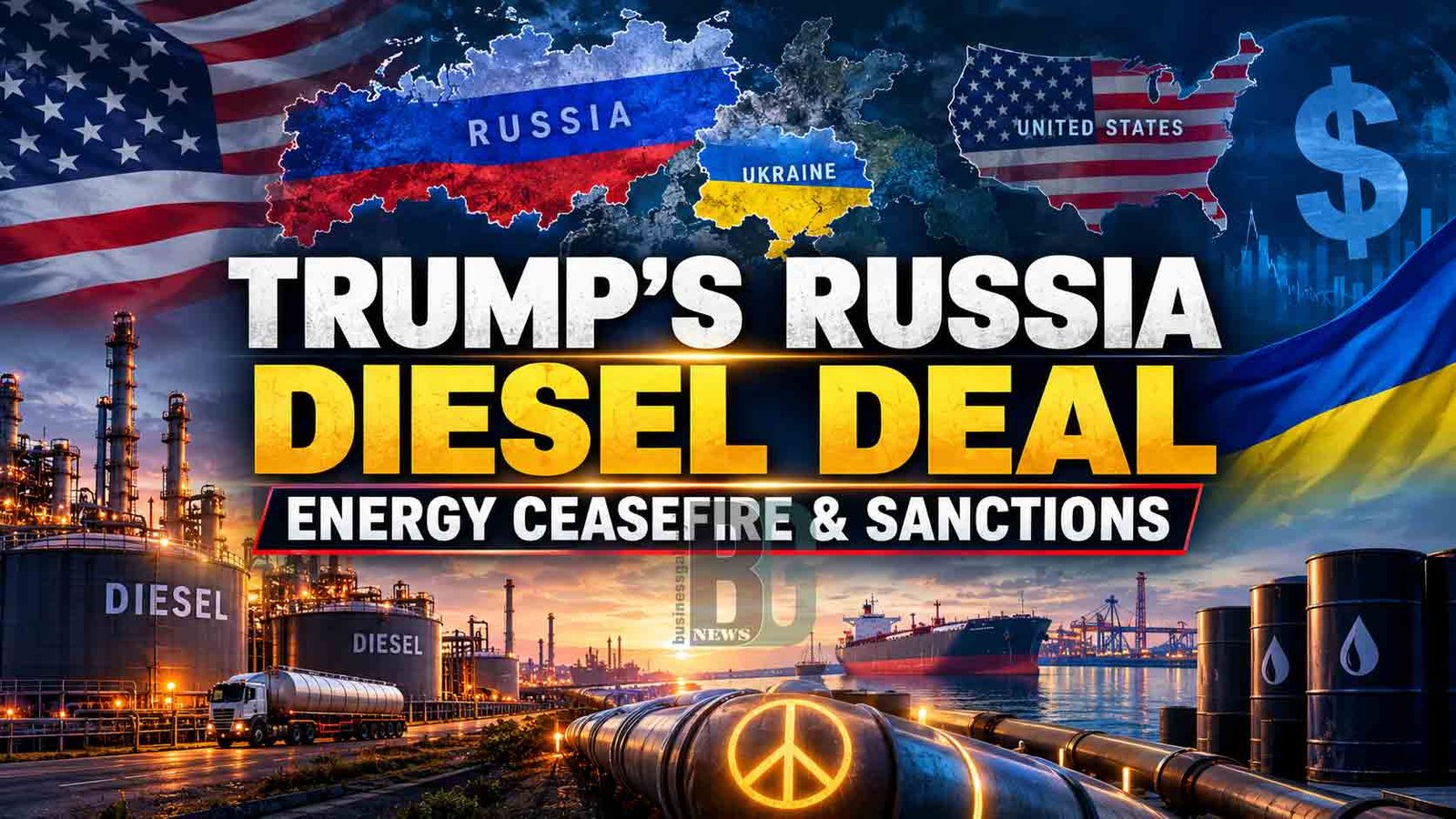
Washington: US President Donald Trump has announced an agreement with Russian President Vladimir Putin to release Russian diesel fuel into US and global markets, while also declaring an energy ceasefire between Russia and Ukraine. The announcements have triggered debate over sanctions policy, global fuel prices and the future of the conflict.
The diesel arrangement follows a telephone conversation between Trump and Putin on October 9, as the US faces pressure from rising fuel costs.
Russia to Supply Diesel in Stages
- Trump said Russia would initially supply 300,000 metric tonnes of diesel, followed by 500,000 tonnes in November and another one million tonnes thereafter. He also announced a further three million tonnes of supply, depending on production and delivery arrangements.
- The proposed shipments are intended to increase fuel availability and ease pressure on prices. However, the actual impact will depend on how much fuel is produced, transported and delivered.
US Temporarily Eases Certain Russian Diesel Sanctions
- The US Treasury Department issued General License No. 135, authorising specified transactions involving Russian origin diesel, including certain sales, deliveries and imports, until April 7, 2027.
- The authorisation represents a targeted relaxation of restrictions for eligible diesel transactions. It does not remove all US sanctions against Russia.
- The move marks a significant change in approach after years of Western restrictions imposed following Russia’s invasion of Ukraine. Supporters argue that additional fuel supplies could help consumers, while critics warn that Russian energy revenues could benefit Moscow during the continuing war.
Trump Announces an Energy Ceasefire
- On October 11, Trump announced that Russia and Ukraine had agreed to stop attacking each other’s energy infrastructure.
- However, the implementation remained uncertain. Ukrainian President Volodymyr Zelenskyy said Ukraine was prepared to refrain from attacking Russian energy facilities if Russia reciprocated. Reports on October 12 indicated that Russian strikes on Ukrainian energy infrastructure continued, raising doubts about whether an effective ceasefire had been established.
- The scope, timing and enforcement arrangements remained unclear.
Ukraine Raises Concerns Over the Deal
- Zelenskyy criticised the Russian diesel arrangement, arguing that increased Russian fuel revenues could help Moscow sustain its military operations.
- The agreement has also drawn criticism from some US lawmakers and Western allies, who have questioned whether easing restrictions on Russian energy exports could weaken pressure on Moscow.
- The Trump administration has presented the arrangement as a way to increase fuel availability and address high energy costs.
Does the Deal Signal a Return to Dollar-Based Trade?
- The diesel agreement has raised broader questions about US-Russia economic relations and the role of the dollar in international energy trade.
- Russia has previously promoted reducing dependence on the US dollar and increasing the use of national currencies in trade with partners such as China and other BRICS members. However, the diesel agreement alone does not establish that Moscow is reversing that policy or seeking a broader return to dollar based trade.
- The currency used for the proposed transactions, the payment arrangements and any wider changes in Russia’s trade policy would need to be independently established before drawing that conclusion.
Impact on Global Fuel Prices
- The additional diesel supplies could provide some relief to fuel markets, but a substantial or immediate price reduction is not guaranteed. Shipping capacity, refinery damage, existing supply shortages and continuing geopolitical tensions could limit the effect.
- Energy markets will also respond to developments in the wider conflict and changes in supply from other producing countries. The agreement’s eventual effect will depend on actual deliveries rather than announced volumes alone.
What Happens Next?
- The key questions are whether Russia delivers the announced fuel volumes, whether the temporary US authorisation leads to sustained trade and whether Russia and Ukraine implement a verifiable halt to attacks on energy infrastructure.
- For now, the diesel deal represents a significant development in US-Russia energy relations, but its wider economic and diplomatic consequences remain uncertain.
Source: International media reporting and US Treasury announcements, October 9-12, 2026.