

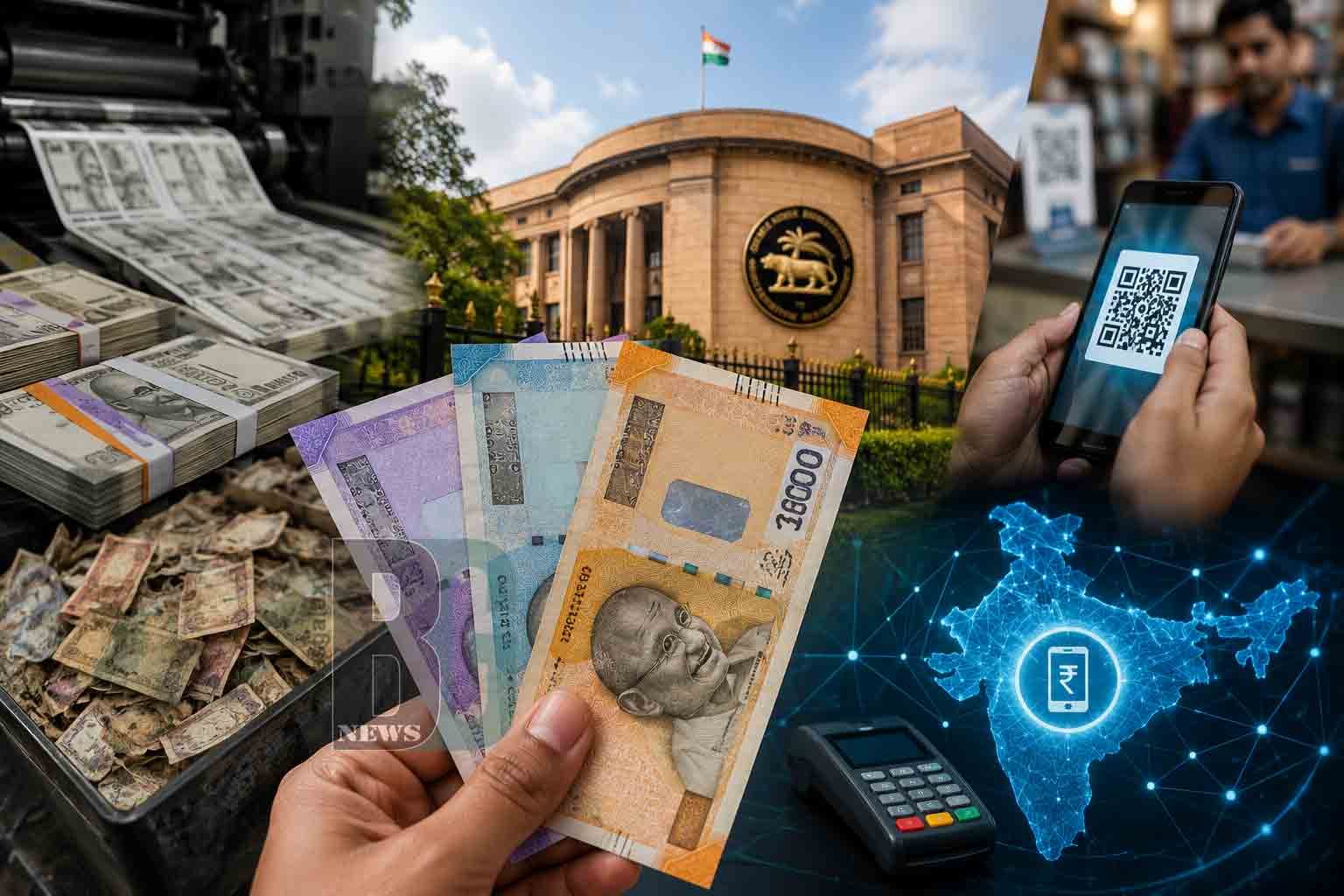
India could soon witness a major change in its currency system, with the Reserve Bank of India (RBI) considering the introduction of polymer, or plastic, banknotes. The move comes as the demand for cash continues to rise despite the rapid expansion of digital payment platforms such as UPI.
According to recent reports, the RBI is revisiting a proposal first explored more than a decade ago. The central bank is expected to begin with a pilot project, likely involving lower denomination notes such as ₹10 and ₹20, before deciding on a wider rollout.
The proposal has gained momentum due to the growing cost of printing and replacing paper currency. RBI’s expenditure on printing banknotes rose to ₹6,372.8 crore in FY2024-25, while nearly 23.8 billion soiled and damaged notes were withdrawn from circulation during the same period. The large number of worn-out notes has increased replacement costs and added pressure on the currency management system.
At the same time, cash usage in India remains strong. Currency in circulation has reached a record ₹42.86 lakh crore, reflecting sustained demand for physical cash even as digital transactions continue to grow rapidly. This trend suggests that India is evolving into both a digital payment economy and a cash based economy simultaneously.
Polymer banknotes are made from a thin, flexible plastic material rather than traditional cotton based paper. They are more resistant to moisture, dirt, and tearing, allowing them to remain in circulation much longer. Polymer notes also offer enhanced security features such as transparent windows and advanced anti counterfeiting technologies.
India had previously tested polymer notes in selected cities in 2012, but the initiative was shelved due to operational and technological challenges. With improvements in printing and ATM technologies, the RBI is now reconsidering the idea.
More than 60 countries, including Australia, Canada, Singapore, the United Kingdom, and New Zealand, have already adopted polymer currency, citing longer durability, lower replacement costs, and stronger security features.
While no final decision has been announced, the RBI’s renewed interest in polymer banknotes signals a possible shift in India’s currency strategy aimed at reducing long term costs and improving the durability of banknotes in circulation.