
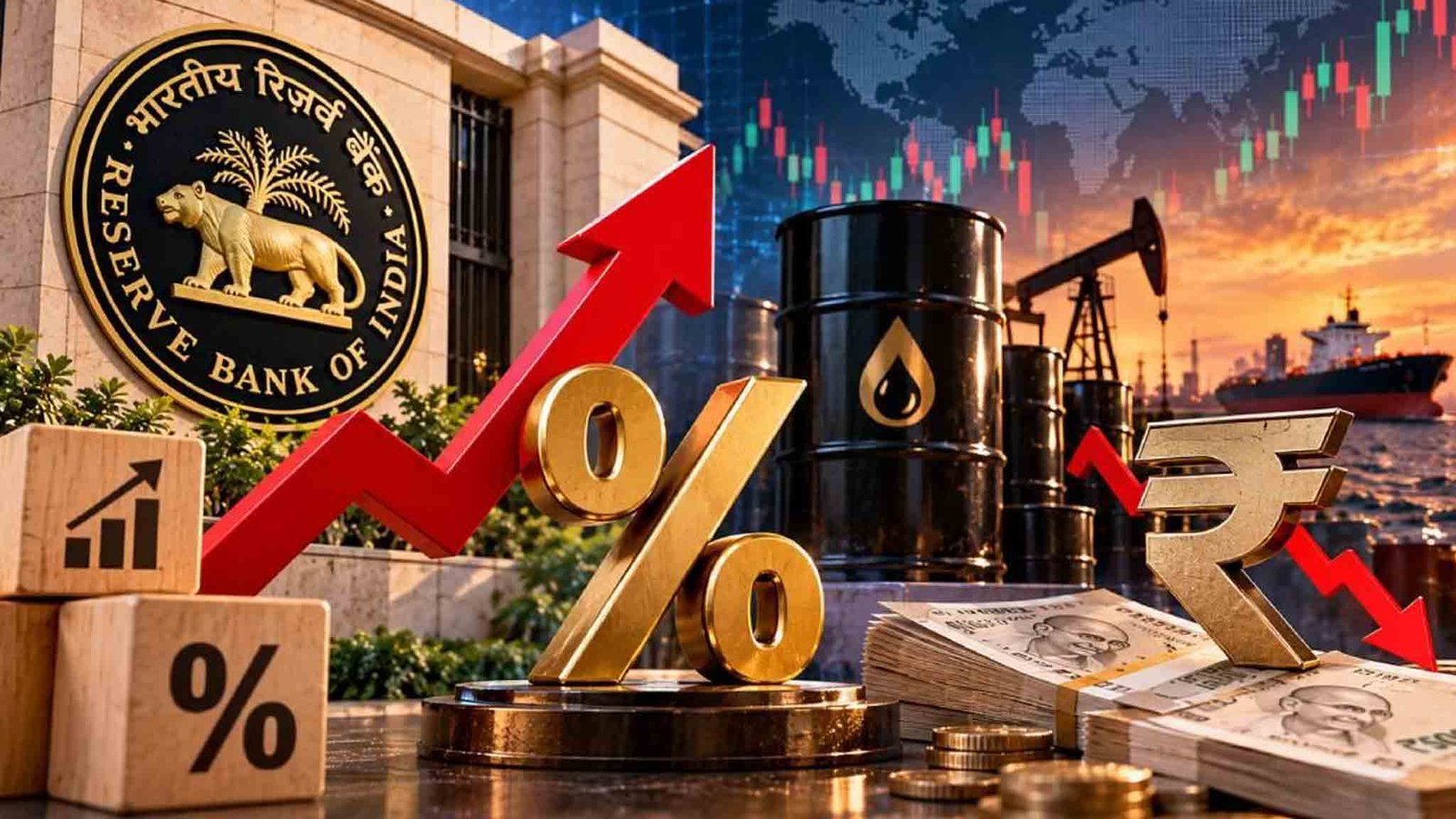
New Delhi: India’s retail inflation climbed to 6.09% in October 2026, crossing the Reserve Bank of India’s (RBI) upper tolerance limit of 6%, as rising food prices added pressure on household budgets. Wholesale inflation also increased sharply to 12.29%, raising concerns about broader price pressures across the economy.
The latest figures indicate growing inflationary challenges for India’s economy and have strengthened expectations that the RBI may consider another increase in interest rates at its upcoming Monetary Policy Committee (MPC) meeting in December.
Retail Inflation Rises to 6.09%
According to the National Statistics Office (NSO), under the Ministry of Statistics and Programme Implementation, India’s Consumer Price Index (CPI) inflation increased to 6.09% in October, compared with 5.54% in September 2026.
The October inflation figures recorded:
- Overall retail inflation: 6.09%.
- Rural inflation: 6.63%.
- Urban inflation: 5.41%.
- Food inflation: 8.94%.
Food prices remained a major contributor to the increase, affecting household expenditure on essential commodities.
The RBI’s medium term inflation target is 4%, with a permitted tolerance range of 2% to 6%. October’s reading therefore exceeded the upper limit of the target range.
Wholesale Inflation Surges to 12.29%
Wholesale Price Index (WPI) inflation also recorded a significant increase, reaching 12.29% in October compared with 11.39% in September.
According to the Ministry of Commerce and Industry, the major contributors included:
- Fuel and power inflation: 32.84%.
- Primary articles inflation: 9.24%.
- Manufactured products inflation: 9.54%.
The increase in fuel and power prices was particularly significant, reflecting higher costs of crude petroleum, natural gas and other energy-related products.
Rising wholesale prices can increase production, transportation and distribution costs, potentially putting additional pressure on consumer prices.
Why Are Inflation Concerns Increasing?
Several factors are contributing to the current inflationary environment.
- 1. Rising food prices: Higher food inflation is increasing household expenditure and creating additional pressure on essential commodities.
- 2. Fuel and energy costs: Higher crude oil and energy prices can increase transportation, manufacturing and distribution expenses.
- 3. Weather related risks: Concerns over El Nino conditions and uneven monsoon patterns could affect agricultural production and food supplies.
- 4. International developments: Geopolitical tensions and fluctuations in global crude oil prices could create additional uncertainty for India’s import dependent economy.
Will the RBI Increase Interest Rates?
- The rising inflation figures have intensified discussions about the RBI’s next monetary policy decision.
- According to Reuters, several economists and financial institutions expect inflationary pressures to remain elevated and have raised the possibility of another repo rate increase in December.
- The RBI raised its benchmark repo rate by 25 basis points in October 2026, according to Reuters reporting. Further monetary tightening is being discussed as a possible measure to control inflation and manage broader price pressures.
- However, the RBI has not confirmed another rate increase. Its December decision will depend on incoming inflation data, economic growth, food prices, international oil markets and other economic indicators.
How Could Higher Interest Rates Affect the Public?
If the RBI increases the repo rate, banks may adjust their lending and deposit rates.
Possible effects include:
- Home loans and other floating-rate loans could become more expensive.
- Personal and business borrowing costs may increase.
- EMIs could rise for borrowers with loans linked to external benchmarks.
- Higher deposit rates could benefit some savers.
- Businesses may face increased financing costs, potentially affecting investment and expansion.
What Lies Ahead?
- India’s inflation trend will remain an important economic indicator in the coming months. Food prices, energy costs, weather conditions and international developments will influence the inflation outlook.
- The RBI faces the challenge of maintaining price stability while supporting economic growth. Its upcoming December monetary policy decision will be closely watched by households, businesses, investors and financial markets.
Sources: Ministry of Statistics and Programme Implementation (MoSPI), Ministry of Commerce and Industry, Reuters and Financial Express.