
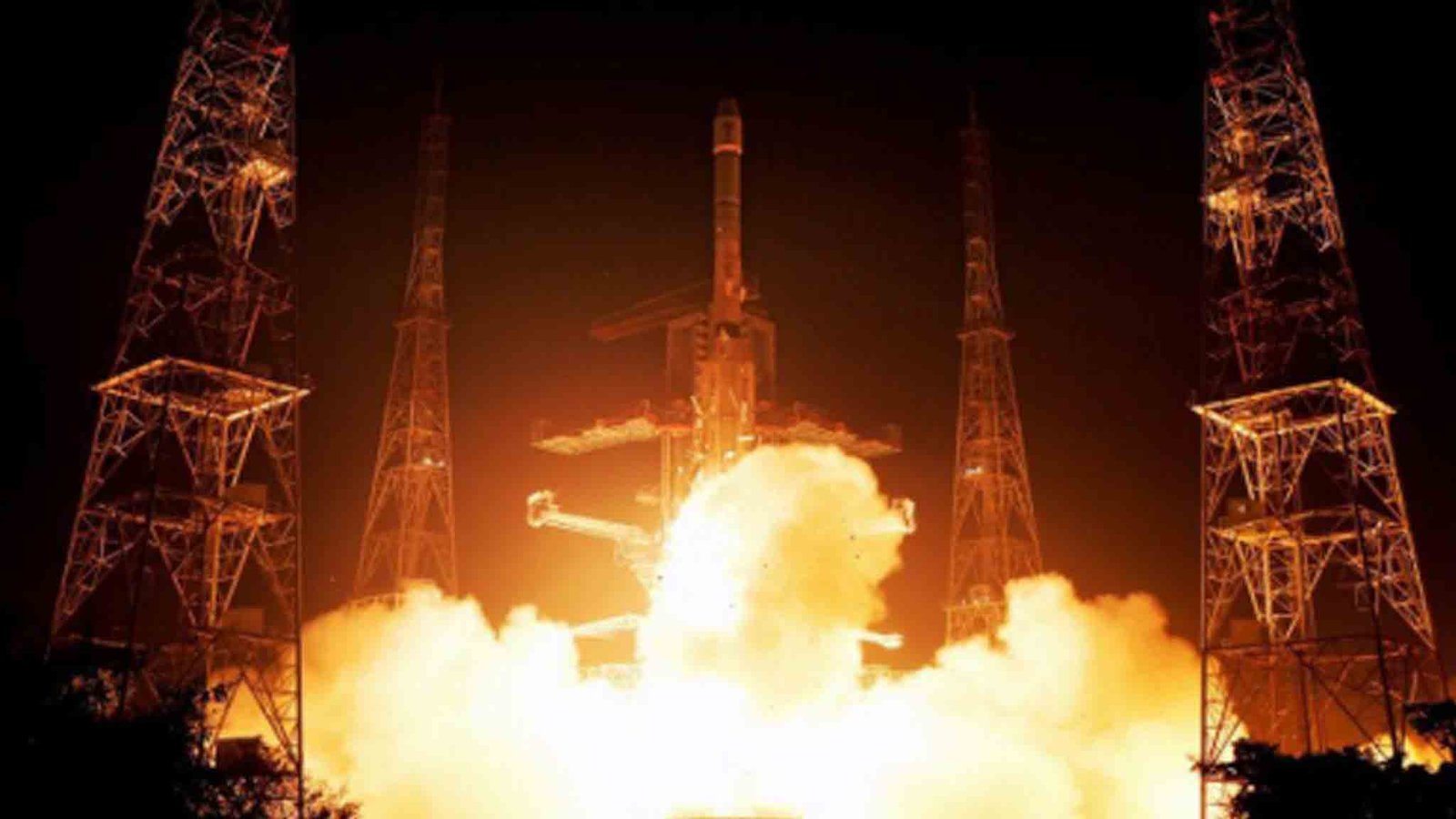
The Indian Space Research Organisation (ISRO) has successfully launched its next-generation navigation satellite, NVS-03, aboard the GSLV-F18 rocket from the Satish Dhawan Space Centre in Sriharikota, Andhra Pradesh.
The mission marks an important step towards strengthening India’s indigenous satellite navigation system, known as Navigation with Indian Constellation (NavIC), and improving navigation services across India and surrounding regions.
The satellite was launched at 11:51 PM IST on October 30. Reports indicate that it was successfully placed into orbit.
What is the NVS-03 mission?
- NVS-03 is the third satellite in ISRO’s second-generation navigation satellite series. It is designed to strengthen the existing NavIC infrastructure and ensure continuity of India’s independent navigation services.
- The GSLV-F18 mission is the 20th flight of India’s Geosynchronous Satellite Launch Vehicle (GSLV).
- The rocket carried the approximately 2,232 kg satellite into a Geosynchronous Transfer Orbit (GTO). The satellite must then complete further orbital manoeuvres to reach its designated operational orbit.
What makes NVS-03 special?
The satellite includes important technological improvements.
- Indigenous atomic clock
NVS-03 carries an Indian-developed atomic clock alongside procured atomic clocks. Accurate timekeeping is essential for satellite navigation because positioning calculations depend on precise timing signals. - Additional L1 frequency signal
The satellite introduces the L1 frequency band in addition to the existing L5 and S-band signals. This is expected to expand compatibility with modern navigation receivers and civilian devices. - Improved navigation services
The satellite is intended to support more reliable positioning, navigation and timing services through India’s NavIC system.
What is NavIC and how does it help India?
NavIC, formerly known as the Indian Regional Navigation Satellite System (IRNSS), is India’s independent satellite based navigation system.
It provides two main services:
- Standard Positioning Service (SPS): Available for civilian users.
- Restricted Service (RS): An encrypted service intended for authorised users.
NavIC is designed to provide coverage across India’s landmass and approximately 1,500 kilometres beyond India’s geographical boundaries.
Where can NavIC be useful?
- Road navigation and vehicle tracking.
- Maritime navigation and fishing operations.
- Aviation and transport services.
- Disaster management and emergency response.
- Precision agriculture.
- Location based services and timing applications.
- Strategic and security related applications.
Why is this mission particularly important?
- India’s NavIC programme has faced technical challenges in maintaining its satellite constellation.
- In January 2025, the NVS-02 satellite was successfully launched, but a problem involving its propulsion system electrical connection prevented it from completing the required orbit raising manoeuvres.
- As a result, the satellite could not reach its intended operational orbit.
- For NVS-03, ISRO has incorporated corrective measures following the investigation into the previous mission. One significant change involves the configuration of the satellite’s pyrotechnic valves to avoid a repeat of the earlier problem.
- The successful launch of NVS-03 is therefore an important development for India’s efforts to strengthen its independent navigation infrastructure.
What comes next?
ISRO has planned five second-generation NavIC satellites:
- NVS-01 – Launched in May 2023.
- NVS-02 – Launched in January 2025.
- NVS-03 – Launched on October 30, 2026.
- NVS-04 – Planned.
- NVS-05 – Planned.
These satellites are intended to augment the existing NavIC constellation and improve the continuity and capabilities of India’s navigation services.
Conclusion
- The NVS-03 mission represents an important step in India’s space and navigation capabilities. By strengthening NavIC with improved satellite technology, indigenous atomic clocks and additional navigation signals, India aims to enhance its technological independence and reduce reliance on foreign navigation systems.
- However, successful launch and initial orbital deployment should not be confused with the completion of all orbital manoeuvres or the commencement of full operational services. The satellite’s subsequent performance will also be important.