
Business Galaxy | India Political and Constitutional Affairs
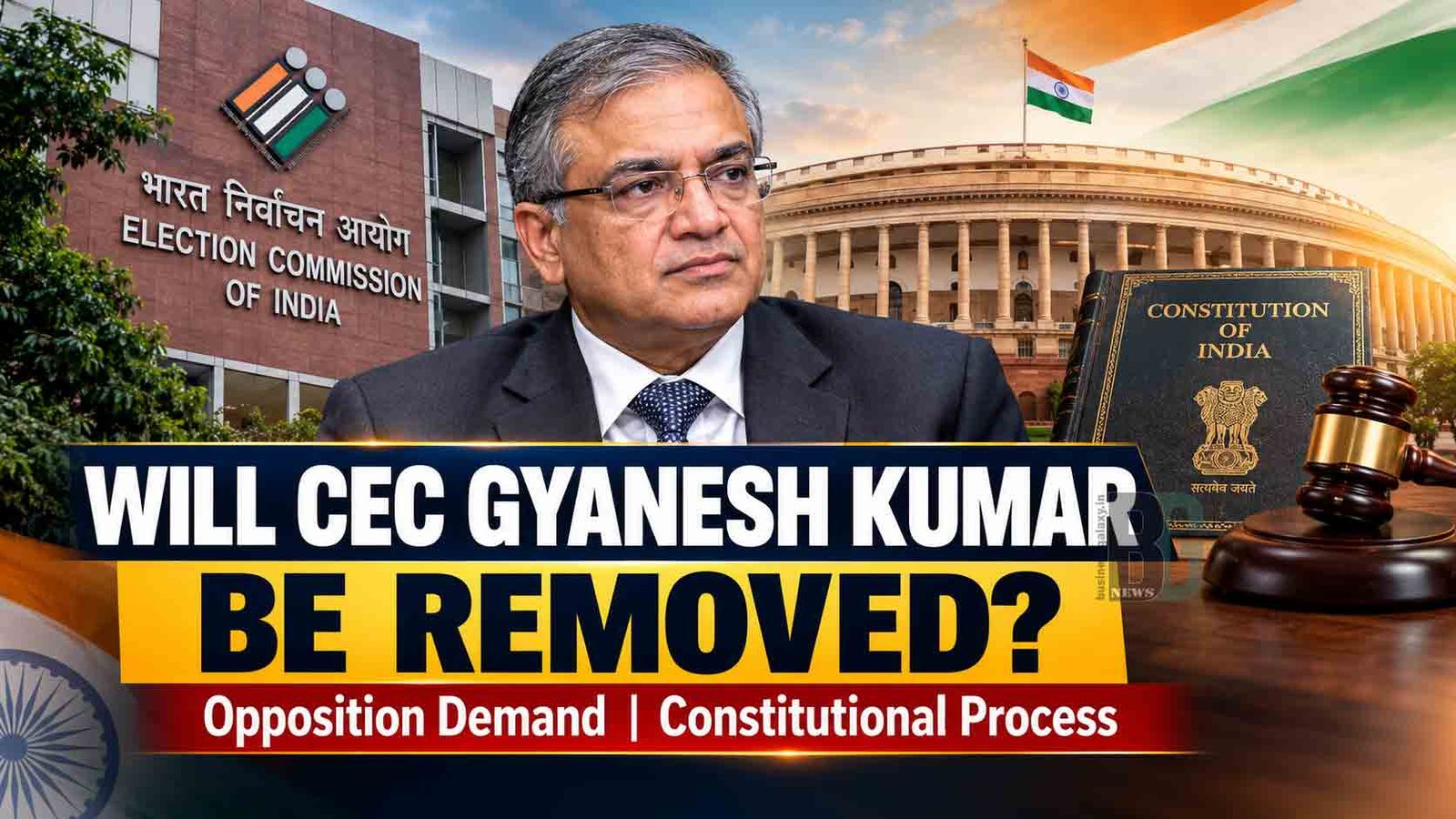
The demand to remove Chief Election Commissioner (CEC) Gyanesh Kumar has become a major political issue in India. Opposition parties want him removed over alleged irregularities in the Special Intensive Revision (SIR) of voter lists. Student organisations and social activists have also raised concerns about voters rights and the handling of protests.
The Election Commission of India (ECI) has defended its decisions and announced measures to help voters. Meanwhile, Lok Sabha Speaker Om Birla has said that any fresh notice seeking Kumar’s removal will be examined according to parliamentary rules.
But will Gyanesh Kumar actually lose his position? The answer depends on the evidence and the constitutional process.
What Is the Election Commission Saying?
- The Election Commission is the constitutional body responsible for conducting elections to Parliament, state legislatures and the offices of the President and Vice-President.
- The Chief Election Commissioner heads the Commission, which also includes other Election Commissioners.
- On September 26, the ECI issued a statement defending its decisions, including those related to the SIR process. It said that its decisions had been approved unanimously by the full Commission.
- The statement came after media reports said that Election Commissioners Sukhbir Singh Sandhu and Vivek Joshi had raised objections about certain decisions and procedures.
- The Commission said that internal discussions and written observations were part of its normal working process. It maintained that the reported differences did not mean its final decisions were divided.
- The ECI has also announced measures to help voters whose names or documents require verification. These include assistance through Booth Level Officers (BLOs), help desks, special camps for vulnerable people and a review of its ECINet digital system.
- The Commission says these steps are intended to make voter verification easier and improve the functioning of its systems.
What Is the Government Doing?
- The issue has become a matter of political and constitutional debate. However, no separate, new Union government announcement resolving the allegations against Kumar was confirmed in the reports reviewed for this article.
- The government’s position should not be confused with the Election Commission’s statements. The ECI is a constitutional institution, and its official response represents the Commission’s position.
- The next important developments may come through parliamentary proceedings, court hearings or further statements from the government and the Election Commission.
What Is the Opposition Demanding?
- Opposition parties have accused the Election Commission of failing to address their concerns about the SIR process. They argue that voter list revisions must not result in eligible citizens losing their right to vote.
- They have demanded Kumar’s removal and sought greater transparency in the handling of electoral rolls.
- The Opposition has also raised questions about reports of disagreements among Election Commissioners.
- However, these allegations have not been established as proven findings of wrongdoing. The Election Commission has defended its procedures and the claims must be assessed through evidence and the appropriate legal process.
What Did Lok Sabha Speaker Om Birla Say?
- On October 22, Speaker Om Birla said that any fresh notice seeking Kumar’s removal would be examined according to parliamentary rules.
- This means that a notice would have to be considered under the prescribed procedure. It does not mean that the Speaker has accepted a fresh motion or decided to remove Kumar.
- Earlier removal notices were rejected by the presiding officers of both Houses in April 2026. A subsequent attempt was reported as pending in the Rajya Sabha.
- The status of any fresh or pending notice is important because the removal process cannot move forward simply because political parties demand it.
What Are Students and Young Protesters Saying?
- Student organisations, including the All India Students Association (AISA) and the Students Federation of India (SFI), have participated in demonstrations connected with the SIR controversy and demands for Kumar’s removal.
- Their concerns include the protection of eligible voters, transparency in electoral roll revisions and the right of citizens to question public institutions.
- The handling of protests has also become a subject of debate. Some organisers and activists have criticised police restrictions and detentions, while authorities have cited public order concerns.
- The issue has therefore expanded beyond the removal demand to include questions about peaceful protest and the protection of democratic rights.
What Are Social Activists Saying?
- Social activists, lawyers and civil society groups have called for greater transparency in voter verification.
- They argue that people whose names are missing from voter lists should receive clear information about how to correct their records. They have also raised concerns about difficulties faced by migrant workers, homeless people and economically disadvantaged citizens who may struggle to provide documents.
- Activists have separately questioned restrictions imposed during demonstrations and called for the protection of peaceful assembly.
- These are concerns raised by civil society groups. Individual allegations about voter exclusion or unlawful police action require verification before they can be reported as established facts.
What Do Constitutional Experts Say?
- The main legal question is whether there is sufficient evidence to justify removing the Chief Election Commissioner.
- Under Article 324(5) of the Constitution, the CEC has protection against removal comparable to that of a Supreme Court judge.
- The CEC cannot be removed simply because Opposition parties disagree with his decisions. The constitutional grounds of proved misbehaviour or incapacity must be established through the applicable procedure.
- A removal motion must also secure the required special majorities in both the Lok Sabha and the Rajya Sabha.
- This makes removal a difficult process. Even if a notice is admitted, the allegations must still be examined and the parliamentary requirements must be met.
- The Supreme Court proceedings concerning the SIR process provide a separate route for examining legal questions. However, a court issuing notice on a petition does not mean that it has accepted the allegations as true.
What Could Happen Next?
Several developments will be important to watch:
- Parliament: Whether a fresh removal notice is formally submitted and what decision is taken on its admissibility.
- Supreme Court: How the legal challenges concerning the SIR process progress.
- Election Commission: Whether it issues further explanations or publishes additional information about voter verification.
- Opposition parties: Whether they continue protests or pursue further parliamentary and legal action.
- Students and social activists: Whether they organise additional demonstrations and raise concerns about voter rights and peaceful protest.
These developments could shape the political debate, but they do not automatically mean that Kumar will be removed.
Conclusion: Will Gyanesh Kumar Lose His Position?
- As of October 24, 2026, there is no confirmed announcement that Gyanesh Kumar is being removed as Chief Election Commissioner.
- The Opposition is demanding his removal, student groups and social activists are raising concerns and the Election Commission is defending its decisions while announcing measures to help voters.
- The next stage will depend on the evidence, court proceedings and the constitutional process in Parliament.
- The key point is simple: political pressure is not the same as removal. Any decision must follow the law and the prescribed constitutional procedure.
Business Galaxy will continue to follow verified developments and report the positions of the government, Opposition, Election Commission and other stakeholders fairly.