

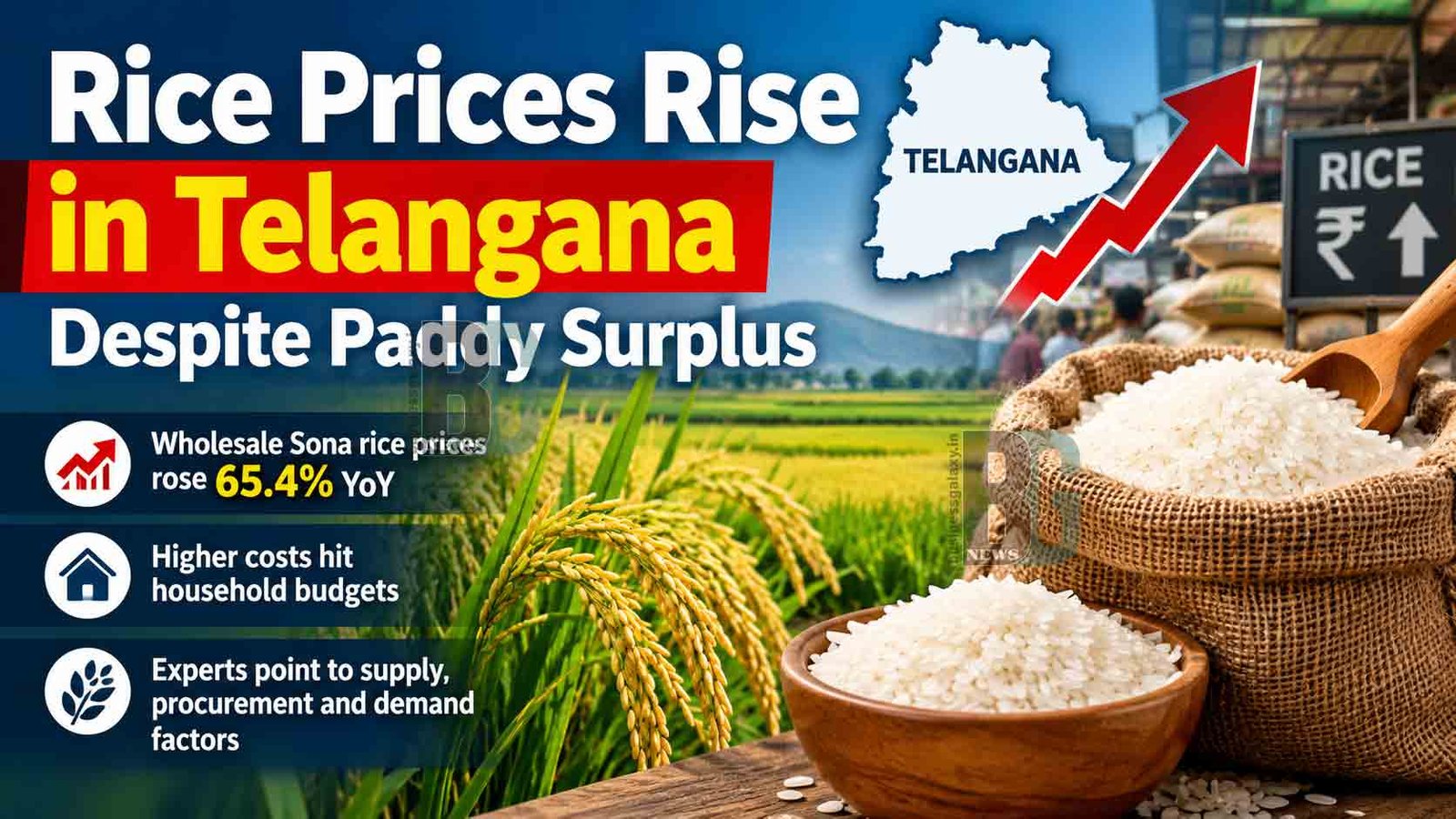
Households across Telangana are facing rising food expenses as rice prices continue to climb, putting additional pressure on family budgets despite the state’s position as a major paddy-producing region.
According to a report published on October 20, wholesale Sona rice prices in Telangana rose by 65.4% year on year, from ₹2,068 per quintal in October 2025 to ₹3,419 per quintal in October 2026. The report also cited rice inflation of 13% in September 2026.
Retail prices have also increased. A report published by The New Indian Express on October 9 said fine rice was selling at around ₹80-₹82 per kilogram in Telangana, compared with approximately ₹70 earlier. A 25 kg bag was reported to cost around ₹2,150, up from approximately ₹1,800.
Why are rice prices increasing?
- Market reports point to several possible factors, including concerns about future supplies, reduced rice cultivation nationally, rising paddy procurement prices and strong demand for fine quality rice.
- Traders and millers have also expressed concerns about rainfall conditions and the possible effects of El Niño on future agricultural production. These concerns may influence purchasing and stockholding decisions, although the extent to which each factor has contributed to current retail prices remains uncertain.
- Another factor is the movement of paddy between farmers, traders, rice mills and markets. Private traders from other states have reportedly been buying paddy directly from Telangana farmers, sometimes offering prices above the minimum support price.
Impact on ordinary families
- Rice is a staple food for millions of households in Telangana. Higher prices can increase monthly grocery bills, particularly for low and middle income families that purchase rice in bulk.
- For example, a reported increase in the price of a 25 kg bag from ₹1,800 to ₹2,150 represents an additional expense of ₹350 per bag. Families buying multiple bags over time may face a substantial increase in their food budgets.
- Rising prices of other essential commodities, including pulses and spices, are adding to the pressure on household spending.
Why are prices rising despite high paddy production?
- High agricultural production does not automatically guarantee lower retail prices. The final cost of rice is also affected by the variety of grain available, procurement prices, milling, storage, transportation, market demand and the amount of grain reaching retail markets.
- The reported wholesale price increase does not, by itself, establish that hoarding or market manipulation is responsible. A detailed assessment of market arrivals, available stocks, trading practices and official price data would be needed to determine the contribution of different factors.
What can be done?
- Monitoring essential commodity prices, improving market transparency and ensuring an adequate supply of affordable rice could help protect consumers. Authorities can also examine unusual price movements and investigate credible complaints of illegal stockholding or other market violations.
- Consumers should compare prices across retailers and check the variety, quality and weight of rice bags before purchasing.
Conclusion: The rise in rice prices is an important public-interest issue for Telangana. The challenge is to understand why consumer prices remain high and ensure that adequate supplies reach households at reasonable rates without unfairly disadvantaging farmers.