

An Analytical Study | Business Galaxy
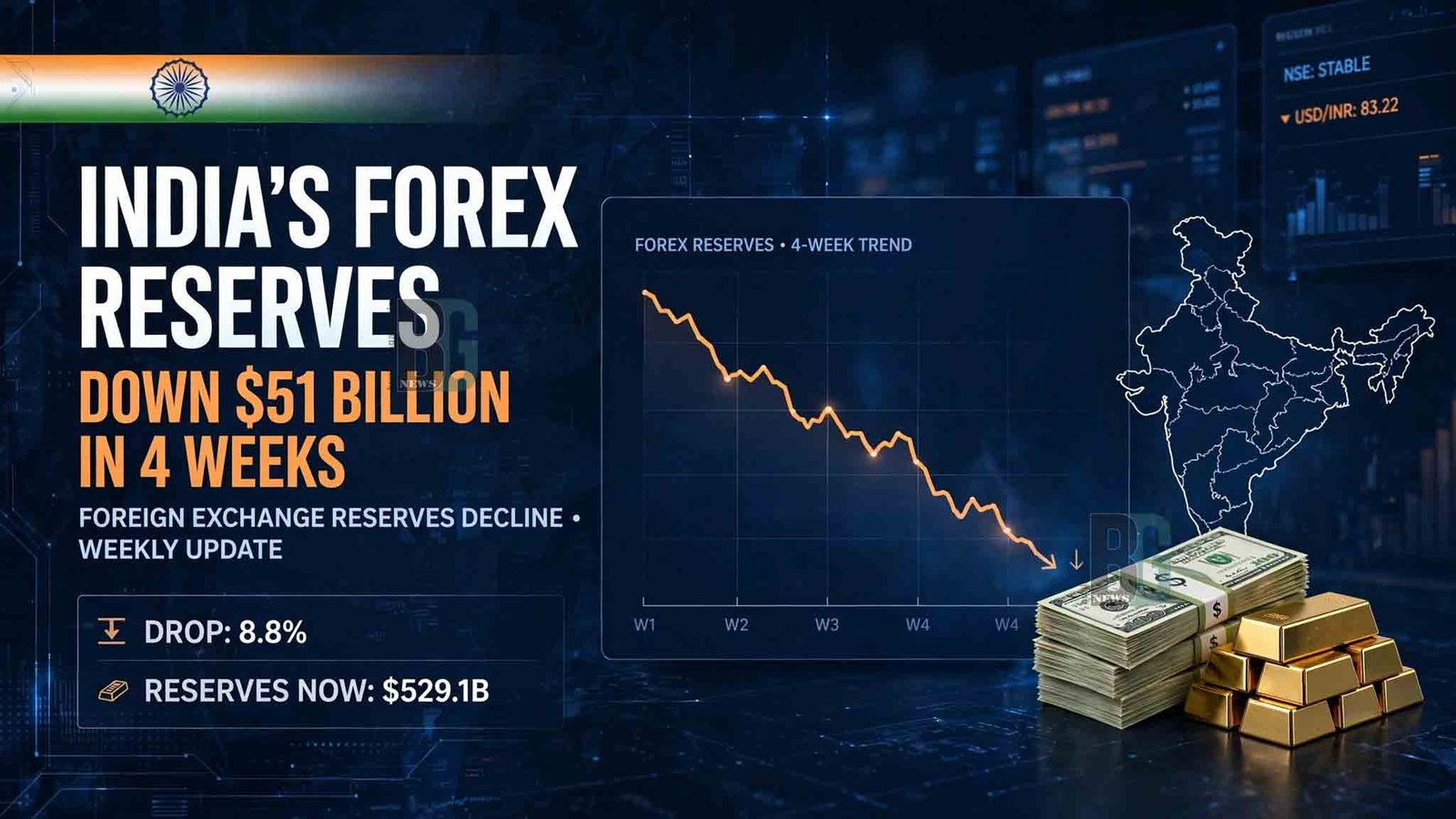
India’s foreign exchange reserves reportedly fell by approximately $51.1 billion over four weeks, declining from $785.7 billion on September 4 to $734.6 billion on October 2, 2026. The sharp decline has raised questions about pressure on the Indian rupee, the role of the Reserve Bank of India (RBI), and the country’s economic stability.
But does this automatically mean India is facing a currency crisis? Not necessarily. Understanding the reasons behind the decline is essential before drawing conclusions.
1. What Are Foreign Exchange Reserves?
- Foreign exchange reserves are assets held by the RBI to help manage external financial pressures. They include foreign currencies, gold, reserve assets held with the International Monetary Fund, and other reserve related assets.
- These reserves help India pay for imports, meet external financial obligations, support confidence in the economy, and manage excessive volatility in the rupee.
- In simple terms, reserves act as a financial safety cushion when the country faces pressure from international markets.
2. Why Have the Reserves Declined?
Several factors can contribute to a decline in foreign exchange reserves.
- A. RBI intervention in currency markets
When the rupee comes under pressure, the RBI may sell US dollars to moderate sharp fluctuations. Such sales can reduce the foreign currency component of reserves. - B. Foreign investment outflows
When foreign investors withdraw money from Indian financial markets, demand for dollars can increase. This can put additional pressure on the rupee. - C. Higher oil prices
India imports a substantial amount of its crude oil requirements. When oil prices rise, the country’s dollar demand and import bill may increase, potentially putting pressure on the currency. - D. Valuation changes
India’s reserves include assets such as gold and currencies other than the US dollar. Changes in international gold prices and exchange rates can change the reported dollar value of reserves even without an equivalent cash outflow.
Therefore, the entire $51.1 billion decline should not be interpreted as money spent by the government or RBI.
3. Does a Falling Rupee Affect Ordinary People?
Yes. A weaker rupee can increase the cost of several imported goods and overseas expenses, although the actual impact depends on international prices, taxes, contracts and business decisions.
- Petrol and diesel: Higher crude oil costs and currency weakness can increase import costs, but retail prices do not automatically rise by the same amount.
- Foreign education: Students paying tuition and living expenses in dollars or other foreign currencies may need more rupees.
- International travel: Flights, hotel bookings and overseas expenses can become more expensive.
- Businesses: Companies importing machinery, Electronics, Medicines or Raw materials may face higher costs.
- Inflation: If higher import costs are passed on to consumers, prices of some goods and services may increase.
Exporters and businesses earning foreign currency may benefit from a weaker rupee, although their costs and other market conditions also matter.
4. Is India Facing a Currency Crisis?
A decline in reserves is a warning sign worth monitoring, but it is not enough by itself to establish a currency crisis.
A proper assessment should examine:
- The pace and duration of reserve losses.
- The rupee’s movement against the US dollar.
- India’s import requirements and short term external debt.
- Foreign investment flows and the country’s current account position.
- Whether reserves remain adequate to cover potential external financial needs.
- The RBI’s ability to manage volatility without exhausting its available buffers.
India’s reserves have historically provided a substantial external financial cushion. The key question is whether the recent decline continues and whether other indicators of external vulnerability deteriorate.
5. What Should We Watch Next?
- The coming weeks will be important for assessing whether the decline represents temporary market pressure or a more persistent challenge.
- The main indicators are the next RBI reserve releases, the rupee’s exchange rate, global crude oil prices, foreign investor activity, and changes in international financial conditions.
- A recovery in reserves or greater currency stability would be encouraging. Continued sharp reserve losses combined with sustained rupee weakness would warrant closer attention.
Conclusion: A Warning Sign, Not Proof of Collapse
- The reported $51.1 billion decline in India’s foreign exchange reserves deserves serious analysis. It highlights the pressure that international markets, oil prices, capital movements and currency intervention can place on the country’s external finances.
- However, responsible analysis must distinguish between a decline in reserves and an actual currency crisis. The latest available figures should be assessed alongside the RBI’s actions and India’s broader economic indicators.
The real question is not simply how much reserves have fallen, but why they have fallen, how long the pressure continues, and whether India’s external financial position remains strong enough to absorb further shocks.
Editorial note: This analysis uses the reported reserve figures for September 4 and October 2, 2026. The latest weekly reserve figure and exchange-rate developments should be checked against official RBI releases before publication. This is an analytical assessment, not a forecast of an economic crisis.
Business Galaxy – Reporting Facts. Shaping Futures.