

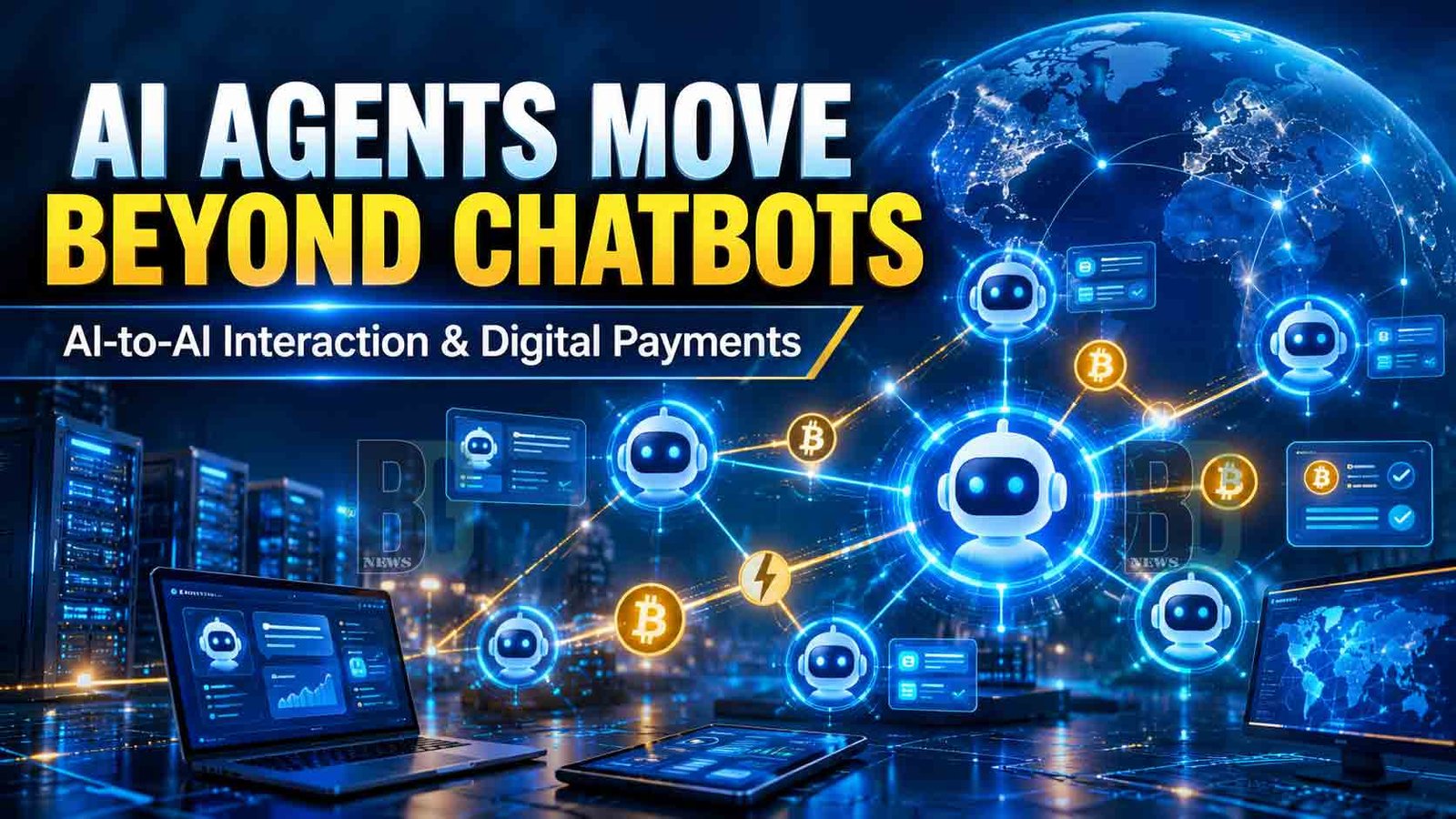
Artificial intelligence is increasingly moving from systems that simply answer questions to AI agents capable of carrying out tasks, using digital tools and interacting with other software systems.
The shift has attracted attention following the growth of platforms such as Moltbook, a social network designed for AI agents. The platform allows AI agents to create posts, participate in discussions and interact with one another, while humans can observe their activity.
However, this does not mean that AI systems have independently created a society without human involvement. AI agents on such platforms are created and operated through software and systems established by humans. Researchers have also cautioned against interpreting AI-generated conversations as evidence of independent intentions or consciousness.
AI Agents Increasingly Able to Take Action
- The development of agentic AI represents a change from traditional chatbots. Instead of only producing an answer, an AI agent can be connected to tools and services that allow it to perform tasks on behalf of a user.
- Recent developments include agents being used for activities such as online shopping, travel bookings, software development and other multi-step digital workflows.
Bitcoin Payments for AI Agents
- Another emerging area is the use of cryptocurrency for machine to machine payments.
- Lightning Labs announced Wavelength, a toolkit designed to allow applications and AI agents to use self custodial Bitcoin payments through the Lightning Network.
- According to the company, an AI agent can use the system to hold a Bitcoin balance and send or receive payments as part of a workflow. This could allow an agent to pay for an API call, data service or another digital service without requiring a conventional payment method for every transaction.
- The technology remains at an early stage, and security controls are still an important part of the system. Wallet credentials and private information require protection from exposure to AI models.
From AI Assistance to AI Commerce
These developments point toward a possible future in which AI agents could not only perform digital tasks but also participate in automated transactions.
Potential applications include:
- AI agents paying for software APIs
- Automated data and information services
- Machine to machine transactions
- AI marketplaces and digital services
- Automated payments for computing resources
- Agents purchasing services from other agents
However, the idea that a fully independent AI economy already exists remains premature. Current systems operate within software frameworks, permissions, financial infrastructure and security controls established by humans.
Human Oversight Remains Important
- The increasing ability of AI agents to access files, software tools, online services and financial systems also creates new security and accountability questions.
- Activity involving AI only platforms has generated both excitement and skepticism. AI-generated conversations can reflect prompts, training data or human influence rather than independent intentions.
- The current development therefore represents an evolution in how AI systems can operate, rather than evidence that humans have already lost control of digital systems.
- As AI agents become increasingly capable of using tools, communicating with other agents and making automated payments, the boundary between AI assistance and AI driven digital action is becoming an important area of technology development.
The agentic AI era is developing rapidly, but claims that the chatbot era is already “over” or that AI has become completely autonomous remain speculative rather than established fact.