
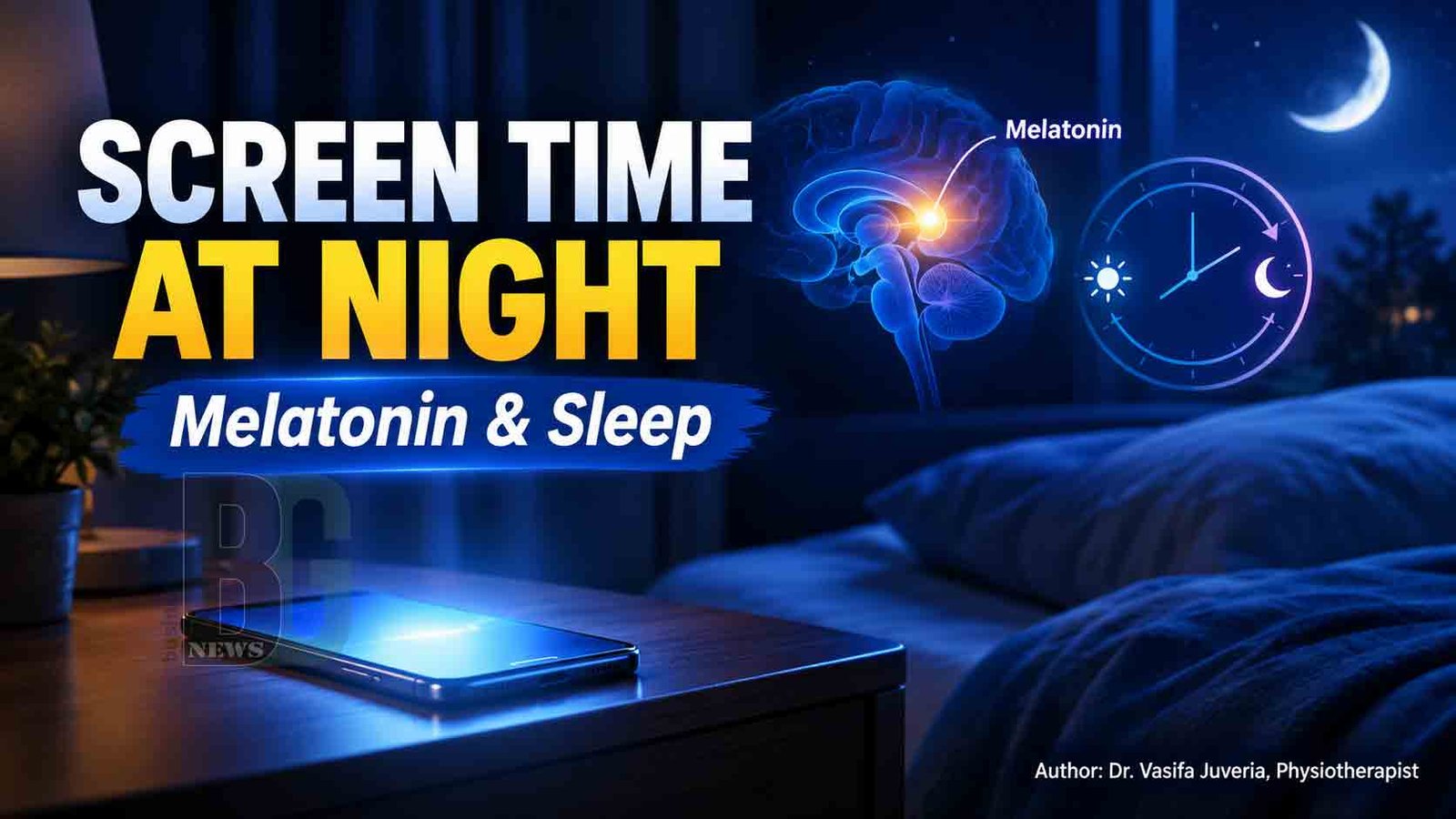
The pineal gland is a small endocrine gland located deep within the brain. Its best known hormone is melatonin, which plays an important role in regulating the body’s circadian rhythm, or internal 24 hour biological clock.
Melatonin production normally follows a daily pattern. During daylight, levels are generally low. As darkness arrives, melatonin production increases, helping signal to the body that it is nighttime and supporting the transition toward sleep.
- But modern life has changed our relationship with darkness.
- We now carry a source of light in our hands. Our phones.
- When Your Screen Meets Your Biological Clock
Light entering the eyes is detected by the retina. Signals related to light and darkness are communicated to the suprachiasmatic nucleus (SCN) in the hypothalamus, an important regulator of the circadian clock.
The SCN influences the pathway that controls melatonin production by the pineal gland.
Bright light at night, particularly light containing substantial short wavelength light, can suppress or delay the normal nighttime rise in melatonin.
In simple terms:
- Light → Eyes → SCN → Pineal gland → Melatonin
- This is one reason why nighttime exposure to bright screens may make it harder for some people to feel sleepy at their usual bedtime.
- It’s Not Just About the Light
- There is another side to nighttime phone use that is easy to overlook.
Imagine checking your phone before bed and seeing:
- An exciting social media video
- A stressful message
- Work notifications
- Breaking news
- An intense game
- An endless stream of new content
Even when the screen itself is not extremely bright, the mental stimulation can keep you alert and make it harder to wind down.
Therefore, nighttime screen use can affect sleep through more than one pathway: light exposure, delayed bedtime, and cognitive or emotional stimulation.
Could This Contribute to Sleep Problems?
- Regular nighttime screen use can be associated with later Bedtimes, Reduced sleep duration and Difficulty falling asleep.
- Persistent sleep difficulties can occur in conditions such as insomnia or circadian rhythm sleep wake disorders. However, it is important not to assume that screen time alone causes a sleep disorder.
- Sleep is influenced by many factors, including stress, medications, medical conditions, work schedules, lifestyle, environment, and individual differences.
Screen exposure is just one piece of a much larger picture.
Your Body May Be Tired But Your Clock May Be Saying “Not Yet”
Have you ever felt exhausted but still unable to fall asleep?
This can happen when sleep pressure and circadian timing are not perfectly aligned.
Your body may be physically tired, while your biological clock is still promoting wakefulness.
Repeatedly staying up late, particularly with bright light and stimulating activities, can contribute to a later sleep schedule in some people.
This is why maintaining a relatively consistent sleep and wake schedule can be helpful.
How Can We Give Our Brain a Better “Night Signal”?
You don’t necessarily need to stop using technology completely.
Small changes may help create a more sleep friendly environment:
- Dim the lights: Reduce exposure to bright light in the evening.
- Reduce screen use before bed: Give your brain some time away from stimulating content.
- Use night mode settings: These can reduce short-wavelength light from screens, although they do not eliminate all light or stimulation.
- Keep the bedroom dark: Darkness supports the normal nighttime rise in melatonin.
- Maintain a consistent sleep schedule: Regular sleep and wake times help reinforce your circadian rhythm.
- Don’t ignore persistent sleep problems: If difficulty sleeping continues or significantly affects your daytime functioning, consider speaking with a healthcare professional.
The Final Scroll
The next time you find yourself scrolling at 1:00 a.m., remember that your phone is more than entertainment.
Its light is information.
Your eyes detect it.
Your brain interprets it.
Your circadian system responds to it.
And your pineal gland adjusts melatonin production as part of that system.
The question isn’t simply:
- “How long have I been on my phone?”
- It may also be:
- “What is my environment telling my brain about what time it is?”
- Sometimes, improving your sleep may begin with something surprisingly simple:
- Turn down the light. Put down the phone. Let your brain know that night has arrived.
Author:
Dr. Vasifa Juveria, Physiotherapist