

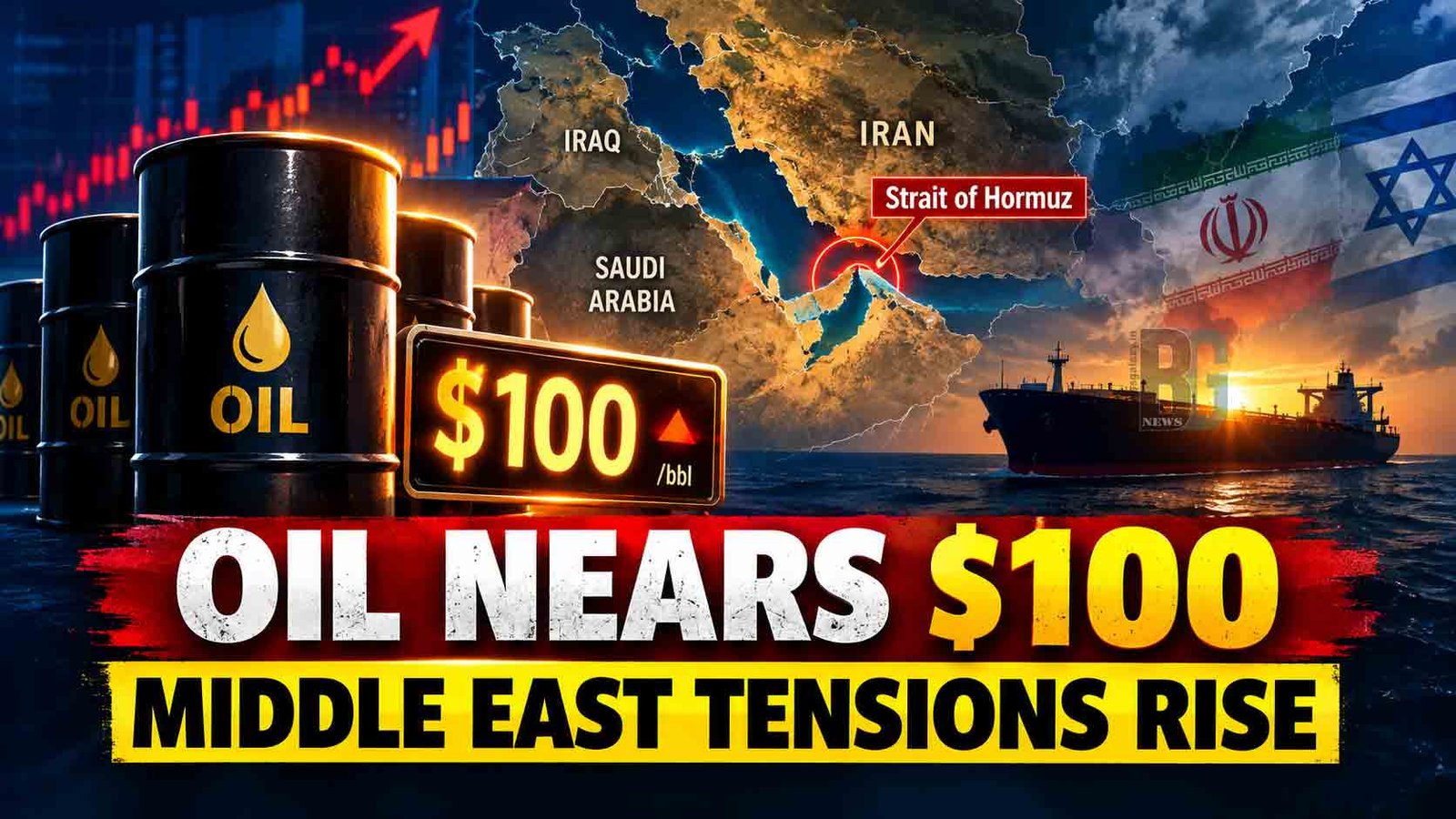
New Delhi: Global oil prices are moving close to $100 per barrel as the conflict in the Middle East continues to intensify. Investors are increasingly worried that further attacks could disrupt oil production and shipping in the region.
Brent crude approaches $100
- Brent crude, the international benchmark for oil prices, settled at around $97.92 per barrel on Tuesday, its highest level in about six weeks. U.S. West Texas Intermediate (WTI) crude settled at around $93.03 per barrel.
- In early trading following further attacks, Brent moved even closer to the $100 mark, reaching about $99.22 per barrel, while WTI rose to around $94.13.
- Oil prices have risen sharply in recent weeks because traders fear that the conflict could reduce the amount of crude reaching the international market.
Why are oil prices rising?
- The latest increase came after Iran backed Houthi forces in Yemen attacked energy facilities in Saudi Arabia.
- The attacks caused fires and temporarily affected some energy operations, increasing fears that more oil infrastructure could be targeted if the conflict spreads.
- At the same time, the wider conflict involving the United States and Iran has increased concerns about oil supplies and shipping routes across the Gulf.
Strait of Hormuz is a major concern
- One of the biggest concerns for the global oil market is the Strait of Hormuz.
- The narrow waterway is an important route for oil shipments from the Gulf to international markets. Any major disruption there could make it more difficult and expensive to transport oil.
- Although oil continues to move through the waterway, traders are closely watching the situation because a serious disruption could cause prices to rise much further.
What could happen if oil reaches $100?
A sustained oil price of $100 or more could have a major effect on the global economy.
Higher crude prices can lead to:
- Higher petrol and diesel prices
- More expensive air travel
- Increased transportation costs
- Higher prices for goods and services
- Greater inflation pressure
- Higher costs for businesses
- Possible pressure on interest-rate decisions
Countries that import large amounts of oil could feel the impact more strongly.
Impact on India
- India imports a large share of the crude oil it uses, so a prolonged increase in international oil prices could increase the country’s import bill.
- Higher crude prices can also put pressure on the Indian rupee, increase transportation costs and create challenges for controlling inflation.
- However, the actual impact on Indian consumers will depend on international crude prices, the rupee dollar exchange rate, government policies and domestic fuel pricing.
Global markets also feeling the pressure
- The rise in oil prices is also affecting financial markets.
- Investors are concerned that expensive energy could push inflation higher and slow economic growth. Global stocks have therefore come under pressure as markets react to the worsening geopolitical situation.
Could oil rise above $100?
- Analysts are watching the situation closely.
- If attacks on oil facilities continue or important shipping routes face major disruption, oil prices could move above $100 per barrel.
- However, prices could also fall if tensions ease and oil supplies remain available through alternative routes. Reuters reported that continued flows through the Strait of Hormuz and alternative export routes are currently helping prevent a much larger supply shortage.
Bottom Line
- Oil prices are approaching $100 per barrel because the escalating Middle East conflict is creating serious concerns about future oil supplies.
- For India and other oil importing countries, a prolonged period of high crude prices could mean higher energy costs, inflation pressure and increased economic challenges.
- The key factor to watch now is whether the conflict expands further and whether oil shipments through the Gulf and the Strait of Hormuz remain stable.