

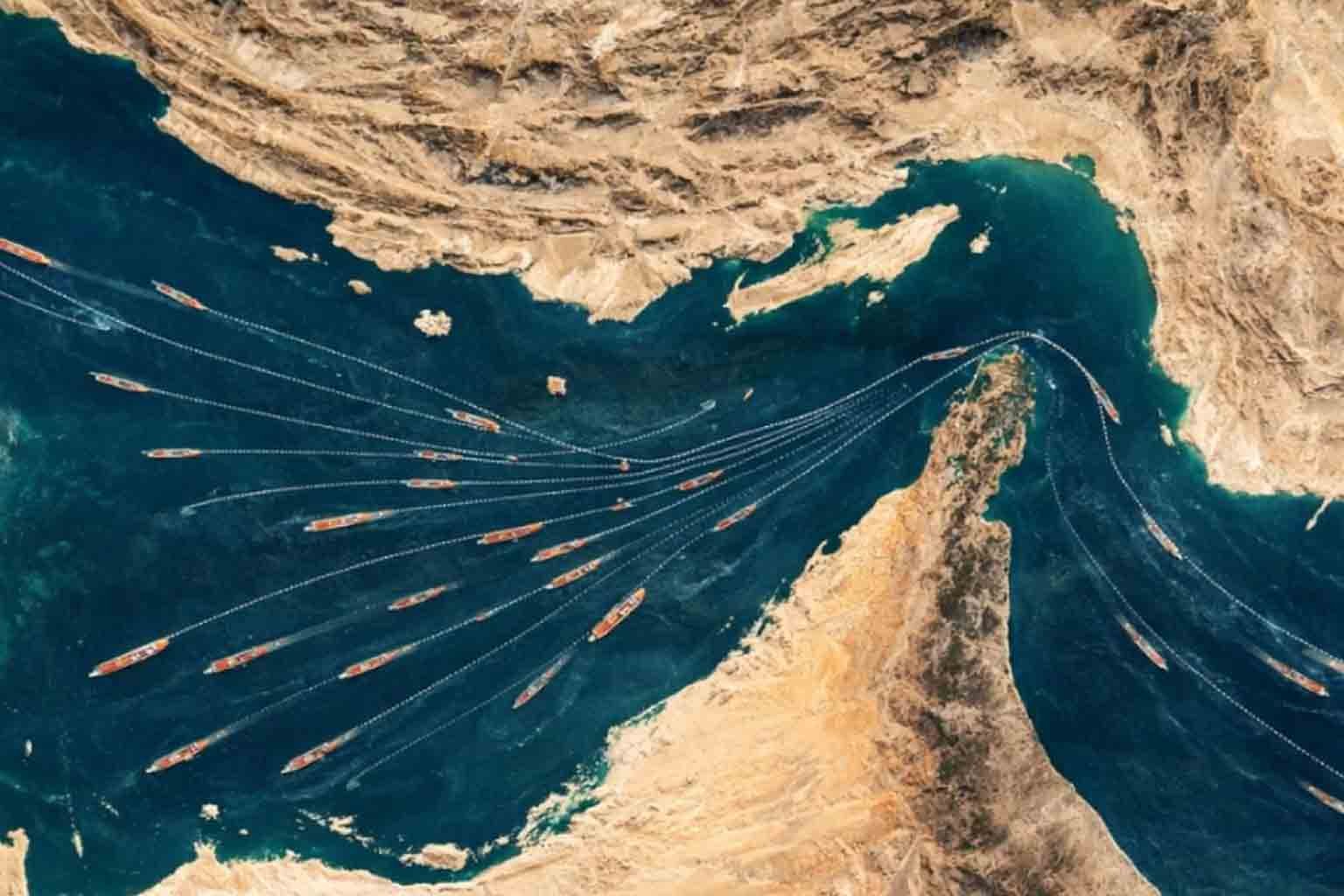
Hopes of restoring commercial shipping through the strategically vital Strait of Hormuz have been clouded by fresh tensions between Iran and the United States, despite recent progress in Iran-Oman talks over a new shipping arrangement.
Iran and Oman have been negotiating a framework for managing commercial vessel traffic through the strait. The two countries have reportedly agreed on coordinates for separate inbound and outbound shipping routes. Under the proposed arrangement, vessels entering the Gulf would use a northern route through Iranian territorial waters, while outbound traffic would use a southern route through Omani waters, coordinated with Iran.
However, the proposed Iran-Oman arrangement has not resulted in the full reopening of the waterway. Iran has said that additional conditions involving the United States must be addressed before normal commercial traffic can resume. The latest developments indicate that the broader US-Iran standoff remains the biggest obstacle to restoring regular shipping.
Strait remains heavily disrupted
- The Strait of Hormuz remains one of the world’s most important energy chokepoints and the continuing disruption is already affecting international shipping and energy markets.
- Reuters reported on August 12 that only eight vessels were tracked passing through the strait on Tuesday, compared with a 10 day average of around 12 vessels. Before the current crisis, traffic typically reached around 130-140 vessels a day.
- The sharp fall in traffic highlights the seriousness of the situation. Shipping companies face security risks, uncertainty over navigation and increased insurance and operating costs.
- At the same time, some vessels appear to be using alternative routes, including the Bab al-Mandab and other approaches, as shipping companies attempt to reduce their exposure to the Hormuz crisis.
Iran’s position
- Iran has rejected claims that the Strait is under US control and has insisted that reopening the waterway depends on Washington meeting Tehran’s conditions.
- Iran’s position has hardened amid renewed attacks and the continuing US-Iran confrontation. Tehran says the waterway cannot simply return to its pre-war operating arrangements without addressing its security and political concerns.
- This has created a gap between reports of progress in the Iran-Oman negotiations and the reality of shipping conditions on the ground.
Oman plays a key diplomatic role
- Oman has emerged as an important intermediary because of its geographic position and longstanding diplomatic relationship with Iran.
- The proposed arrangement involving separate shipping lanes could provide a mechanism for allowing at least some commercial traffic to move through the strait while reducing direct confrontation between vessels and Iranian forces.
- US officials have previously said progress was being made between Iran and Oman and that they expected an agreement. However, the latest developments show that a final and fully operational agreement has not yet restored normal shipping.
Why the Strait of Hormuz matters
The Strait of Hormuz connects the Persian Gulf with the Gulf of Oman and the wider Arabian Sea. It is a critical route for international oil and gas shipments.
Any prolonged disruption can therefore affect:
➤ Crude oil prices
➤ Petrol and diesel prices
➤ Shipping and insurance costs
➤ Global inflation
➤ Asian energy supplies
➤ India’s oil import costs
➤ Global financial markets
For India, the situation is particularly important because the country depends heavily on imported crude oil. A prolonged disruption could increase India’s import bill and put pressure on fuel prices, inflation and the rupee.
Oil markets remain on alert
- The uncertainty around Hormuz has kept energy traders focused on developments between Iran, Oman and the United States. Recent reports of stalled talks and continuing attacks on shipping have raised concerns that the disruption could last longer than initially expected.
- The situation could change rapidly if Washington and Tehran reach a broader political or security understanding. Conversely, further attacks or a breakdown in negotiations could push shipping risks and energy prices higher.
A second crisis hits Oman
- Oman is also dealing with a serious environmental emergency. Reuters reported on August 12 that an oil slick from the grounded tanker Caroline Bezengi has spread across more than 2,000 square kilometres along Oman’s coastline.
- The tanker was carrying about 800,000 barrels of Russian oil when it ran aground near a marine nature reserve. The spill is threatening coastal areas and endangered marine life, adding another major challenge for Oman amid the wider regional crisis.
What happens next?
The immediate focus is on whether Iran and Oman can finalise and implement their proposed shipping arrangement and whether the United States and Iran can resolve the conditions preventing a full reopening.
For now, the reported Iran-Oman progress should not be interpreted as a complete reopening of the Strait of Hormuz. Shipping activity remains far below normal levels and Tehran continues to link reopening to wider negotiations with Washington.