

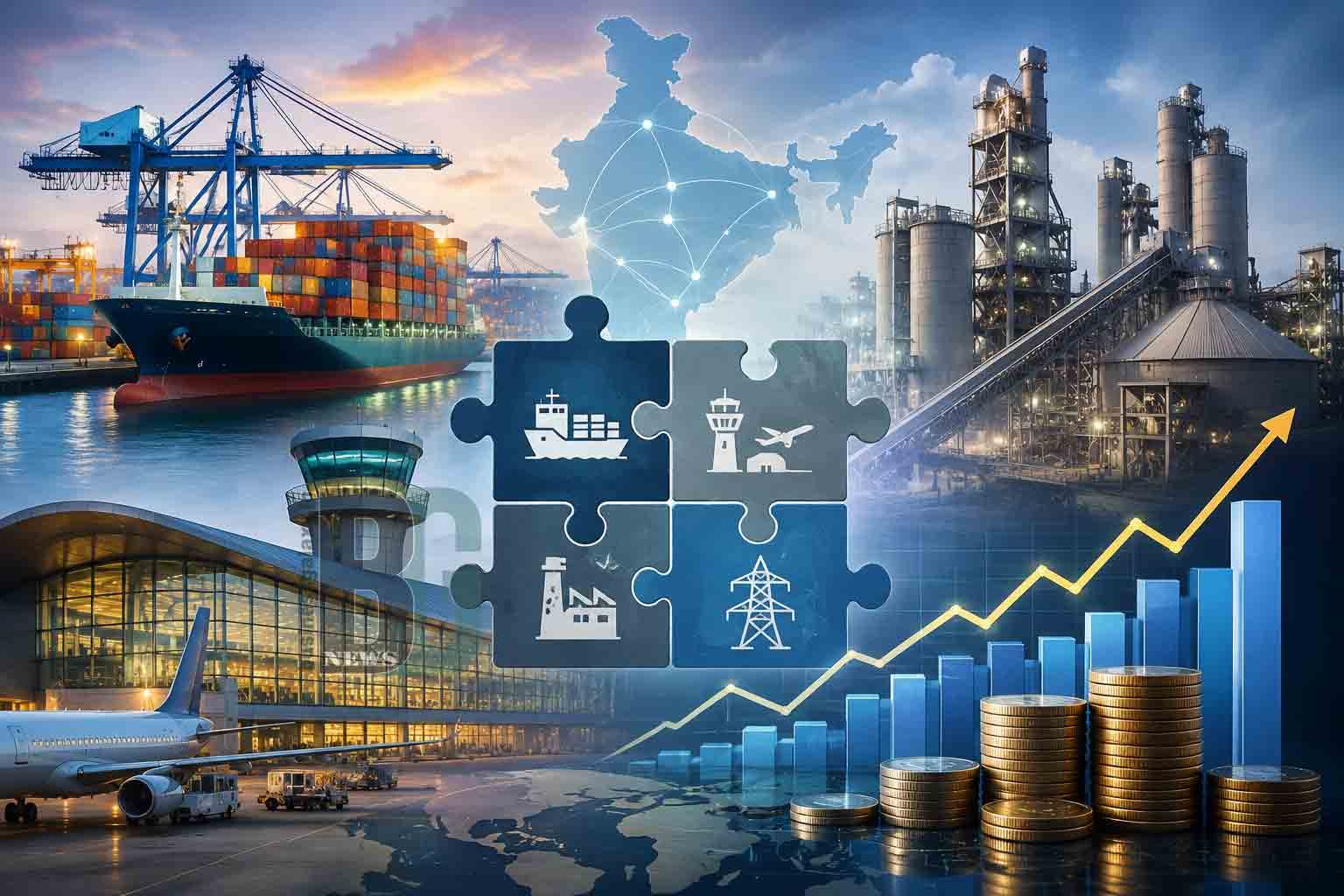
The rapid expansion of some of India’s largest business groups through acquisitions of Ports, Airports, Cement companies, Media assets and Infrastructure projects has reignited debate over market concentration, competition and the future of India’s corporate landscape.
Over the past decade, several major assets have changed hands as financially stressed companies sought investors, lenders pushed for debt resolution and businesses pursued expansion opportunities. Among the most notable examples are the acquisitions of Mumbai Airport, Krishnapatnam Port, Sanghi Industries, NDTV and various cement assets by the Adani Group and its subsidiaries.
Major Acquisitions Draw Attention
In 2020, the Adani Group acquired control of Mumbai’s Chhatrapati Shivaji Maharaj International Airport after purchasing stakes held by the GVK Group. The transaction came at a time when GVK was facing significant financial challenges and debt pressures.
Similarly, Adani Ports acquired Krishnapatnam Port in Andhra Pradesh in a deal valued at more than ₹13,000 crore, strengthening its position as India’s largest private port operator.
In the cement sector, Ambuja Cements, part of the Adani Group, acquired Sanghi Industries in 2023 for approximately ₹5,000 crore, expanding its manufacturing capacity and presence in western India.
The group’s acquisition of NDTV in 2022 also attracted national attention, raising discussions about media ownership and corporate influence in the news industry.
Supporters Cite Investment and Asset Revival
Supporters of these acquisitions argue that they reflect normal market activity in a growing economy. They point out that many of the acquired companies were burdened by debt, facing financial difficulties or seeking strategic investors.
According to this view, large corporate groups with access to capital are often better positioned to revive stressed assets, invest in infrastructure and generate employment. Banking experts also note that acquisitions can help lenders recover loans from distressed companies and reduce the burden of non-performing assets (NPAs).
Proponents further argue that India’s infrastructure ambitions require large scale investment and financially strong companies are capable of undertaking projects involving ports, airports, logistics networks, power generation and manufacturing.
Critics Raise Competition Concerns
Critics, however, argue that increasing concentration of ownership across key sectors could reduce competition and create excessive market power in the hands of a few large corporations.
Economists and competition experts have raised concerns about consolidation in industries such as ports, airports, logistics, energy and cement, warning that reduced competition could affect pricing, innovation and consumer choice over time.
Some opposition leaders and activists have also questioned the timing of certain acquisitions that followed regulatory investigations or financial distress at target companies. However, no court or government investigation has established a direct link between regulatory actions and subsequent corporate takeovers.
Impact on Consumers
Experts say the impact of corporate consolidation on consumers depends largely on the level of competition that remains within each sector.
Supporters argue that larger companies can achieve economies of scale, improve efficiency and invest in modern infrastructure, potentially benefiting consumers and businesses.
Critics counter that excessive concentration may eventually reduce competitive pressures and lead to higher costs or reduced market choice if sufficient safeguards are not maintained.
The Bigger Economic Picture
India continues to attract significant domestic and international investment, while its economy remains among the fastest growing major economies in the world. At the same time, policymakers face the challenge of balancing economic growth with healthy competition.
Regulatory bodies such as the Competition Commission of India (CCI) play a key role in reviewing major mergers and acquisitions to ensure that market competition is preserved.
As India’s corporate landscape evolves, the debate over consolidation, competition and economic power is likely to continue. While supporters see the trend as a natural outcome of market forces and infrastructure development, critics argue that policymakers must remain vigilant to ensure that economic growth benefits consumers, businesses and the broader economy alike.