

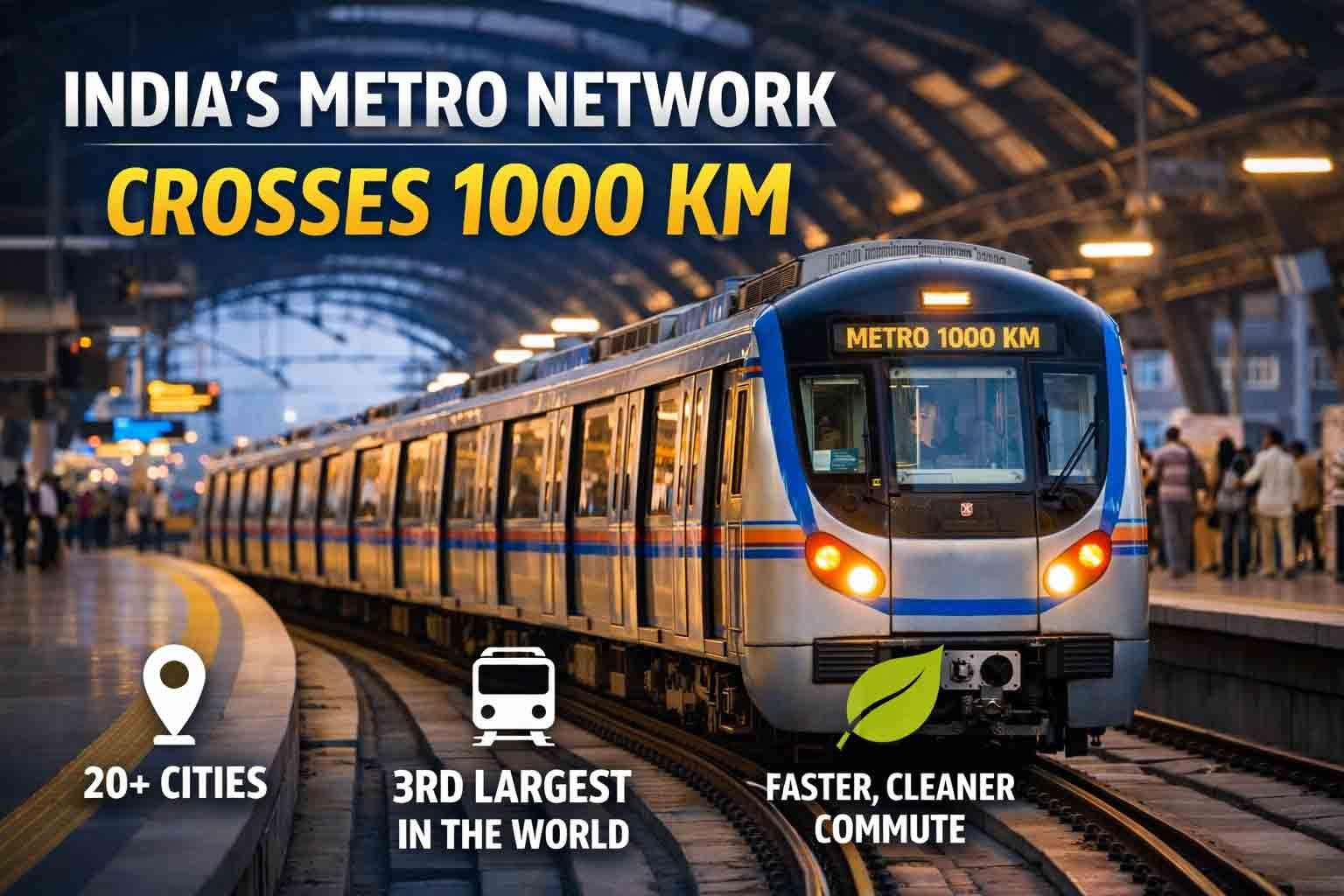
India has achieved a major milestone in urban infrastructure as its metro rail network has crossed 1,000 kilometres of operational length, making it the third largest metro system in the world, after China and the United States.
Rapid Expansion
Over the past decade, India’s metro network has witnessed rapid growth, expanding from a few hundred kilometres to more than 1,000 km today. This expansion reflects the government’s sustained focus on strengthening urban public transport to meet the demands of growing cities.
Cities with Metro Services
Metro rail systems are now operational in over 20 cities across India. Major networks include:
- Delhi Metro: the largest and most extensive in the country
- Bengaluru, Mumbai, Kolkata, Hyderabad and Chennai
- Several Tier 2 cities that have recently launched metro services
Impact on Urban Mobility
The metro has transformed daily commuting by offering a fast, reliable and environment friendly alternative to road transport. Millions of passengers rely on metro services every day, significantly reducing traffic congestion and air pollution in major urban centres.
Government Focus and Future Plans
The achievement is part of India’s broader infrastructure development agenda aimed at improving quality of life in cities. Multiple metro projects are currently under construction, and further expansion is planned in the coming years to connect more urban and semi urban areas.
Global Standing
With more than 1,000 km of operational metro lines, India now ranks third globally in metro rail coverage, underlining its emergence as a major player in modern urban transport infrastructure.