
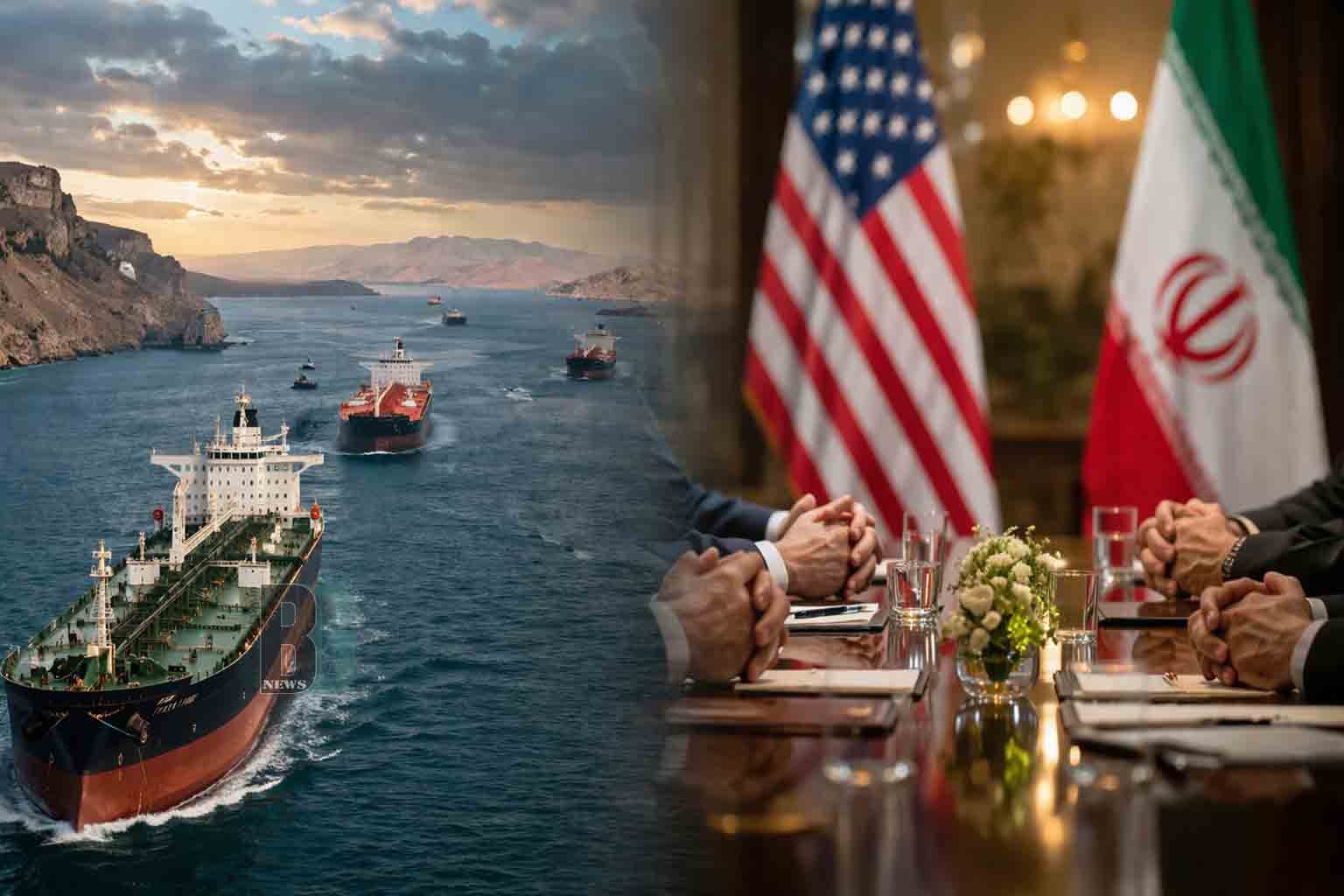
Washington: The White House has confirmed that senior officials under Donald Trump are reviewing a new proposal from Iran aimed at ending the ongoing conflict and reopening the critical Strait of Hormuz, one of the world’s most important oil transit routes.
According to officials, the proposal outlines a phased approach to de-escalation. Tehran has suggested an immediate ceasefire, followed by the reopening of the Strait of Hormuz to restore global shipping and energy flows. However, discussions over Iran’s nuclear program would be postponed to a later stage an aspect that remains a major sticking point in negotiations.
The Strait of Hormuz is a vital choke point through which a significant portion of global oil supply passes. Its disruption in recent weeks has triggered volatility in energy markets and raised concerns among major economies dependent on stable oil flows.
The Trump administration has responded cautiously. While acknowledging the importance of reopening the strait and reducing tensions, US officials have reiterated that any long-term agreement must address Iran’s nuclear ambitions. President Trump has maintained firm “Red lines,” insisting that Tehran must commit to strict limits or a complete rollback of its nuclear program as part of any deal.
This difference in priorities has created a diplomatic deadlock. Iran appears to be seeking immediate economic and strategic relief through a ceasefire, while the United States is pushing for broader security guarantees before easing pressure.
Behind the scenes, international mediators are continuing efforts to bridge the gap. Regional players and global powers are closely watching the talks, given the wider implications for energy markets and geopolitical stability.
Despite the renewed diplomatic push, officials caution that a breakthrough is not imminent. Tensions remain high and both sides continue to approach negotiations with deep mistrust following years of strained relations and failed agreements.
For now, the situation remains fluid, with the world’s attention fixed on whether diplomacy can succeed in reopening a key global trade artery and preventing further escalation in the region.