
Top Court Gives Both Governments 10 Days to Submit Detailed Responses to Petitions Concerning October Demonstrations
New Delhi, November 26, 2026:
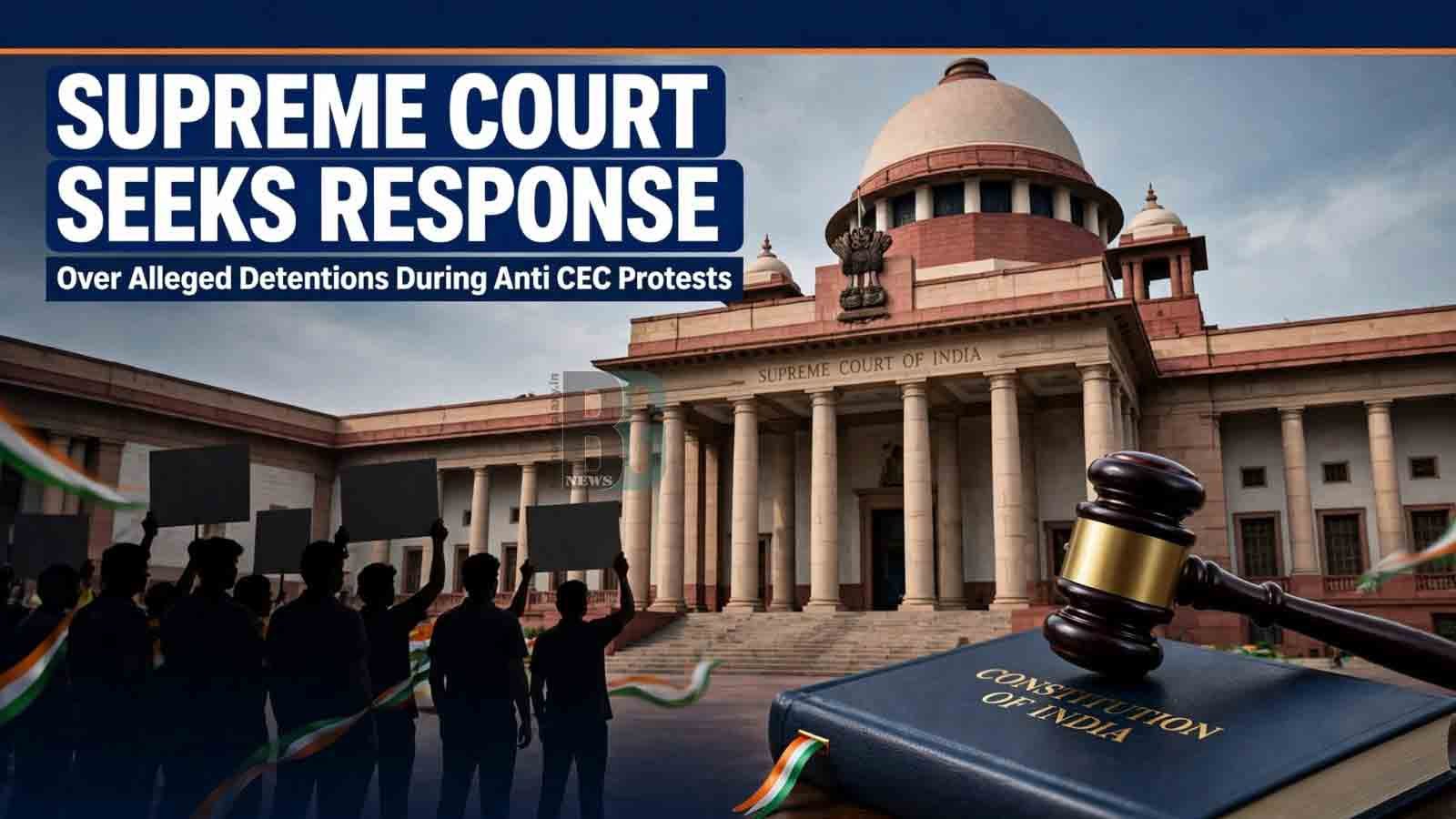
- The Supreme Court of India has directed the Central Government and the Delhi Government to submit detailed responses to petitions alleging illegal detention of protesters, political leaders, lawyers and journalists during demonstrations held in Delhi in October against Chief Election Commissioner (CEC) Gyanesh Kumar.
- A three judge bench comprising Chief Justice of India Surya Kant and Justices Joymalya Bagchi and V. Mohana issued the direction on November 25, 2026. The court has given both governments 10 days to submit comprehensive responses. It has also allowed the petitioners one week after the filing of the responses to submit their rejoinders, if any.
Background of the Protests
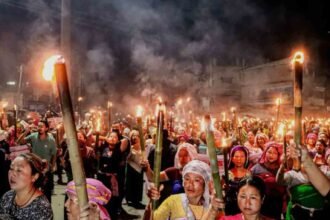
- The petitions relate to demonstrations organised in New Delhi on October 10 and 11, 2026, by various political groups and youth organisations demanding the removal of Chief Election Commissioner Gyanesh Kumar.
- The protests were linked to allegations of irregularities in the Election Commission of India’s Special Intensive Revision (SIR) of electoral rolls.
- Several petitions were subsequently filed before the Supreme Court, raising concerns over alleged police action, detention of demonstrators, lawyers and journalists and restrictions on public movement during the protests.
What Happened During the Supreme Court Hearing?
- During the November 25 hearing, Additional Solicitor General Aishwarya Bhati informed the bench that affidavits had been filed in some of the related petitions, while responses concerning the alleged detentions were still pending.
- The Supreme Court directed the Centre and Delhi Government to place their detailed positions before the court.
- The proceedings also include a habeas corpus petition filed by Trinamool Congress MP and senior advocate Menaka Guruswamy concerning the alleged detention and removal of political leaders, including former West Bengal Chief Minister Mamata Banerjee, from the protest site.
- Delhi Police has maintained in the related proceedings that no one was arrested or detained during the October 10 protests, arguing that the particular petition had become infructuous. These claims and the petitioners allegations are matters before the court.
Supreme Court’s Earlier Observations
- During a special sitting on October 11, the Supreme Court had emphasised that people participating in peaceful gatherings should not be detained except in accordance with the procedure established by law.
- The court had also addressed restrictions on Delhi Metro and railway services, stating that public transport should function normally, subject to necessary law and order requirements.
Why This Case Matters
The proceedings raise important questions concerning:
- The constitutional right to peaceful assembly and protest.
- Protection against unlawful detention.
- Freedom of expression and democratic participation.
- The safety and working rights of journalists covering public demonstrations.
- Accountability of law enforcement authorities.
The Supreme Court’s latest direction provides an opportunity for both governments to present their positions on the allegations before the court.
The matter will proceed after the affidavits and any subsequent rejoinders are submitted.
Source: Bar & Bench, India Legal, The Week (PTI) and Supreme Court proceedings.