
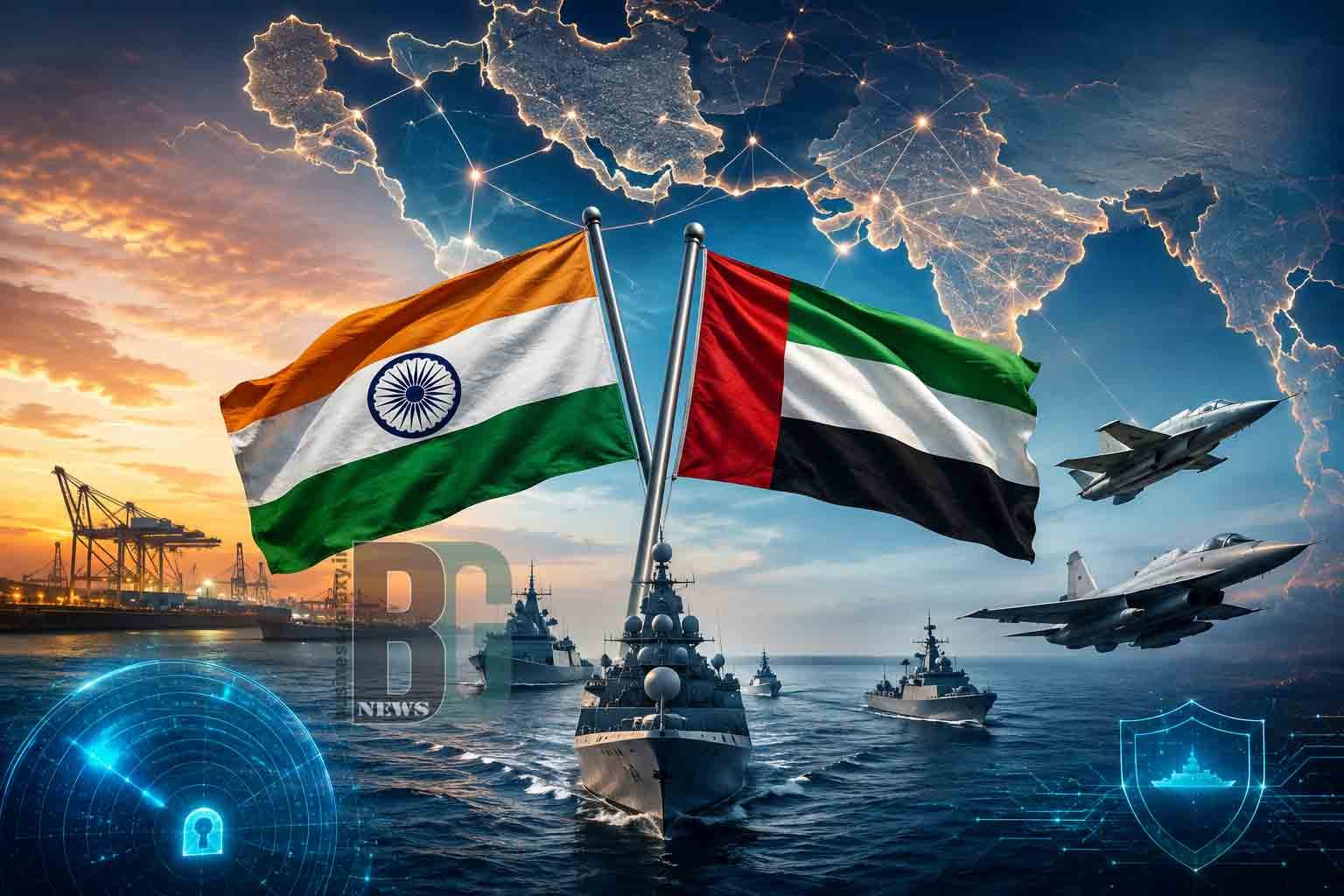
India and the United Arab Emirates (UAE) have signed a series of major defence, energy and strategic cooperation agreements during Prime Minister Narendra Modi’s visit to Abu Dhabi, as tensions linked to the ongoing Iran conflict continue to rise across West Asia.
The agreements focus heavily on maritime security, cyber defence, military technology cooperation, intelligence sharing, defence manufacturing, and joint military exercises. Officials described the new framework as a significant step toward a deeper India-UAE strategic defence partnership.
Key Agreements Signed
➤ India and UAE finalized a framework for long term strategic defence cooperation.
➤ Both countries agreed to strengthen naval coordination and maritime security in the Arabian Sea and Gulf region.
➤ New partnerships were signed in cyber security, secure communications, and defence innovation.
➤ The UAE’s ADNOC and India also expanded agreements related to strategic petroleum reserves and oil storage.
➤ Talks included increasing crude oil and LNG supplies to India to protect energy security during regional instability.
Modi’s Message in Abu Dhabi
During the visit, Narendra Modi strongly condemned recent attacks on the UAE and stated that India “stands shoulder to shoulder with UAE” during regional security challenges.
He also highlighted the importance of stability in the Gulf region, especially as disruptions linked to the Iran conflict continue affecting oil routes and international trade.
Why the Timing Is Important
The agreements come at a time when the Middle East remains tense because of the ongoing 2026 Iran war involving Iran, the United States, Israel, and several Gulf nations.
Iran has accused the UAE of supporting military operations against Tehran, while missile and drone attacks have targeted Gulf infrastructure in recent months.
India is particularly concerned because:
➤ A large portion of India’s oil imports pass through the Strait of Hormuz.
➤ Any disruption in Gulf shipping directly impacts India’s economy and fuel prices.
➤ Millions of Indians live and work in Gulf countries including the UAE.
➤ India has launched maritime security efforts to protect energy supplies and shipping routes.
BRICS Meeting Tensions
The defence deals were announced alongside tense discussions during the BRICS foreign ministers meeting in New Delhi. Iran reportedly accused the UAE of involvement in anti-Iran operations, exposing divisions within BRICS over the Gulf conflict.
Despite these tensions, India has maintained a careful diplomatic balance, calling for stability and protection of international trade routes without directly taking sides in the conflict.
Bigger Strategic Picture
Analysts say the India-UAE agreements reflect:
➤ India’s growing strategic role in West Asia.
➤ UAE’s push to strengthen regional defence partnerships.
➤ Rising concerns over energy security and Gulf stability.
➤ Increased military and geopolitical competition in the region amid the Iran conflict.